Passed in January 2022, New York's new Family and Firefighter Protection Act regulates the use of flame retardant chemicals.
New York joins 4 other US states (Delaware, Georgia, Iowa and West Virginia) in passing this type of regulation according to Safer States, a network of diverse environmental health coalitions and organizations. New York's legislation regulates specific chemicals in upholstered furniture, mattresses and electronic enclosures.
Reasons behind the legislation
These chemicals are meant to prevent the start of a fire or slow its growth. However, according to the National Institute of Environmental Health Services, many of the chemicals are linked to serious health effects from cancer and reproductive issues to developmental disabilities.
Some flame retardants bioaccumulate in humans, causing long-term chronic health problems.
Adverse effects
Children and firefighters are particularly at risk from the effects of the chemicals in flame retardants
Children and firefighters are particularly at risk from the effects of the chemicals contained in flame retardants. Exposure to these compounds is associated with adverse effects on fetal and child development.
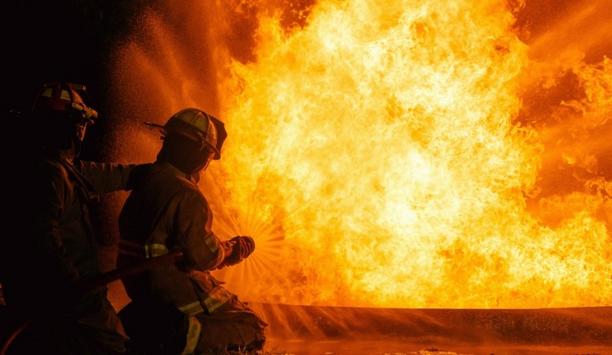
When flame retardants within common household items and building materials burn, they produce toxic chemicals that firefighters are regularly exposed to in the line of duty, contributing to higher cancer rates among firefighters than those in the general population.
Action at federal level
At the federal level, amendments to the Toxic Substances Control Act in 2016 required the Environmental Protection Agency (EPA) to issue updated regulations for potentially harmful chemicals, including several flame retardant substances.
Once the risk evaluations are completed and regulations are updated, the EPA could completely ban the chemicals, mandate personal protective equipment or ban certain uses of the chemicals.
The EPA released a draft revised risk evaluation in December 2021 for the cyclic aliphatic bromide cluster (HBCD), a subclass of flame retardants primarily used in building materials including insulation, solder paste and recycled plastics. The risk evaluation determined that this cluster of chemicals carries 'unreasonable risk of injury to health and the environment under the conditions of use.'
Action at state level
According to Safer States, a total of 16 states have adopted policies for risk evaluation and future action.
For firefighters
Legislation at the state and federal levels restricting the use of specific flame retardant chemicals could greatly reduce firefighters' exposure to them, which will ultimately be a step forward for firefighters' health.

- Fire Safety Risk Assessment
- Fire Safety Planning
- Fire Prevention
- Fire Detection
- Fire Protection
- Fire Rescue
- Fire Safety Inspection
- Fire Safety Testing
- Fire Safety Standards
- Training & Education
- Fire Safety Policies
- Fire Safety Management
- Fire Emergency Response
- Electrical Fire Safety
- Building Fire Safety
- Industrial Fire Safety
- Tall Building Fire Safety
- Active Fire Protection (AFP)
- Passive Fire Protection (PFP)
- Firefighter Health and Safety
- Public Education
- Personal Protective Equipment (PPE)
- Fire Insurance
- Smart Home
- Explosion Protection
- Flammable Material Control
- Artificial Intelligence
- Mergers & Acquisitions