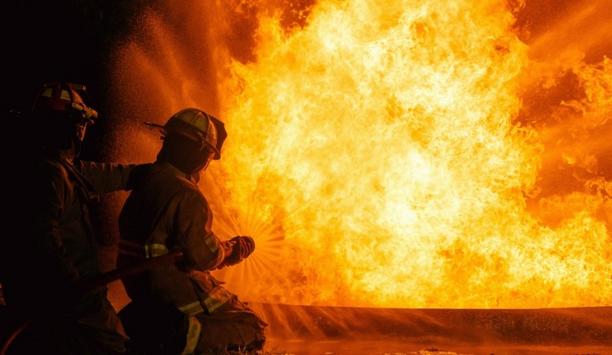

Many studies have shown that firefighters and emergency medical services (EMS) responders have a high likelihood of experiencing verbal or physical violence at least once in their career.
Fire-based paramedics and EMS are at particularly high risk of experiencing an assault, since they respond to calls in varied locations, often paired with only one or two colleagues. In these situations, they may come into close contact with people who have mental health issues.
Mitigating the risk of assaults on responders
Researchers on the Stress and Violence to Fire-based EMS Responders (SAVER) study found many improvements organizations can make to mitigate the risk and impact of assaults on their responders.
SAVER study researchers wanted to develop a systems-level checklist for violence against fire-based EMS responders
High-reliability organizations — those that have fewer than normal accidents, such as the airline and healthcare industries — have mitigated risks through the adoption of systems-level, organizational checklists.
SAVER study researchers wanted to develop a systems-level checklist for violence against fire-based EMS responders using findings from a comprehensive literature review. They also gathered input from subject matter experts at a national stakeholder meeting.
What the research shows
Prevention opportunities exist when looking as far upstream as possible from the likely source of harm. Therefore, it’s best to focus on organizational policies that can shape solutions before the problem occurs.
When management and unions can put effective policies in place, responsibility for safety is firmly on the organization rather than on the individual EMS responder. This is important since management organizes training opportunities and establishes standard operating procedures that can minimize the risk.
Organizational-level checklist
The final SAVER checklist consists of 174 items organized by six phases of EMS response:
- Pre-event
- Traveling to the scene
- Scene arrival
- Patient care
- Assessing readiness to return to service
- Post-event
The organization, not individual EMS responders, is responsible for nearly all the 174 checklist items. Fire departments and labor unions can use the checklist to accurately assess and implement training, policies and practices that promote the prevention and mitigation of assaults on EMS responders.
Organizational training for personnel
While the checklist is organizational in implementation, the result impacts the individual worker
Organizations can provide training to their personnel to recognize and react appropriately to potentially dangerous situations by using ‘pause-points’ to protect their health and safety, while on calls.
While the checklist is organizational in implementation, the result impacts the individual worker, SAVER study researchers find.
Individual-level checklist: Pause points
EMS responders focus on a six-item individual-level checklist, also referred to as ‘pause points’. Department-level training provides EMS responders with the knowledge of how to call a safety ‘time-out’ at one of six specific pause points.
- Traveling to the scene: In the case of violence at a location in the past, request and wait for law enforcement backup.
- Scene arrival: Before exiting the ambulance, make sure that all the resources needed are in place to safely begin patient care.
- Patient care: Before transport, check whether the patient requires restraint and have they been checked for weapons.
- Assessing readiness to return to service: Check whether the individual is mentally and physically ready to return to service.
- Post-event (reporting): For those who have experienced verbal or physical violence, check if they have reported it.
- Post-event (resources): Check whether the victim has sought and received the physical and long-term mental health resources they feel will enable them to return to work whole and ready.
These six individual-level actions give EMS responders the organizational mandate to protect themselves, while providing vital patient care. They also put into place a feedback mechanism to management on what might not be working in the field.

- Fire Safety Risk Assessment
- Fire Safety Planning
- Fire Prevention
- Fire Detection
- Fire Protection
- Fire Rescue
- Fire Safety Inspection
- Fire Safety Testing
- Fire Safety Standards
- Training & Education
- Fire Safety Policies
- Fire Safety Management
- Fire Emergency Response
- Electrical Fire Safety
- Building Fire Safety
- Industrial Fire Safety
- Tall Building Fire Safety
- Active Fire Protection (AFP)
- Passive Fire Protection (PFP)
- Firefighter Health and Safety
- Public Education
- COVID-19
- Personal Protective Equipment (PPE)
- Fire Insurance
- Explosion Protection
- Flammable Material Control
- Artificial Intelligence
- Mergers & Acquisitions