
Cool fall weather has arrived, winter is fast approaching, and Big Bear Fire Department encourages everyone to practice safe winter heating.
Big Bear Valley residents and tourists alike will soon be lighting pilot lights and finding other ways to keep warm during the chill of the season. When not functioning properly, the heating appliances that are keeping users warm can turn deadly quickly.
Carbon monoxide
“Carbon monoxide is odorless and colorless and can kill its victims while they’re sleeping. People don’t realize they are being poisoned,” according to Mike Maltby, the Assistant Chief with Big Bear Fire Department.
He adds, “The best way to prevent carbon monoxide poisoning is to have gas-fed, flame-producing appliances serviced annually by a professional, in addition to installing carbon monoxide (CO) detectors.”
symptoms of carbon monoxide poisoning
If carbon monoxide poisoning is suspected, get fresh air immediately, call 9-1-1, and seek medical attention
Know the symptoms of carbon monoxide poisoning. Carbon monoxide is a colorless, odorless gas that produces flu-like symptoms in its victims such as severe headaches, dizziness, mental confusion, nausea, and/or faintness.
If carbon monoxide poisoning is suspected, get fresh air immediately, call 9-1-1, and seek medical attention as soon as possible.
CO detectors
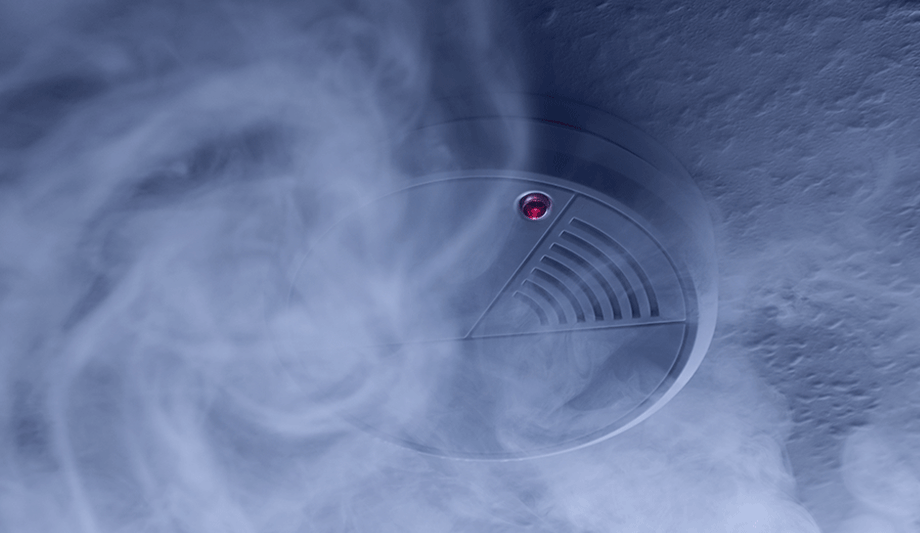
California state law requires CO detectors to be placed in the home outside sleeping areas, as well as on each level of the home. It is better to be safe than sorry.
If there is a question on the number of CO detectors required, error on the side of more. CO detectors are fairly inexpensive and can be purchased locally.
installation and maintenance
CO detectors should be installed and maintained per the manufacturer’s instructions. Generally, they can be installed on a wall or a ceiling. However, they should not be on the wall within 6 inches of the ceiling.
This 'pocket' is considered dead air that does not circulate well with the rest of the air in the house. It is also a good idea to place detectors near the home’s conventional heating source. CO detectors should be tested monthly and replaced every 5–7 years.
ways to avoid CO poisoning
Purchase only those detectors bearing the seal of the Underwriters Laboratory (UL). Other ways to avoid carbon monoxide poisoning include visually inspecting your water heater, furnace, and clothes dryer flues for signs of damage or obstruction. Birds and squirrels are known for building nests or hiding food in the exhaust flues.
This can prevent proper drafting of exhaust gases. Also, never use barbecues indoors. Charcoal gives off a lethal amount of carbon monoxide that is normally dissipated in the outdoor air. Kerosene and propane heaters can also produce these deadly gases and are prohibited from use in the home.

- Fire Safety Risk Assessment
- Fire Safety Planning
- Fire Prevention
- Fire Detection
- Fire Protection
- Fire Rescue
- Fire Safety Inspection
- Fire Safety Testing
- Fire Safety Standards
- Training & Education
- Fire Safety Policies
- Fire Safety Management
- Fire Emergency Response
- Electrical Fire Safety
- Building Fire Safety
- Industrial Fire Safety
- Tall Building Fire Safety
- Active Fire Protection (AFP)
- Passive Fire Protection (PFP)
- Firefighter Health and Safety
- Public Education
- Personal Protective Equipment (PPE)
- Fire Insurance
- Explosion Protection
- Flammable Material Control
- Artificial Intelligence