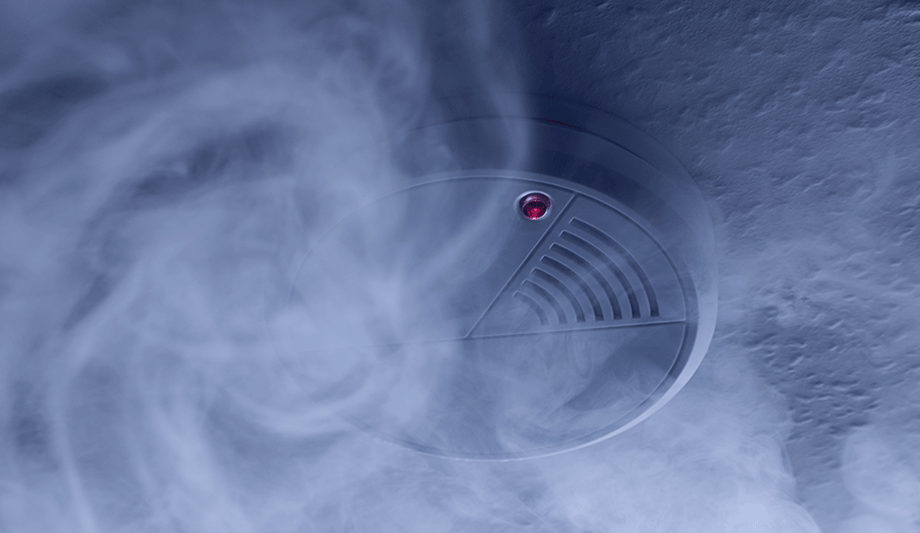

Faster 5G data speeds and low latency profoundly impact the speed of detection and response in the fire market. When seeking early detection of wildfires, for example, faster data speeds translate almost directly into a faster response.
New intelligent detection technology
New intelligent detection technology for wildfires combines artificial intelligence (AI) with Internet of Things (IoT) connectivity to achieve earlier detection of wildfires that could spread quickly in dry, windy conditions.
5G communication sends signals from high-definition cameras to specialists for analysis. In addition to cameras, sensors detecting air moisture, soil content, and temperature also help to determine fire risk.
5G
Leveraging 5G enables newer technologies to perform various functions in near real-time
5G is the 5th generation mobile network, a global wireless standard that enables networks designed to connect machines, objects, and devices.
Leveraging 5G’s speed and bandwidth and combining it with multi-access edge computing enables newer technologies to perform various functions in near real-time.
Advantages
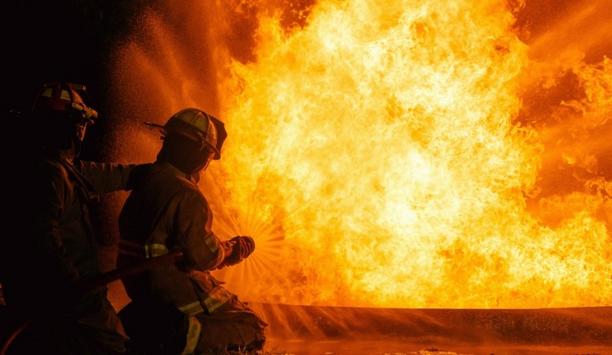
Advantages of 5G technology for firefighters include faster communication, improved situational awareness, and enhanced safety.
5G networks offer significantly faster speeds and lower latency than previous generations of wireless technology, which means firefighters can send and receive data more quickly when every second counts.
bandwidth and capacity
5G networks’ greater bandwidth and capacity enable firefighters to access more data and analytics in real time. This can help them better understand the situation on the ground and make more informed decisions.
For example, firefighters can use 5G-enabled drones to gather real-time video and thermal imaging data to identify hot spots or other hazards.
5G-enabled wearable devices
Firefighters can use 5G-enabled wearable devices to track location to help other responders locate them
Firefighters can also use 5G-enabled wearable devices to track their location and vital signs, which can help other responders locate them in an emergency.
The secure communications of 5G networks enable more reliable systems.
limitations
Obstacles to the more significant usage of 5G technology include costs, which can be significant, especially for smaller agencies with limited budgets. The higher frequency of 5G signals can also cause interference with other electronic devices, including some radios and emergency communication systems.
There are also limitations to the coverage areas; first responders in remote or rural areas may not have access to 5G coverage. Multiple players and factors are at play as the competitive landscape of 5G evolves.
FirstNet
FirstNet is a nationwide, high-speed wireless broadband network that is dedicated to public safety. It was created through a partnership between the First Responder Network Authority (FirstNet Authority) and AT&T, which holds the contract to build and operate the network.
FirstNet is the only network that is dedicated to public safety, and it has been adopted by many public safety agencies across the United States.
public safety networks
Commercial wireless carriers, such as Verizon and T-Mobile, are also building out 5G networks
In addition, commercial wireless carriers, such as Verizon and T-Mobile, are also building out 5G networks. These networks are not dedicated to public safety, but public safety agencies may use them in some cases.
Other public safety networks in the United States include the Wireless Priority Service (WPS) and the Government Emergency Telecommunications Service (GETS). These networks provide priority access to commercial wireless networks for public safety agencies.
reliable and secure communication
Furthermore, technology providers, such as Ericsson, Nokia, and Samsung, are developing 5G infrastructure and devices that can be used by public safety agencies.
In a nutshell, 5G networks offer more reliable and secure communication than previous generations of wireless technology. This can be critical during emergencies, where communication breakdowns can put firefighters at risk.