

A fire door is designed to stop fire and smoke from spreading, giving people time to escape and protecting property. It looks similar to a regular door but is built and tested as part of a complete system that includes the door leaf, frame, seals, and hardware.
People often think any heavy or solid door will work as a fire door, but that is not the case. Fire doors are tested as complete systems, and every part – from the frame and hardware to the seals and glazing – must meet the tested specification. If you change a component or cut into the door without the correct approval, it may not perform properly in a fire.
Fire gates or fire curtains
“Fire doors are not just building components; they are part of the building’s fire strategy,” says Daniel Swannack, Chief Commercial Officer, Door Product Segment at ASSA ABLOY Opening Solutions EMEIA, adding “Their job is to hold back fire and smoke long enough for people to get out safely.”
Fire doors are rated to hold back fire for a set time, such as 30, 60, or 90 minutes. In some cases, where a standard door is not practical, you might see sliding fire gates or fire curtains used to protect larger openings. Sliding doors are commonly used in car parks and industrial spaces where wide access is needed.
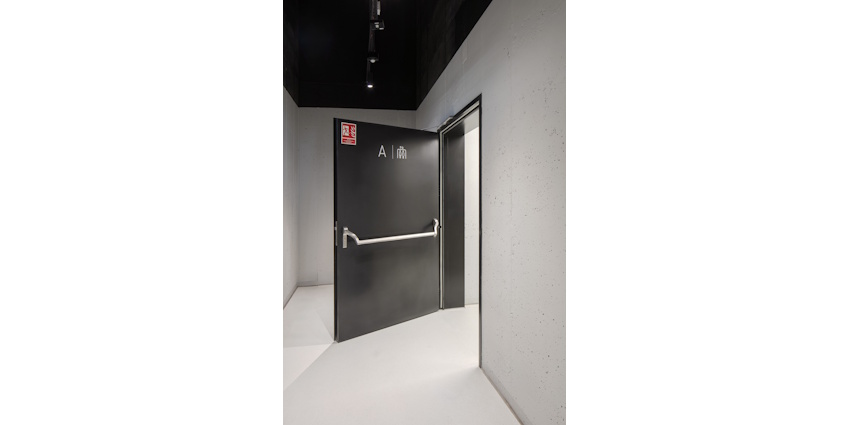 |
| Sliding doors are commonly used in car parks and industrial spaces. |
Fire curtains or sliding systems
Many fire doors operate manually, but there are also hinged fire doors that can be automated
Fire doors work by containing fire and smoke to one area, keeping escape routes clear for as long as possible. They do not need power or intervention – they simply have to be closed and in good condition.
Features such as intumescent seals, which expand with heat, and fire-rated cores help to keep fire under control.
Many fire doors operate manually, but there are also hinged fire doors that can be automated. In larger or open spaces, fire curtains or sliding systems provide the same protection by closing automatically.
EI classification for integrity and insulation
The type of building and how it is used make a big difference in choosing the right fire door. In hotels or offices, timber doors are often chosen for their appearance and acoustic qualities. In industrial sites, data centers or high-security areas, steel doors might be the better option.
Wide openings in places like warehouses, airports, or underground car parks may need sliding fire gates or curtains instead.
Local regulations also play a role: in much of Europe, fire curtains need to meet EI classification for integrity and insulation, while in the UK EW classification is often accepted, which focuses on integrity with limited heat radiation.
EI-rated curtains
Fire curtains are tested to EN 1634-1, and where smoke control is needed, to EN 12101-1 or EN 1634-3
Across Europe, fire doors are covered by EN 16034, with testing done under EN 1634-1 for fire resistance and EN 1634-3 for smoke control.
Hardware is tested separately under EN 1634-2. In the UK, BS 476 is still recognized alongside EN standards. Fire curtains are tested to EN 1634-1, and where smoke control is needed, to EN 12101-1 or EN 1634-3.
EI-rated curtains block both fire and heat transfer, while EW-rated systems, often used in the UK, focus on integrity with reduced heat radiation. Testing is always conducted on the complete system, including the door, frame, and hardware, to make sure everything performs as intended.
Third-party certification
“To maintain this performance, installation must follow the certified details exactly,” says Daniel Swannack, adding “If the door is not installed properly, it may not meet its fire rating even if all components are correct.”
Third-party certification proves that the product has been tested, audited, and produced consistently to meet safety standards. Certification is a vital reassurance for building owners, architects, and insurers that the door will do its job in any emergency.
This applies to all fire doors, whether timber or steel, and to larger solutions like fire gates and curtains. Certification also helps to smooth the approval process with building control and demonstrates compliance with legal requirements.
Fire door’s effectiveness
Fire doors and curtains can be linked to alarms so they automatically close when needed
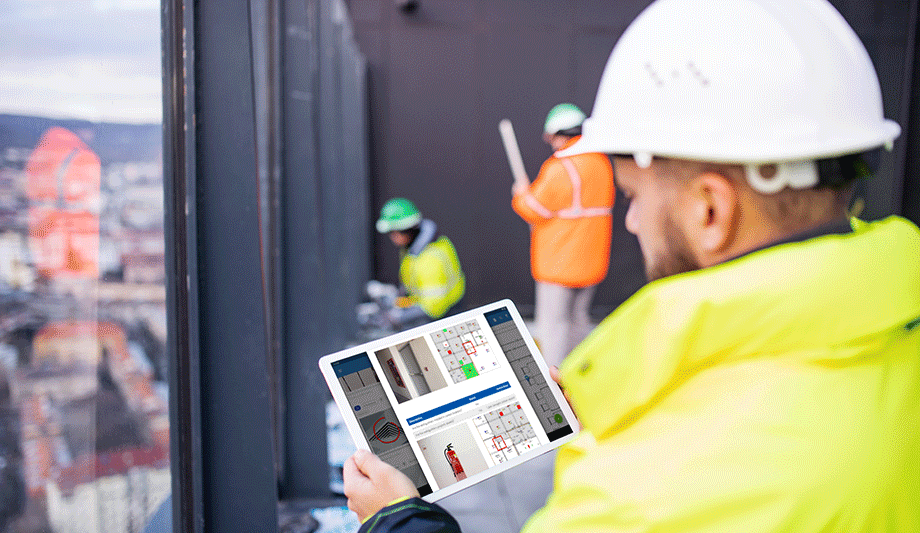
Smart building systems can contribute to a fire door’s effectiveness by keeping track of fire doors, showing if they are closed, blocked, or need maintenance.
Fire doors and curtains can be linked to alarms so they automatically close when needed, or connected with access control to ensure compartmentation is maintained.
In complex environments, such as hospitals or data centers, these systems also provide useful reporting and maintenance records, ensuring doors are always ready to perform.
Automatic systems
“Fire doors must be kept in good working order to be effective,” says Daniel Swannack, adding “This means checking the seals, hinges, closers and making sure they shut fully and are undamaged.”
Automatic systems like fire curtains, sliding doors, and automated hinged doors need their motors and controls tested, too. Many regulations call for checks every six months in busy areas. A fire door is only as good as its maintenance, and a small fault may make a big difference in an emergency.
Sustainability goals by using the Forest Stewardship Council
Timber fire doors can have custom finishes, painted surfaces, or hidden hardware
To maintain protection while achieving aesthetics, there is a lot of flexibility now when it comes to design. Timber fire doors can have custom finishes, painted surfaces, or hidden hardware, while steel doors may be color-matched or clad to fit the interior or exterior architecture.
In hotels, residential buildings, and offices, getting the right look is often just as important as performance.
“We work with architects to make sure our doors meet fire standards without compromising the overall design,” says Daniel Swannack.
Fire doors can support sustainability goals
Fire doors can support sustainability goals by using Forest Stewardship Council (FSC)-certified timber, low-volatile organic compound (VOC) coatings, and recyclable steel.
“Many of our doors also come with Environmental Product Declarations, which provide verified data on their environmental impact,” adds Daniel Swannack.
Reduce waste and replacement cycles
Durability is another factor: Long-lasting products reduce waste and replacement cycles.
“The challenge is to combine all that with reliable fire performance, and this is where proper testing and certification really matter,” Daniel Swannack says.
Choosing the right door
Whether in a school, hospital, apartment block or industrial site, choosing the right door and keeping it properly maintained is essential.
“Our role is to make that process easier by combining compliance, performance and, where needed, design flexibility,” concludes Daniel Swannack.