
The UK site of one of the world’s renowned producers of petroleum has selected Linear Heat Detection Cable (LHDC) from Patol Fire Detection Solutions (Patol) to protect its floating roof tanks. The site in the south of England is the latest in a long line of worldwide petroleum production facilities to opt for the Patol fire detection solution.
With atmospheric storage tanks used to store highly flammable products, finding an effective way to prevent what could be the catastrophic consequences of a fire is a fundamental requirement. The most common cause is worn or damaged rim seals on the floating roof of the tank. By mounting Patol’s LHDC above the rim seal, an alert is provided should any leaked vapor ignition occur. By linking this to a suppression system, an immediate response can be triggered to any fire condition.
Linear Heat Detection Cable
In this application, Patol’s 70-degree digital Linear Heat Detection Cable (LHDC) was selected by Mecsol, a Bristol-based company that undertakes work nationally, with particular experience in the hazardous area sector in the United Kingdom.
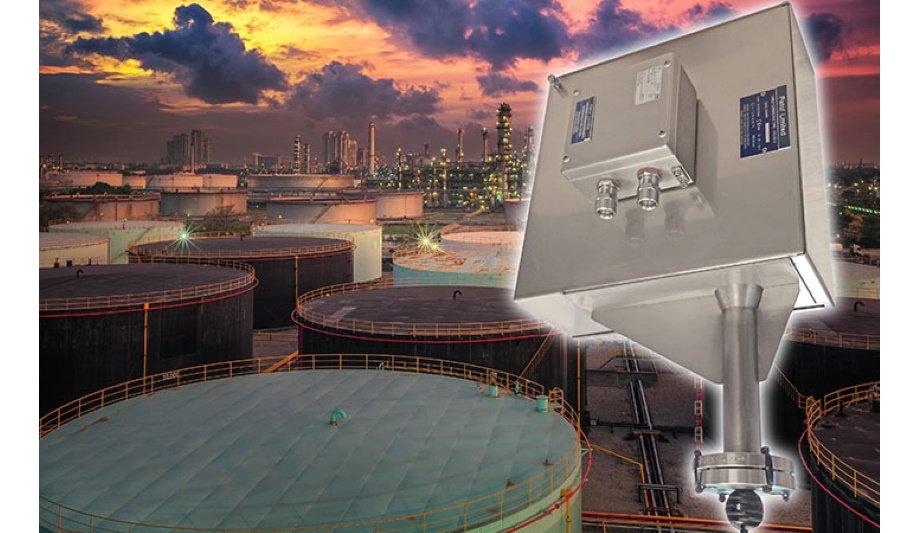
The installation included a stainless-steel braid around the two-core cable to provide further protection by creating an earth for any lightning strike or static electricity issues. To allow full movement of the floating roof, a cable reeler was installed at the top of the tank, with the cable connected to the stainless-steel junction box located on the floating roof.
Cable reeler installed at top of the tank
The Patol digital LHDC triggers an alarm for any hot spot occurring over a very small section of the overall cable length
The cable reeler automatically uncoils the cable when the petroleum level falls and winds in the cable when it rises, with the mechanism housed in a stainless-steel cabinet. The cable reeler is certified to IECEx and ATEX standards.
The Patol digital Linear Heat Detection Cable (LHDC) triggers an alarm for any hot spot occurring over a very small section of the overall cable length. While LHDC is widely used in many different applications, it is particularly suited to those with harsh environmental conditions and in hazardous areas.
Open Circuit (Fault) and Short Circuit (Fire) notification
The cable is recognized as a ‘simple apparatus’ and is connected to an intrinsically safe (IS) barrier to ensure safe operation in potentially explosive atmospheres. Ease of routine maintenance through fire and fault testing is provided via a stainless-steel switch mounted outside the tank. The LHDC is continuously monitored and provides Open Circuit (Fault) and Short Circuit (Fire) notification to a monitor located in the site’s control room.
Steve Wilder, UK & Eire Technical Sales Engineer at Patol, said “This is an excellent example of how LHDC can provide a reliable and yet cost-effective solution to preventing fires in floating roof tanks. It is already widely adopted throughout the world and, alongside Petrochem facilities, is providing protection in applications ranging from cable tunnels and escalators to road and rail tunnels, cold rooms and warehouse high rise pallet racking.”

- Fire Safety Risk Assessment
- Fire Safety Planning
- Fire Prevention
- Fire Detection
- Fire Protection
- Fire Rescue
- Fire Safety Inspection
- Fire Safety Testing
- Fire Safety Standards
- Fire Safety Policies
- Fire Safety Management
- Fire Emergency Response
- Electrical Fire Safety
- Building Fire Safety
- Industrial Fire Safety
- Active Fire Protection (AFP)
- Firefighter Health and Safety
- Explosion Protection
- Flammable Material Control