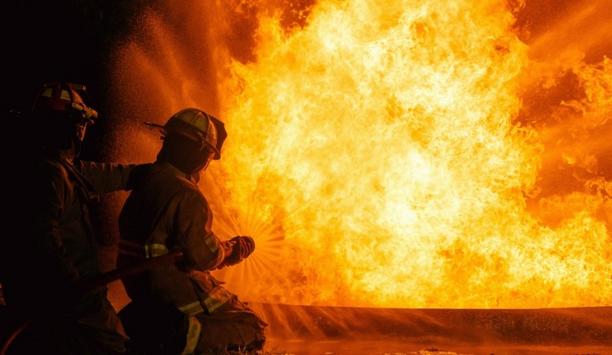

A recent fire in a recycling facility at the Gaskells waste site in Kirkdale, United Kingdom, sent waves of smoke clouding the sky over north Liverpool in the early Sunday hours. Firefighters fought the blaze for 12 hours, and nearby residents were advised to remain indoors with the windows closed. A large quantity of waste material was ablaze, and firefighters used an aerial platform to reach some sections of the fire.
The event is representative of the challenges of fires in waste and recycling plans, a significant global issue. Waste, paper and plastic products account for almost half of waste fires. Other waste facilities prone to fire include scrap metal, organics, chemicals, construction and demolition (C&D) and e-scrap.
In the United States, there were 317 fires reported at waste and recycling facilities in 2020, and the most fires were reported in California, Ohio, Texas and New York.
Contribution of lithium-ion batteries
Lithium-ion batteries in the waste stream are a factor in waste fires across the globe
One likely cause of a recent increase in waste fires is the rise in use (and disposal) of lithium-ion batteries. These rechargeable batteries are now ubiquitous in our age of portable electronics and electric vehicles. The batteries’ contents are under pressure, so any puncture creates a reaction between lithium and water in the air to generate heat and could produce a fire. There is also danger in the release of fluoride gases when the batteries ignite.
Lithium-ion batteries in the waste stream are a factor in waste fires across the globe, including Japan, Austria, Sweden, France, German, the United Kingdom, Australia, Canada and the United States.
Other Likely causes of waste fires
Other causes of waste fires include aerosols, chemicals and butane cans; hot and dry environments; recycling of chemicals and hazardous materials; sparks from equipment; and arson.
Some observers have suggested that the pandemic may have contributed to waste fires through the disposal of half-empty bottles of alcohol-based sanitizer, which are flammable.
Enabling Early detection with thermal cameras
Thermal cameras can be connected to sprinklers or automated fire doors to provide early response
As the fire in Kirkdale illustrates, extinguishing a waste fire is time-consuming and resource-intensive. However, early detection can address the risk more efficiently.
For example, thermals cameras can be used to monitor temperatures inside and outside a waste plant. The cameras can be programmed to provide an alarm when a predefined temperature is reached (as a warning), and again when a higher temperature is reached (an alarm). Smart algorithms enable these cameras to avoid false alarms triggered by, for example, sunlight or cars driving by.
The cameras can also be used for routine inspections, for instance, to identify electrical faults, over-heating equipment and other potential ignition sources. Thermal cameras can also be connected to sprinklers or automated fire doors to provide early response.
fire prevention plan
Waste site managers should devise a fire prevention plan (FPP) that can minimize the likelihood of a fire, seek to extinguish fire within four hours, and minimize the spread of fire to neighboring areas.
Fire is also used to manage and dispose of waste. As much as a billion tons of waste is burned in open and uncontrolled fires around the world each year, or almost half of the waste generated. Waste disposal fires typically burn at lower temperatures, and harmful substances such as dioxins can form when PVC plastic is burned, which can adversely affect human health.
Burning plastics in open fires releases CO2 and other greenhouse gases, and plastics that are not totally burned can pollute nearby land and water. Burning waste can have negative consequences for the urban poor and waste pickers who are more likely to be exposed to it.