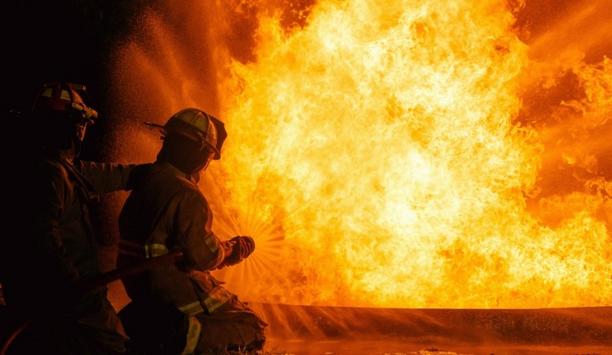

Deliberate fire-setting in Scotland has reduced by more than a third in the period heading up to Bonfire Night.
This is always the busiest time of the year for the emergency services in Scotland, which typically witnesses a spike in anti-social behavior.
deliberate fire reduction
However, Scottish Fire and Rescue Service (SFRS) figures show that since 2018, the number of deliberate fires in the three weeks before 5 November has fallen from 1,302 to 907 – a reduction of 35%.
This also includes reductions of around 40% in both Glasgow and Edinburgh, 53% across East, North, and South Ayrshire, and 25% in the Falkirk and West Lothian areas. These incidents are largely made up of outdoor incidents impacting refuse and woodland, but also involved hundreds of building and vehicle fires.
sustained prevention efforts
SFRS Head of Prevention and Protection welcomes this reduction as a clear impact of school visits
Deputy Assistant Chief Officer (DACO) - Iain Macleod, SFRS Head of Prevention and Protection, welcomes this reduction as a clear impact of sustained prevention efforts, such as school visits.
He said, “We do so much more than simply responding to fires and prevention is always a key pillar of our work. Every year at this time of year our crews are mobilized to deal with deliberately set bonfires and to help people injured by the careless use of fireworks – particularly children and young people."
Educating on the dangers of deliberate fire-setting
Iain Macleod adds, “But we always want to prevent fires, accidents, or injuries from occurring in the first place. In the build-up to the Bonfire Night period, we work tirelessly to engage directly with schools and community groups to educate our young people on the dangers of deliberate fire-setting, bonfires, and fireworks."
He continues, “We welcome any fall in this type of activity as this reduces the risk to the wider community and the impact this type of behavior can have on our firefighters.”
delivering safety presentations
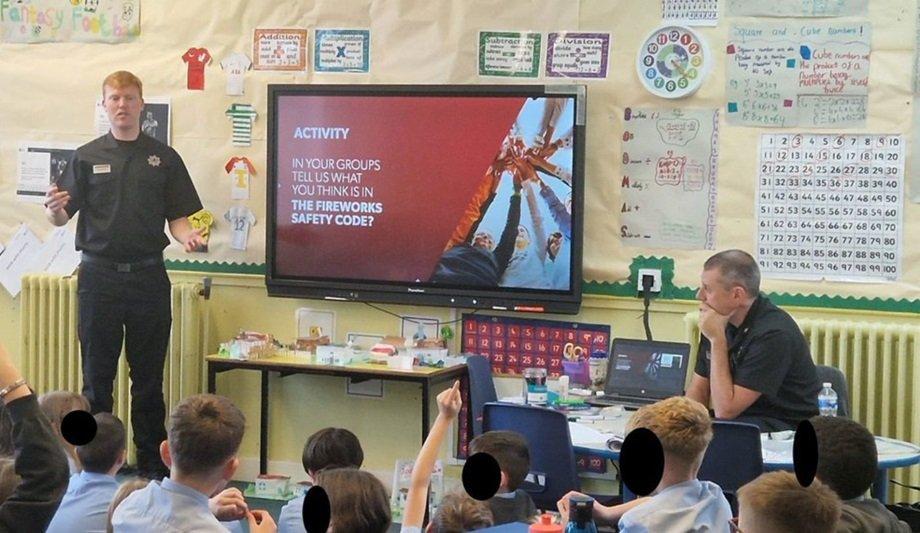
Young people are advised about how to prevent injuries and what to do in the event of an emergency
Every year, Scotland’s firefighters and community safety teams visit hundreds of primary and secondary schools to deliver safety presentations and remind pupils of the risks and dangers of bonfires and fireworks.
In 2022, SFRS visited more than 600 schools across the country and reached more than 8,000 young people between the ages of 10 and 14 – and this year is no different.
Young people are advised about how to prevent injuries and what to do in the event of an emergency, as well as useful information about the laws around using fireworks in Scotland.
Safe enjoyment
DACO Macleod has also reminded people of the risks of hosting events at home. Research by the Care of Burns in Scotland (COBIS) reports that the majority of incidents and injuries around the Bonfire Night period occur at private properties.
He said, “We want people to enjoy themselves however this must be done safely and responsibly. Our message is clear – leave fireworks to the professionals and attend an organized event where possible."
Follow fireworks Code
Iain Macleod adds, "If anyone is thinking about hosting a private event involving flame or fireworks, please ensure you are aware of the laws around the use of fireworks and always follow the Fireworks Code to keep everyone safe.”
David McGill, Lead Clinician for the Care of Burns in Scotland (COBIS) network and Consultant Plastic Surgeon at Scotland’s Burn Hub, said, “Unfortunately we see a rise in burn injuries around Bonfire Night, in both adults and children. We carry out an annual audit of firework injuries across Scotland, and last year there were 41 injuries recorded over the four weeks around Guy Fawkes night."
care around fireworks
David McGill adds, “The majority of these occurred at private properties. Injuries reported ranged from minor, such as burns to the fingers, to severe including loss of fingers and complex eye injuries with loss of vision."
He continues, “Children are frequently burned with sparklers. There's a misunderstanding of how hot they can get. They can cause severe burns to fingers and hands, or catch clothing alight. Sparklers should never be given to children under the age of five. Great care should be taken around fireworks, especially when children are near. To minimize the risks to you and your family, a publicly arranged event would be by far the safest way to view fireworks.”