
With the increased number of electric vehicles on the road today and projections for the majority of cars having lithium ion and other special batteries in the near future, first responders are faced with new challenges in handling disasters.
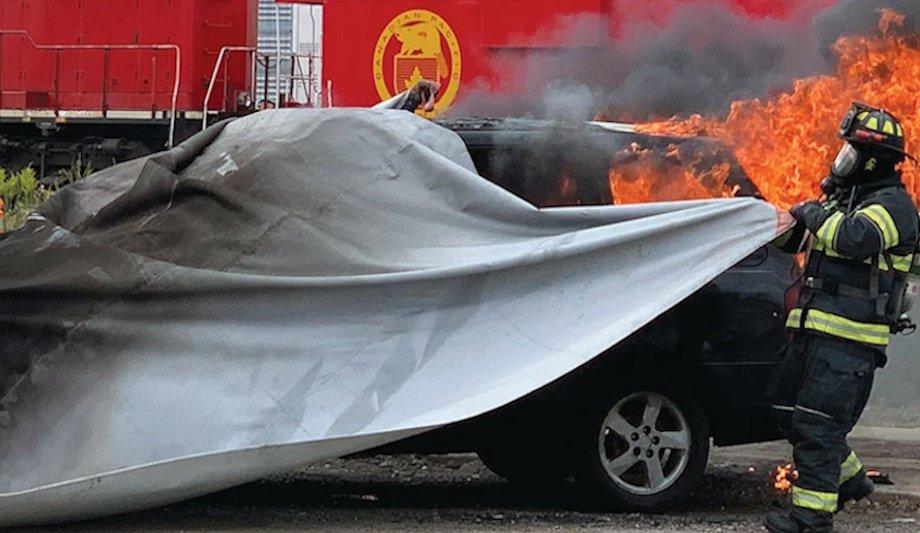
Battery fires present unique fire hazards, and while there is no emergency response guide or an accepted way to handle these fires, they are offering a way to Contain – Control – Isolate (CCI), preventing fire spread and further damage from toxic gas and smoke and the risk of electrocution.
NFPA tests and electric vehicle fires
Using the CCI method, the unit can mitigate the risks and buy time for choosing a further response strategy
The use of a fire blanket cuts off the oxygen supply, provides initial knockdown, and lowers the temperature, reducing exposure risk and further disaster.
NFPA tests conducted on three electric vehicle (EV) fires determined that between 1160 and 2639 gallons of water were needed to cool the battery properly, which is not something most first-due engines have on their apparatus.
If the department responds to an EV fire on a highway, sufficient water is not usually available to cool the fire and prevent reignition unless they have a tanker/tender responding. If they have an EV fire in a parking garage, tunnel, or other areas where exposure risks are high, and there is not enough water available, there are high risks of reignition and fire spread. By using the CCI method, the department can mitigate the risks and buy time for determining a further response strategy.
Unique fire hazard
In addition to the immediate fire dangers batteries on EVs present, vehicles involved in a crash often ignite hours or days after the crash where the battery is compromised. There are reports of batteries starting on fire on tow trucks when more oxygen is introduced and after damaged batteries are submerged in seawater for days.
The fire blanket is a great tool for departments to have on hand when dealing with an EV fire. Not only will these blankets handle EV fires, but they are also effective in controlling battery fires in warehouses and factories or encountering a unique fire hazard that a fire extinguisher may not be capable of handling.