Fire suppression systems are used to extinguish, control, or, in some cases, entirely prevent fires from spreading or occurring. They are an integral part of any fire protection infrastructure.
A fire suppression system is classified as an active fire protection system. This means it’s made up of engineered units that are built to extinguish fires through the application of a substance. These substances could be water, foam, or chemical compounds.
How does a fire suppression system work?
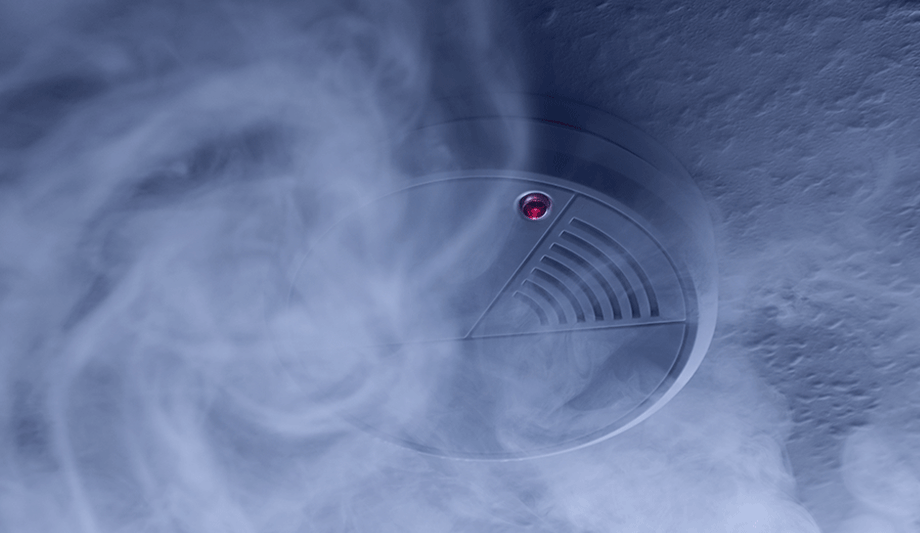
The built-in components of a fire suppression system detect fires in their early stages through things like heat and smoke. These components are attached to an alarm signal that will alert them that fire has been detected. From there, they can take steps to subdue and suppress the fire.
Most fire suppression systems will automatically release the application of an external substance to extinguish the fire after the detection and/or alert. However, some can have a manual application release.
When do they need a fire suppression system?
Fire suppression system would be most useful in buildings where a sprinkler system may not be the most effective method
Fire suppression systems are not a legal requirement in the UK. However, commercial fire risk assessments may highlight the need for a fire suppression system, which should be taken into consideration.
A fire suppression system would be most useful in buildings where a sprinkler system may not be the most effective method of fire protection. For example, in a building that houses a lot of electrical equipment.
Types of fire suppression systems
There are different types of fire suppression systems to use depending on the environment they’re going to be used in.
These include:
- Water
- Foams
- Inert gases
- Chemical powders
- Halons
Maintaining fire suppression systems
Fire suppression system have to be designed and installed correctly, it must also ensure that it remains
According to HSE, “Active fire-fighting systems need to be reliable and the design of the system should demonstrate this. The design of fire fighting systems should conform to specified standards, such as BS 5306 Code of practice for extinguishing installation and equipment and Fire Offices Committee ‘Tentative rules for medium and high velocity spray systems’.”
But not only does a fire suppression system have to be designed and installed correctly, it must also ensure that it remains in good working order and will perform as expected through regular maintenance checks.
Fire management tasks
Failure to maintain life safety equipment that did not activate could result in criminal proceedings under The Regulatory Reform (Fire Safety) Order 2005, England and Wales, or The Fire Safety (Scotland) Regulations 2006.
Fire suppression equipment should be serviced every 12 months. Aurora, the fire safety software, gives them an easy-to-understand and complete picture of all the current, completed, and pending fire management tasks. So, they can easily allocate jobs and prioritize and complete actions.