Ensuring safety is paramount when constructing new buildings, whether they serve residential or commercial purposes.
Fires can escalate quickly, making the installation of fire extinguishers a critical component for controlling situations before they turn into emergencies. This is particularly vital for high-rise structures, where evacuation can be challenging.
Fire Extinguisher Regulations
The Regulatory Reform (Fire Safety) Order 2005 outlines all fire safety protocols for non-domestic structures in the UK.
This is particularly vital for high-rise structures, where evacuation can be challenging
This comprehensive legislation applies to most commercial properties, mandating a fire safety risk assessment for each new development. A designated Responsible Person must carry out this assessment, determining fire risks and ensuring safe evacuation routes.
Role of the Responsible Person
Part of the Responsible Person's duties includes ensuring that employees are familiar with the location and usage of fire extinguishers. In addition to recognizing fire hazards, it's essential to practice evacuation routes through regular fire drills, which help address any gaps in the risk assessment.
Creating a Compliant Environment
Maintaining a safe and legally compliant environment requires thorough knowledge and training of the equipment in use.
Failure to adequately prepare staff can lead to severe consequences, potentially absolving insurance providers from covering damages. It's crucial that the types of extinguishers used match the specific risks present on the premises, with CO2 extinguishers being standard for electrical fires.
Fire Safety Laws and Extinguisher Types
UK regulations require commercial buildings to have at least 2kg CO2 extinguishers to combat electrical fires, which include items like computers and kitchen appliances.
For Class A fires, involving materials such as paper and wood, water or foam-based extinguishers are typically used, albeit these should never be deployed on electrical fires. Awareness of which extinguisher to use in various scenarios is critical for safety.
Location and Installation of Extinguishers
As part of the fire risk evaluation, extents of high fire risk should not be far from an extinguisher
The strategic placement of fire extinguishers is essential. As part of the fire risk evaluation, extents of high fire risk should not be far from an extinguisher.
Commonly, extinguishers are installed near exits and fire alarm points, and larger buildings may require additional units to maintain accessibility. The British Standards BS5306 specify that a person should always be within 30 meters of an extinguisher.
The Importance of Professional Installation
Proper installation involves securing extinguishers to stands or mounting them on walls to avoid unnecessary relocation. Engaging a professional specialist ensures that installations remain compliant with current safety regulations, safeguarding building occupants effectively.
Comprehensive Fire Safety Maintenance
While installing extinguishers is a starting point, full fire safety also involves regular service and maintenance of equipment. Companies like Total Fire Group offer tailored service packages to ensure extinguishers are operable when needed, as well as conducting risk assessments and fire safety training.
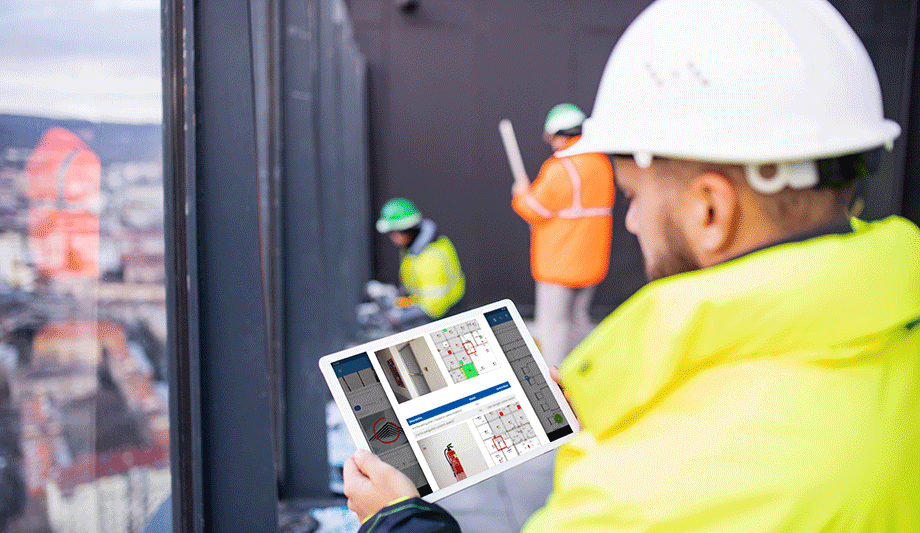
Utilizing Fire Risk Assessment Software
For businesses managing multiple sites, Total Fire Group provides an advanced fire risk assessment software to monitor and streamline safety protocols across locations, simplifying the task of maintaining a safe work environment.
The most important thing to consider with a new build, whether its purpose is apartments or offices, is safety.
Things can go wrong quickly, so preparation and prevention are key. In case of a fire, fire extinguisher installation is crucial for defusing a situation before it becomes an emergency.
Especially when many new builds are tower blocks, the risk of being unable to evacuate safely becomes greater.
Fire extinguisher regulations
The Regulation Reform (fire safety) Order 2005 covers all fire safety legislation for non-domestic buildings
The Regulation Reform (fire safety) Order 2005 covers all fire safety legislation for non-domestic buildings.
All regulations that govern the use of fire extinguishers are covered in the Order and practically all commercial buildings fall under these regulations.
Every new build is required to have a fire safety risk assessment. The Regulatory Reform Order places responsibility on a named Responsible Person who will carry out a risk assessment, identifying any possible risks and ensuring that people on the premises can evacuate safely.
Responsible Person
Fire drills are the best way to ensure that everyone knows evacuation routes
An assessment will also help determine areas that are at a higher risk of fire, therefore, require a fire extinguisher close by.
The Responsible Person needs to make sure that everyone working at the premises knows where the fire extinguishers are and how to use them. In terms of general fire safety, it’s also incredibly important that everyone knows the safest way to evacuate a building.
Fire drills are the best way to ensure that everyone knows evacuation routes and to identify anything in the fire risk assessment that’s been missed.
Compliant environment
The proper steps need to be taken to ensure a safe and compliant environment. If workers aren’t properly trained in the equipment and knowledge needed in the event of a fire, this could result in serious injuries or even death.
In this case, most insurance companies won’t pay for any damages on grounds of negligence.
The type of equipment one has on their premises will determine what types of extinguishers they need. The most common being the CO2 extinguisher, used to put out electrical fires.
Fire safety laws
All commercial buildings with electrical equipment must have at least 2kg CO2 extinguishers
According to fire extinguisher regulations in the UK, all commercial buildings with electrical equipment must have at least 2kg CO2 extinguishers to be compliant with fire safety laws. That’s anything electrical, even a toaster or a computer.
A water (or Foam/AFFF) based fire extinguisher is the most commonly used. They’re the ‘original’ fire extinguisher, and important to have around in most commercial buildings. They’re used on flammable solids such as paper, wood, and textiles – these are known as Class A fires.
They are not, however, to be used on electrical fires whatsoever. It’s imperative that the Responsible Person and workers at the premises are aware what fire extinguishers are to be used depending on the type of fire.
Fire extinguishers locations
Water based and CO2 extinguishers are considered to be the ‘standard pair’
Water based and CO2 extinguishers are considered to be the ‘standard pair’. A fire risk assessment will determine where the highest risks of fire are, from which a fire extinguisher should never be far away. They’re also typically located near fire exits and fire alarm call-points.
Larger buildings might have to increase the number of fire extinguishers they provide but they should always follow the 30 meter rule.
UK British Standards (BS5306) state that users should never be more than 30 meters away from a fire extinguisher on any given level of the premises.
Fire extinguisher installation
They should also be attached to a stand or fixed to a wall to ensure people don’t move them unnecessarily. Of course, to have complete peace of mind that one is remaining compliant, a professional fire safety specialist is needed.
Fire extinguisher installation is extremely serious, and it’s important to remain compliant. Not only to abide by the law, but to keep employers and other people in the building as safe as possible.
Total Fire Installations
Installing fire extinguishers is just the beginning to maintaining a fire safe and compliant new build
Installing fire extinguishers is just the beginning to maintaining a fire safe and compliant new build. Ensuring users have fully serviced fire equipment is a vital part of the fire protection duties, part of that is choosing the right company to carry out the fire equipment service and maintenance.
Total Fire Group can provide a service and maintenance package tailored to users’ needs, ensuring they are fully compliant and the fire extinguishers are ready and in full working order – whenever they might need them.
As fire safety consultancy specialists, they work with a range of commercial businesses, ensuring their fire extinguishers are serviced and maintained, as well as carrying out fire risk assessments and training.
Fire risk assessment software
Total Fire Group also has their own fire risk assessment software to streamline the fire safety protocols.
If users have multiple businesses, or multiple business sites, carrying out numerous fire risk assessments can be a lot of work. The revolutionary software helps users keep track of those sites and the actions within them, all in one place.