For hotels, ensuring fire safety is paramount due to the presence of numerous guests and staff, as well as potential fire hazards.
Developing a comprehensive fire strategy tailored specifically to a hotel’s unique design, occupancy, and usage is essential to minimize fire risks and ensure safety. This strategy serves as a detailed document examining all facets of fire safety within the building.
Developing a Hotel Fire Strategy
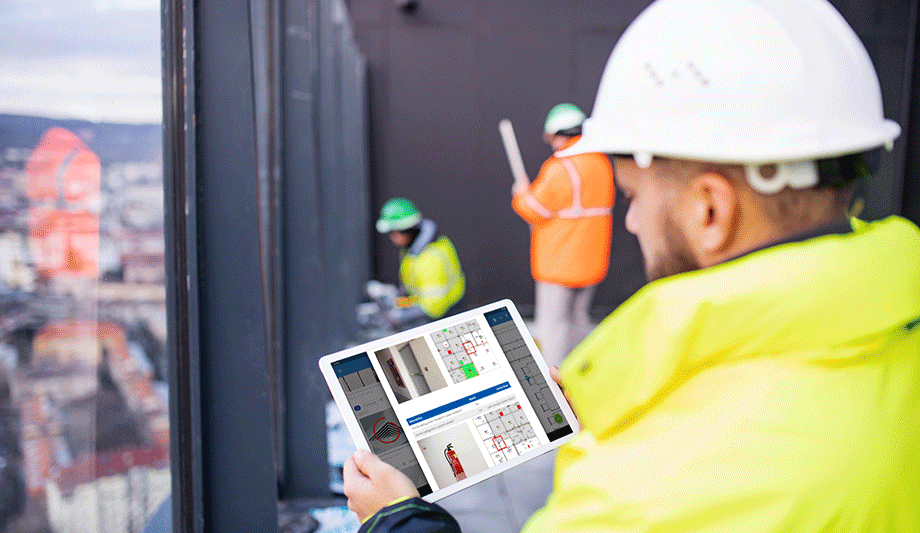
Any effective fire strategy begins with a thorough fire risk assessment. This involves identifying potential fire hazards within the hotel and categorizing them as high, moderate, or low-risk.
For example, hotel kitchens are typically classified as high-risk due to open flames and cooking equipment. It’s also crucial to account for vulnerable individuals, such as wheelchair users. Once hazards are identified, plans must be established to eliminate, reduce, or protect people from these risks.
Implementing Fire Detection and Warning Systems
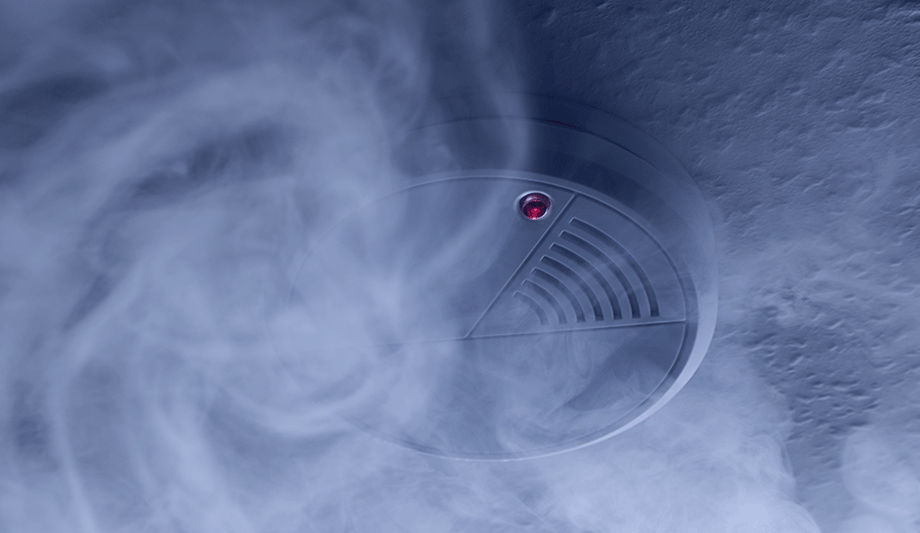
Since preventing fires completely is not always feasible, hotels should install effective detection and warning systems. These should include smoke detectors and alarms strategically placed in guest rooms, staff areas, and common spaces such as corridors to alert individuals in case of a fire.
Ensuring Clear Escape Routes and Fire Doors
Each floor of the hotel should be equipped with a sufficient number of fire doors, clearly marked escape routes, and exits leading safely outside the building. Proper signage is necessary to guide guests and staff during an evacuation.
Maintaining Emergency Lighting
In the event of an electrical failure during a fire, emergency lights must illuminate routes, signs, and exits. This measure is particularly crucial at night or in areas with limited natural light.
Designating a Safety Meeting Point
Hotels must designate a secure meeting point to accommodate all staff and guests during an evacuation. Larger hotels may require multiple meeting areas, whereas smaller ones might only need separate locations for guests and staff.
Equipping with Firefighting Tools
Owners should ensure that water fire extinguishers (red) are available every 200m² of floor space
Owners should ensure that water fire extinguishers (red) are available every 200m² of floor space.
Specific risks like cooking oil fires in kitchens necessitate wet chemical extinguishers (yellow), while carbon dioxide (black) or powder (blue) extinguishers are suitable for electrical or gas fires. Additional tools such as fire blankets should be placed near fire-prone areas like kitchens.
Training Staff and Assigning Competent Personnel
Hotel staff must receive training on fire safety, including how to raise alarms, fight fires, and evacuate. Refresher courses are required routinely, especially after hiring new staff or updating fire safety plans. Appointing Fire Safety Officers as 'Competent Persons' with designated responsibilities is also recommended.
Consultancy Services for Tailored Fire Strategies
Given the unique nature of each hotel, a completely customized fire strategy is vital. Total Fire Group offers consultancy services to assist hotel owners in devising and revising their fire strategies according to the specific demands of their facilities.
With hundreds of staff and guests (some who may only be within the property for a short period of time), and dozens of potential fire risks, fire safety is an extremely high priority for hotels.
That’s why it’s vital as a hotel owner that one has a comprehensive fire strategy in place.
A fire strategy is a complex document specifically tailored to a building, reviewing all aspects of the building’s fire safety. Because every building is unique in terms of design, occupancy and usage, the hotel needs a unique fire strategy to reduce the risk of a fire and ensure the safety of the people in the building.
Hotel fire strategy
Fire risk assessment
Any fire strategy should begin with a comprehensive risk assessment. A fire risk assessment for hotels should identify fire hazards and rate them in terms of high, moderate and low-risk.
For example, a hotel kitchen would be considered a high-risk area due to open flames and the equipment used in there. A fire risk assessment for hotels should also take into consideration any at-risk individuals (both guests and staff) within the building such as wheelchair users.
For each risk an owner identifies, a plan should be put in place to eliminate (if possible), reduce, and protect people from that risk.
Fire detection & warning system
Realistically it’s not always going to be possible to prevent a fire, so it’s vital people have an adequate detection and warning system in case there is a fire in their hotel.
This should include things like smoke detectors and alarms, which should be in both rooms, staff areas and common places such as hallways.
Escape routes & fire doors
Every floor within the hotel needs to have an appropriate number of fire doors, with clearly marked escape routes from all points in case of evacuation. Fire exits in the hotel need to lead to safe areas outside of the building, and guests and staff should be aided by clear signage.
Emergency lighting
If a fire causes the electrics in the hotel to fail, owners will need to ensure emergency routes, signs, and exits are clearly marked with emergency lights. This is especially important if a fire breaks out in the middle of the night and visibility is poor, or one has very little natural light coming into the building generally.
Safety meeting point
In case of a fire and subsequent evacuation, owners need to have a designated meeting point that is safe and secure and accommodate all staff and guests. Depending on the size of the hotel and the number of guests, people may need multiple meeting points. For a small hotel, it may be sufficient to have just two: one for guests and one for staff.
Firefighting equipment
For every 200m² of floor space, owners should provide a water (red) fire extinguisher. And additional firefighting equipment should be supplied at other relevant points. For example, if cooking oil (Class F) fires are a risk in the kitchen, users should install wet chemical (yellow) fire extinguishers.
Carbon dioxide (black) or powder (blue) fire extinguishers should be provided where there is a risk of electric or gas fire. Users might also consider additional equipment, such as fire blankets close to fire hazards, for example, in a kitchen.
Staff training & competent persons
All staff should be trained in fire safety procedures, including how to raise an alarm
All staff should be trained in fire safety procedures, including how to raise an alarm, how to fight fires, and how to evacuate the building.
And this training needs to be repeated frequently, especially when owners hire new staff or make alterations to their building and fire safety plan.
Refresher training should also be provided if the hotel fire risk assessment flags anything specific or new. A ‘Competent Persons or Persons’ should be appointed as Fire Safety Officers with specific responsibilities.
Consultancy service
The above is not a complete list of every single thing owners will need in their fire strategy, and because every hotel is different, the plan needs to be completely bespoke to each one, and their building and its occupants.
Total Fire Group’s fire safety consultancy service can help the business put together a comprehensive fire strategy unique to the demands of the hotel. They can also help buyers review and update their fire strategy during the fire risk assessment for hotels.