Nanotechnology, manufactured at scale and low cost while posing minimal health risks, may point to a future with fewer fires that are less lethal and less damaging.
The U.S. Fire Administration reported over 1.3 million structure fires in 2017 causing an estimated 3,400 deaths, 14,670 injuries, and 23 billion dollars in damages. The high cost of current fire problems in lives and property leads some researchers to look for innovative fire protection solutions.
Nanotechnology
One such solution is nanotechnology. It is used to make building and product materials more robust, lighter, and at the same time, more fire-resistant. What is nanotechnology?
How is nanotechnology used?
Nanotechnology is used in:
- Starch-based coatings are applied to textiles and furniture to increase fire resistance.
- Brick, mortar, and other clay products lower thermal conductivity and increase gas barrier properties.
- Nanofiber mats. These mats, used in place of building insulation and some foams, attract thermal energy from flames and absorb it while self-extinguishing the fire. This limits fire spread and damage. Compartmentalization of fires is an important benefit of nanotechnology, allowing occupants more time to escape.
- Hydrogels for fire-resistant blankets and clothing absorb heat and prevent thermal burns.
- Polyetherimide nanocomposite foams enhance thermal protection for appliances. These foams can be combined with nanoclays, which won't release toxic gases when exposed to flame.
How can nanotechnology be used in the future for fire safety?
Many potential benefits can be gained by leveraging nanotechnology for fire safety. They include:
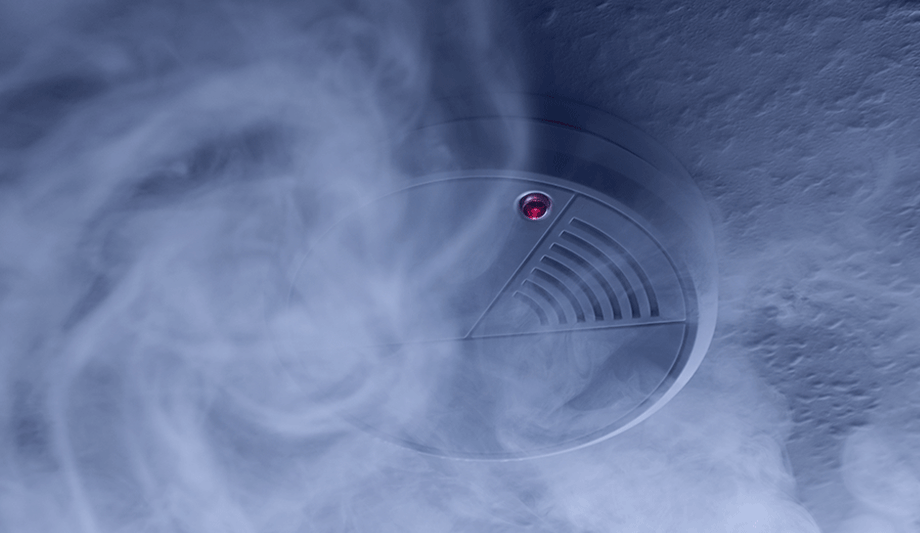
- Smoke alarms that can detect particles at the very start of a fire.
- Fire-resistant nanocoatings that increase material strength and durability to better withstand high thermal energy.
- Fire suppression systems use various chemical mixtures broken down to particle size to better extinguish the fire.
- Fire-resistant nanocoatings on fuel lines and engine components to prevent vehicle fires.
Where is future research needed?
Three areas are delaying the widespread use of nanotechnology.
- Health concerns
Cancer and silicosis are known to be a concern with nanotechnologies. We know that harmful exposure is possible through inhalation, skin contact, or ingestion.
But there's still a great deal that we don't know about the full scope of risks to the fire service and the public and precisely under what conditions.
- Reliability of nanocoatings
Nanoparticles tend to form bubbles when they start to char. When those bubbles burst, the nanoparticles are propelled outward and protection is reduced. Finding a cost-effective way to mitigate this problem needs to be found.
- Cost
Production on a wide scale is expensive and most corporations choose to invest in the cheaper option of suppression systems and detectors.