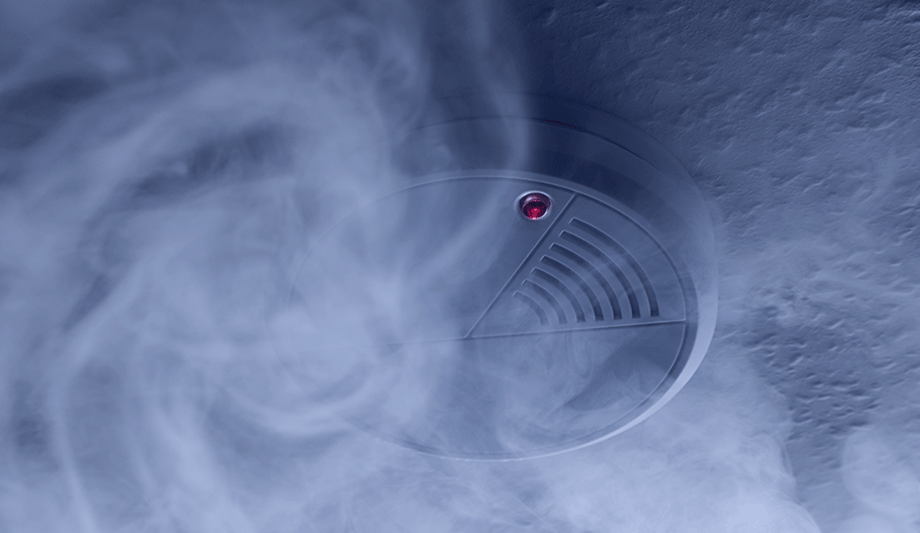

Battery-powered and even wired-in technology are not infallible – even for smoke detectors. Batteries die, parts wear out, and dust may clog the system, preventing the smoke alarm from detecting smoke or fire during an emergency.
Because smoke alarms are the first defense against fire, they should be primed to alert users at the first whiff of smoke. A properly working smoke detector reduces the risk of death by half and may even help users save their business.
Tips for Maintaining Smoke Detectors Based on Type
The two primary methods for smoke alarm maintenance are testing and cleaning:
Why do users need to test smoke detectors?
The alarm should be tested at least once a month to ensure everything is in working order
Regardless of the type of smoke alarm users have, it should be tested at least once a month to ensure everything is in working order.
This will give users peace of mind that the smoke detector will work when user need it most.
Why do users need to clean smoke detectors?
Remaining stationary, smoke alarms collect dust and pollutants. These can clog the system and prevent the alarm from working as it should.
That’s why it’s important to clean the smoke detector monthly by dusting it with a dry cloth. Yearly, users can also remove the external casing and dust from the interior.
Alarm Powered By Batteries
- Test the alarm at least once a month.
- Clean the alarm monthly.
- Replace the batteries at least once yearly (or when the user hears low battery warning chirps).
- Replace the entire smoke alarm system once every ten years.
Alarm Powered By 10-Year Sealed Battery
- Test the alarm at least once a month.
- Clean the alarm monthly.
- Replace the entire system once every ten years (or when the user hears end-of-life warning chirps).
Hardwired Alarm
- Test the alarm at least once a month.
- Clean the alarm monthly.
- Replace the backup battery (for power outages) at least once a year.
- Replace the entire hardwired alarm system every ten years.
Additional Smoke Alarm Features to Consider
While basic smoke detectors will safeguard the business, users can go above and beyond to protect employees and buildings by investing in interconnected smoke detectors, a carbon monoxide display, and a hush button.
- Benefits of Interconnected Smoke Detectors
Interconnected smoke detectors are all connected, so when one goes off, they all go off
Interconnected smoke detectors are all connected, so when one goes off, they all go off. It’s important to have smoke alarms on every floor and connect them.
This ensures that if a fire starts on one floor, the interconnected smoke alarms will alert the whole building of the emergency.
- Consider Adding a Carbon Monoxide Display
Modern smoke detectors have a digital display that includes carbon monoxide levels.
Because carbon monoxide is a colorless, odorless gas that kills 400 people and hospitalizes 4000 a year, having a system in place to detect it may save lives in the building.
- Buy an Alarm with a Hush Button
Because smoke alarms can be sensitive to smoke – even smoke that isn’t leading to a fire – many people are tempted to remove the batteries temporarily to stop the chirping noise.
This leaves the home or building vulnerable in the event of a real fire if someone forgets to replace the batteries. That’s why many smoke detectors now come with a hush button which allows users to turn off the noise if there is no fire in the building.
Call Safe-T Fire for Annual Smoke Alarm Maintenance
With 35 years of industry experience, Safe-T Fire Protection offers the best smoke detector maintenance and inspection for businesses of all types.
If users need smoke detectors installed at the business, the team is well-trained in providing safe smoke detector installation. Safe-T Fire Protection also offers smoke detector maintenance, ensuring the smoke alarms are ready to work reliably when needed.