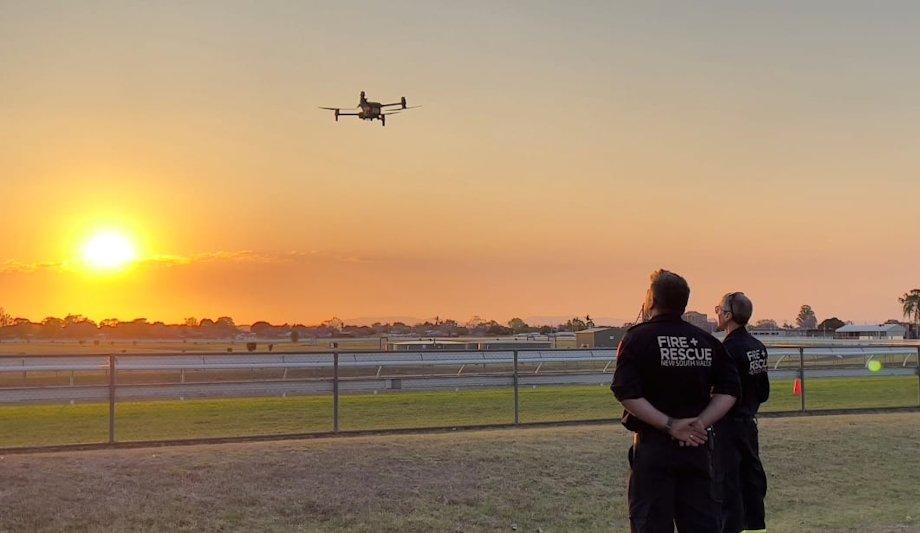
The Fire and Rescue NSW crew in Grafton is lauding the introduction of drone technology as a transformative asset for firefighting operations in the area. This development marks nearly two years since the Grafton Fire Station obtained its Remotely Piloted Aircraft System (RPAS) license in February 2021. Captain Garry Reardon has hailed the technology as revolutionary for enhancing firefighting capabilities.
Providing Aerial Intelligence
Captain Reardon emphasized the drone's versatile applications, stating, “The RPAS is deployable in so many different situations, from assessing hazardous materials (HAZMAT) incidents to searches for missing people, from providing aerial intelligence about bushfires to dropping incendiary devices into the bush to safely ignite hazard reduction burns.” He further explained the drone’s extensive uses, including tracking large debris carried by floodwaters into cane fields. With recent upgrades to the DJI Matrice 30, he compared the drone's capabilities to having “a helicopter in your pocket.”
Reardon also noted the extensive training undergone by drone pilots, who complete a week's course to earn a Civil Aviation Safety Authority (CASA) qualification, allowing them to operate both day and night.
Drone’s Infrared Camera
The drone’s infrared camera is particularly vital, as Captain Reardon explained, in locating people lost in rugged terrains or animals in danger. “We know of operations elsewhere in which a person’s been missing for 24 hours…they get a drone involved, with its infra-red tech, and typically the person’s found in 15 to 20 minutes," he stated. The technology is especially valuable in the timber country and national parks where Grafton is located, areas often frequented by campers and hikers.
Eyes in the Sky
“We live in an age of information and now use these FRNSW drones to act as our eyes in the sky, providing real-time intelligence to firefighters making vital decisions on the ground. It’s brought us an enormous boost to our operational capability, that’s for sure,” concluded Captain Reardon.
FRNSW has implemented RPAS units across more than two dozen strategic locations throughout New South Wales, enhancing the regional firefighting capabilities significantly.
Grafton’s Fire and Rescue NSW crew is singing the praises of its recent, new drone capability, declaring it a ‘game-changer’ for local firefighting.
The Grafton Fire Station first received its drone or Remotely Piloted Aircraft System (RPAS) licence in February 2021. Almost two years on and Captain, Garry Reardon, describes it as revolutionary for firefighting.
Providing aerial intelligence
“The RPAS is deployable in so many different situations, from assessing hazardous materials (HAZMAT) incidents to searches for missing people, from providing aerial intelligence about bushfires to dropping incendiary devices into the bush to safely ignite hazard reduction burns,” said Captain Reardon.
He adds, “The drone does it all. We even used our drones to track large debris like caravans and water tanks swept into local cane fields by floodwaters last year. We’ve recently upgraded to the DJI Matrice 30, it’s like having a helicopter in your pocket.”
Garry Reardon continues, “Our firefighter pilots are highly trained, conducting a week’s training to get a Civil Aviation Safety Authority (CASA) qualification, and we’re licensed to fly during the day and night.”
Drone’s infra-red camera
Captain Reardon says the drone’s infrared camera can highlight people lost in the bush
Captain Reardon says the drone’s infrared camera can highlight people lost in the bush or animals caught in the line of fire.
Garry Reardon stated, “We know of operations elsewhere in which a person’s been missing for 24 hours…they get a drone involved, with its infra-red tech, and typically the person’s found in 15 to 20 minutes.”
He adds, “This is timber country and there’s lots of rugged bush and a lot of national parks where people come and camp and go bushwalking…in the event somebody does get lost and they’re reported missing, we can be called on to assist.”
Eyes in the sky
“We live in an age of information and we now use these FRNSW drones to act as our eyes in the sky, providing real-time intelligence to firefighters making vital decisions on the ground. It’s brought us an enormous boost to our operational capability, that’s for sure,” concluded Captain Reardon.
FRNSW has deployed RPAS units at more than two dozen strategic, regional areas across New South Wales.