
The vital role that infra-red transit heat sensors can play in protecting waste management sites from the threat of fire has been illustrated by an incident at a dry mixed recycling (DMR) plant. The nature of waste recycling means that the range of materials being processed is varied. In this case a 18v lithium ion battery was shredded, with the resulting damage causing the battery to arc.
With no protection fitted to the shredder outfeed, the battery was carried into a dosing bunker where it continued to spark. This ignited some of the flammable materials within the bunker, resulting in a series of small smoldering fires. Thankfully fire protection measures had been installed by Blazequel, a company specializing in fire protection through its UK head office in Bedford and a satellite office in Londonderry, Northern Ireland.
infra-red transit heat sensor
Amongst the industry sectors in which Blazequel operates is recycling and waste management, with the company having a wide-ranging knowledge and experience in the particular fire safety challenges of such environments. For this site, Blazequel had recommended and installed an infra-red transit heat sensor from industrial fire protection specialist Patol.
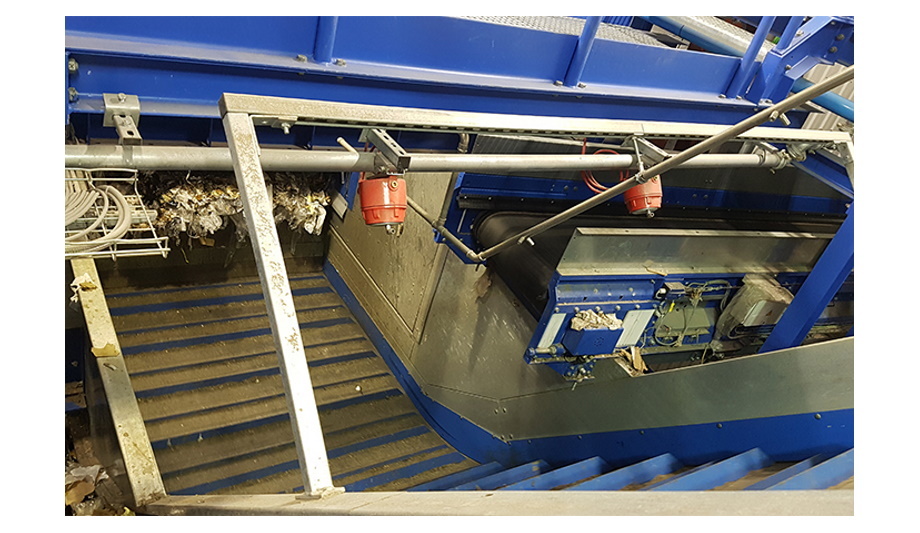
This proved to be an insightful choice since, as there were no flames in the dosing bunker, the flame detectors and water deluge protection system in the bunker did not activate as the heat generated by the sparking of the battery and the smoldering nature of the fires it generated had insufficient energy. However, on the dosing bunker outfeed, where an incline conveyor carries materials away from the bunker, the infra-red transit heat sensor was installed to provide additional detection.
connected water deluge system
If the Infra-Red Heat Detectors had not been in place, the battery would pass into ballistic separator"
As soon as the battery passed onto the conveyor, the risk was detected and the connected water deluge system activated to extinguish the fires. Keith Picton, Marketing Manager of Blazequel comments – “this decision to provide what is effectively ember/spark detection was the difference between this being a minor incident that was automatically dealt with effectively and what could easily have turned into a major fire."
"If the Infra-Red Heat Detectors had not been in place, the battery would have passed into the ballistic separator, and then subsequent separators, with the potential to result in a serious fire in one of the final storage bunkers when it came into contact with the material stockpile.”
positive air pressure
Steve Wilder is a Project Engineer with Patol and adds – “Waste management process lines are particularly high risk when it comes to fire. Over a period of just 3 years, an average of more than 300 fires a year were recorded in UK waste and recycling plants and that is a conservative estimate as many smaller incidents go unreported. As these plants are dirty and dusty environments, our infra-red transit heat sensors feature air purging from either a compressor or a blower. This maintains a positive air pressure across the sensor window to prevent dust settling and impairing performance.”