
To help first responders handle the potential challenges aligned with energy storage systems (ESS) and solar energy, the National Fire Protection Association (NFPA) has updated its first-of-its-kind ESS safety training for the fire service with new technology insights, relevant research, and expanded solar considerations.
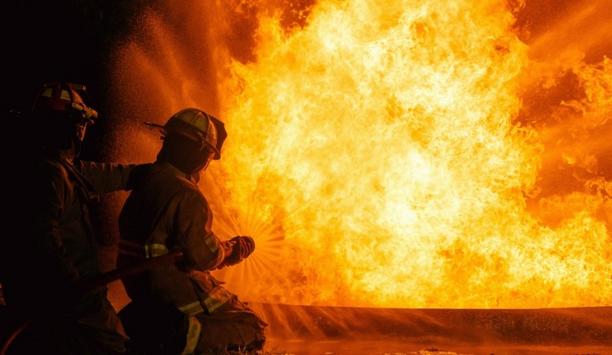
The surging popularity of ESS and photovoltaic systems (PV) in both commercial and residential settings underscores the need for clear, current fire protection and suppression guidance for first responders. While alternative energy systems offer significant environmental and economic benefits, they can also pose potential harm to people and property, especially first responders who may encounter HAZMAT issues, thermal runaway concerns, battery explosion and re-ignition, and off-gassing.
Emergency response considerations
NFPA's self-paced online Energy Storage and Solar Systems Safety Training, Fire Service Edition was underwritten by the Federal Emergency Management Agency (FEMA) initially in 2015 and again recently.
The enhanced 3-hour module uses engaging videos, animations, simulations, and review exercises
The enhanced 3-hour module uses engaging videos, animations, simulations, and review exercises to inform firefighters about basic electrical theory, types of PV installations, battery chemistries, and response strategies. Fire leaders and training personnel are encouraged to educate themselves and others within their purview on ESS failure modes, pre-incident planning, shutdown, ventilation, and other emergency response considerations. Upon successful completion of the training, students will receive a certificate.
Technology outpace safety
“By all accounts, alternative energy use in the United States will continue to grow with states including Massachusetts, Texas, Oregon, Colorado, and Hawaii mandating widespread energy storage system deployment. We can’t let technology outpace safety,” says NFPA President and CEO Jim Pauley. “It is critical that fire officers, trainers, firefighters, and AHJs are well-versed on ESS and solar emergency preparedness and response - for their own safety and the safety of others.”
In addition to responder training, NFPA has been developing a new standard to establish criteria to minimize hazards associated with ESS. NFPA 855, Standard for the Installation of Stationary Energy Storage Systems, will be published in 2019. It will work in concert with the new National Electrical Code Article 706.