Fire and Rescue NSW (FRNSW) firefighters, battling a blaze in a grain silo at Leeton in the state’s Riverina last week, have discovered a new use for their Remotely Piloted Aircraft Systems (RPAS), or drones, that is expected to significantly reduce the length of emergency operations.
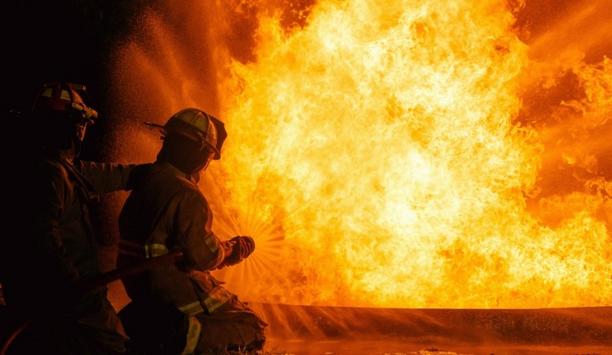
The smoldering, slow-burning fire broke out in a silo containing 600 tonnes of field peas, within a local business last Friday (24 November). Low levels of smoke were issuing from the top of the silo.
Ground-level inspection panels
Silo fires have the potential to burn for days and pose a risk of explosion and collapse
Silo fires have the potential to burn for days and pose a risk of explosion and collapse. Firefighters from the Leeton Fire Station hatched a plan to relieve pressure from the silo by using ground-level inspection panels to drain the grain into adjacent augers.
As they covered the silo with protective hose lines, the crews dispatched an RPAS or drone to peer through the silo’s roof hatch and determined there was minimal pressure present.
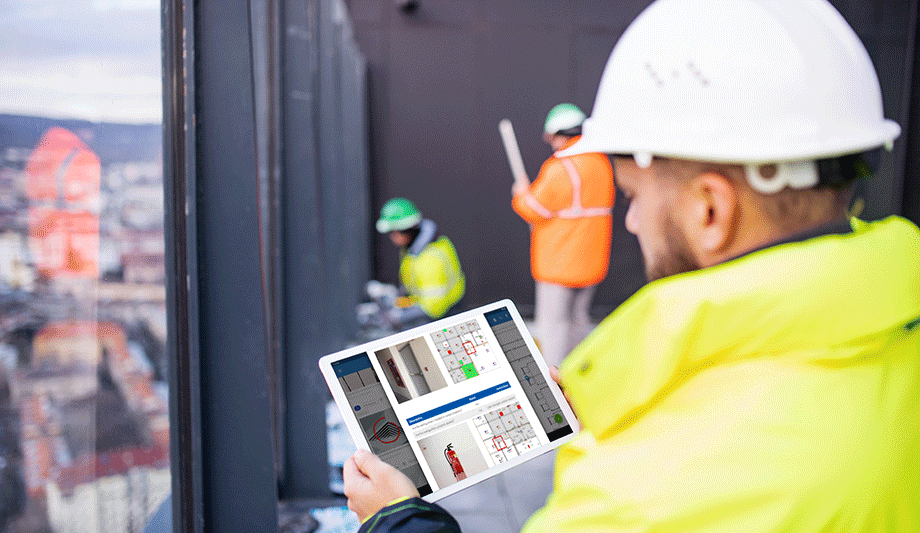
RPAS’s thermal-imaging camera
The crews quickly discovered over several flights that the RPAS’s thermal-imaging camera was detecting a lowering heat signature from the silo, indicating the fire level was dropping and the silo was cooling as the grain was released.
The camera images provided the firefighters with unexpected real-time intelligence about the state of the blaze, signatures not picked up by their handheld thermal devices.
Accurate temperature readings
The data also gave the first responders accurate temperature readings and an about level of grain
The data also gave the first responders accurate temperature readings and an approximate level of grain left in the silo.
FRNSW Duty Commander, Matthew Hunter, says the discovery has terrific potential to speed up the emergency response to future silo fires.
Footage from the RPAS
“When boxed up in a silo, these fires generate a lot of heat, but they’re starved of oxygen,” Inspector Hunter said. “As soon as you introduce oxygen to the silos, they can actually explode,” he explained.
“We were reviewing and comparing the footage from the RPAS when we noticed there were a number of rings on the side of the silo and could see the heat signatures, captured on the video, dropping."
Newfound capability with firefighting colleagues
Leeton crew is preparing to share this newfound capability with their firefighting colleagues
Hunter added: “We realized that was the actual grain level and it gave us a really good indicator of how fast the grain was draining, so we could manage the flow without causing the silo to collapse."
“It was picking up the sinking temperature inside the steel structure." The Leeton crew is preparing to share this newfound capability with their firefighting colleagues across the nation.
FRNSW’s RPAS fleet
“The technology gives us greater situational awareness,” Inspector Hunter said, “In this case, it turned an incident that could have lasted days into a one-day response."
FRNSW’s RPAS fleet is also used for fire and disaster intelligence, damage assessments, searches for missing people, hazard reduction burns, fire zone measurement and was even utilized to scan for large debris, swept into cane fields after last year’s northern rivers floods.