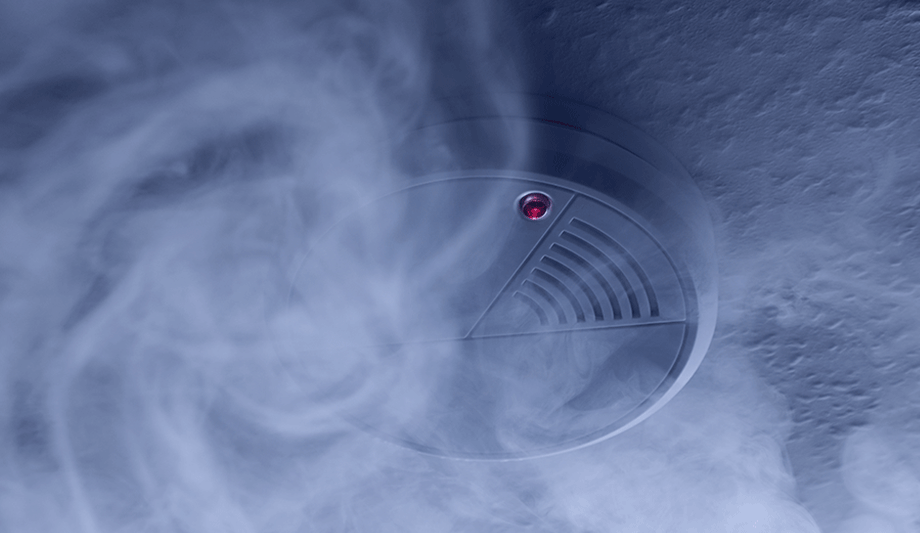
The emergence of remote and hybrid work models is a lasting trend that has reshaped the fire safety dynamics of commercial office buildings. Although seen as advantageous for employees, these changes necessitate a reevaluation of fire safety protocols. Even the most basic structures require a fire alarm system, which must be maintained regularly, whether the building is fully occupied or not. With fewer occupants in offices, it's crucial to uphold stringent fire prevention and protection measures, as the chance of promptly identifying a fire diminishes.
Fire Training
Providing adequate fire safety training to all employees is vital to ensure their protection in case of an emergency. Employees working remotely who occasionally visit the office may lack familiarity with the evacuation routes and building layout, complicating safe exits during fires. It is essential to keep all staff well-informed about evacuation procedures to avoid any safety hazards.
Commercial spaces are often one of the biggest financial commitments for businesses. The transition to hybrid work means these spaces may not be optimally utilized and their usage may have shifted. Such factors are critical for fire safety evaluations and can impact insurance requirements.
Fire Risk Assessment
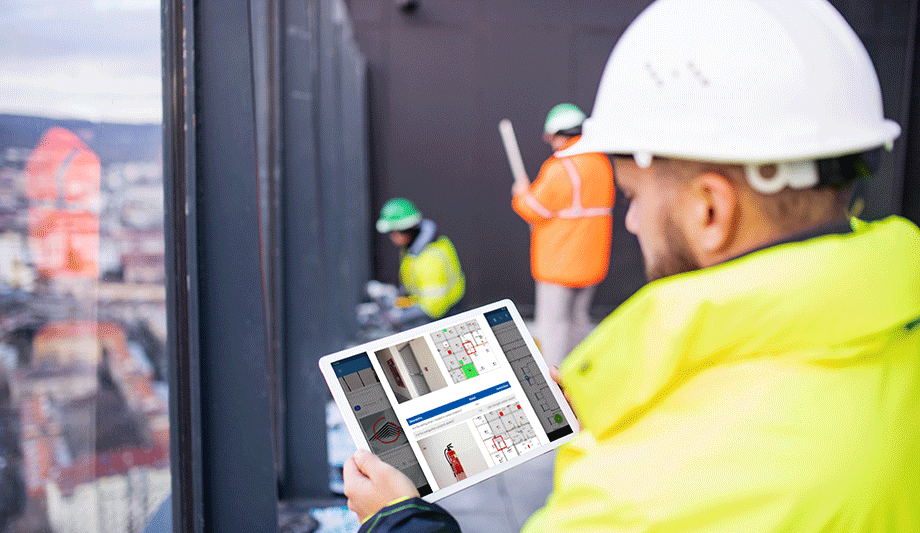
Changes such as installing work booths, partitions, and leisure areas can influence adherence to fire safety regulations. A revised fire risk assessment is necessary to accommodate these changes, as they could impede early fire detection or unauthorized access prevention. The redeployment of fire detection and security equipment, including fire extinguishers, emergency call points, and CCTV cameras, must be considered to maintain compliance.
Ensuring Fire Safety is Maintained
The adoption of remote and hybrid work has undeniably introduced new fire safety challenges for office buildings. It's essential for building owners and managers to address these risks strategically to ensure all employees, irrespective of their work location, remain safe. Communicating evacuation procedures clearly and conducting routine fire safety audits and risk assessments are vital steps to uphold safety standards.
The shift towards remote and hybrid working models is undoubtedly here to stay, and while it’s seen as a positive change for employees, it’s also had a significant impact on the fire safety of commercial office buildings.
Even the simplest of buildings will require some form of a fire alarm system, and if a building has a fire alarm installed, whether it is occupied or vacant, the system must be regularly maintained.
Just because a building is either vacant or not occupied to capacity at all times, fire safety maintenance should still be ensured. Additionally, with fewer people physically present in the office, the likelihood of a fire breaking out and being noticed quickly decreases, so it’s imperative that fire prevention and protection measures are well-maintained.
Fire training
Adequate fire safety training should be given to all employees to ensure their safety
Remote workers who need to come into the office sporadically may not be familiar with the evacuation procedures and layout of the building, making it more difficult for them to safely exit in the event of a fire.
Adequate fire safety training should be given to all employees to ensure their safety in the event of a fire.
The expense of owning or leasing commercial buildings or offices is often the second highest expense for businesses. With the shift towards hybrid working, these buildings may now be underutilized and the ways in which they are used may have changed. This has implications for both fire safety assessments and insurance coverage.
Fire risk assessment
Changes in office layout, such as the addition of work booths, partitions, comfortable seating areas, recreational facilities, and on-site restaurants and gyms, may affect compliance with fire regulations.
Without a new fire risk assessment, the altered layout may hinder the early detection of fire or unauthorized access, especially if the placement of fire detection and security devices, as well as equipment such as fire extinguishers, emergency call points, and CCTV cameras, has not been considered in the redesign.
Ensuring fire safety is maintained
Remote and hybrid working models have clearly introduced new fire safety challenges for office buildings, and so it’s important for building owners and managers to take these risks into account and take appropriate measures to ensure the safety of all employees, whether they are working remotely or in the office.
To mitigate these risks, commercial building owners and managers should ensure that their evacuation procedures are clearly communicated to all employees, regardless of whether they are working remotely or in the office. And should also conduct regular fire safety audits and fire risk assessments to safely maintain standards and practices.