
Fire safety is important in understanding how to be prepared to use the proper equipment in fire emergencies. The number one cause of fire emergencies in the home comes from unattended cooking.
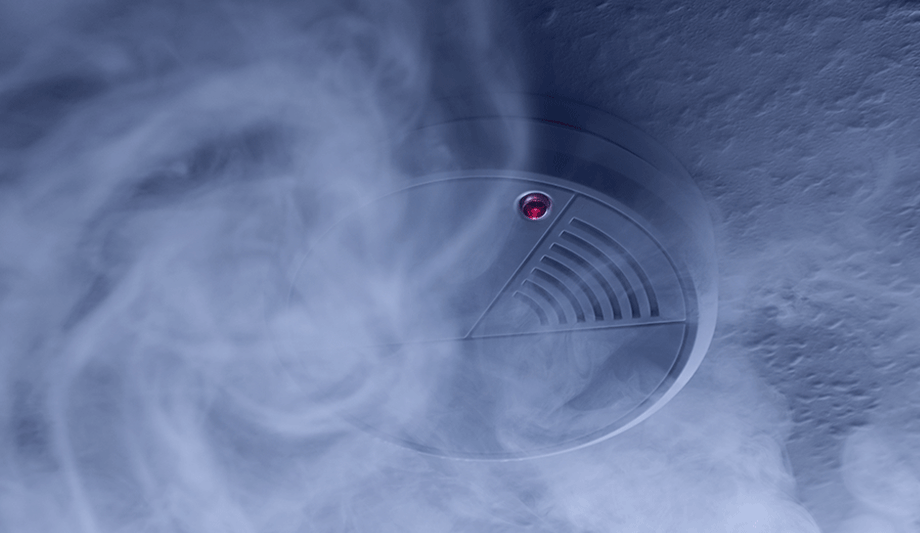
People become careless when cooking in the kitchen, leaving food on the stove and in the oven unattended. Out of home fire deaths, 3 out of 5 arise from homes that have no working fire alarms.
Classes of Fire
It’s easy to become negligent about risks that could cause fires in the home and workplace. Leaving candles burning, hair equipment plugged in, and other heat sources unattended can be a recipe for disaster.
When it comes to extinguishing a fire, it’s much more complicated than many people realize. The different classes of fires are classified by the type of fuel that’s burning. These fires require various ways of being extinguished, given that not all methods will be effective against them. There are five recognized classes of fire, labeled A, B, C, D, and K.
Class A
Class A fires are usually extinguished with water or mono-ammonium phosphate
This type of fire is the most common, including everyday combustibles, such as wood, paper, trash, plastic, cloth, and rubber. If a user has a house fire, this is most likely the type of fire the user will encounter, as trash, paper, or plastic may have caused it.
Class A fires are usually extinguished with water or mono ammonium phosphate.
Class B
Class B fires have flammable liquid or gas as the fuel base. These materials can include kerosene, gasoline, oil, propane, and petroleum-based paints.
These types of fires can become a problem in industries that use certain types of fuel or paints. To extinguish these fires, it’s best to smother the oxygen.
Class C
When these fires happen, users need to cut the power off and use non-conducive chemicals
Class C describes electrical fires. They are often fueled by wiring, fuse boxes, motors, and other electrical appliances. They can also come about from an overloaded surge protector or bad wiring.
This means that they can occur in both small and large-scale businesses. It’s also possible for electrical fires to happen in the home. When these fires happen, users need to cut the power off and use non-conducive chemicals to extinguish the fire.
Class D
Class D fires have combustible metal as the fuel source. These metals include titanium, magnesium, sodium, potassium, and aluminum. These fires can arise in laboratory environments and other industries that constantly use combustible materials.
Water mustn’t be used to extinguish Class D fires, as it will be ineffective and dangerous. A dry powder agent will need to be used to extinguish these fires.
Class K
Liquid cooking materials can include grease, vegetable fat, cooking oils, and animal fats
Class K fires are cooking fires that come about from liquid combustion. Specifically, they are a type of liquid fire. Liquid cooking materials can include grease, vegetable fat, cooking oils, and animal fats.
These types of fires are a concern in restaurant services, but also in homes. To extinguish these fires, wet chemical fire extinguishers are needed.
Fire Safety Education
Here at Safe-T Fire Protection, they’re passionate about educating others on the importance of fire safety. The fire services are designed to keep the business safe and to help users be prepared for fire emergencies.
Safe-T Fire Protection offers fire extinguishers, fire sprinkler systems, fire alarms, emergency lighting, kitchen hood systems, fire hydrants, backflow preventers, and spray booth systems.