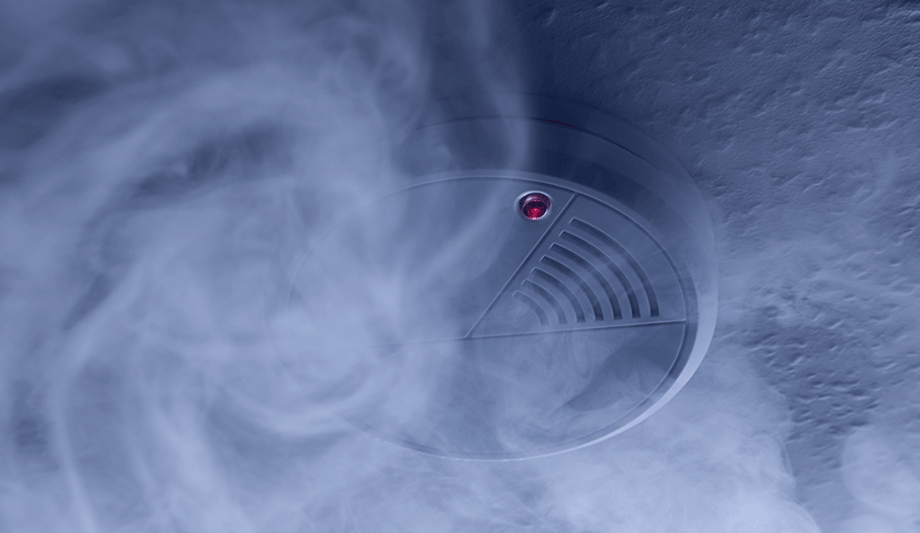
A recent incident highlights the effective role of Pneumatically Actuated Fire Suppression Systems (PAFSS) in swiftly addressing fire hazards in industrial settings.
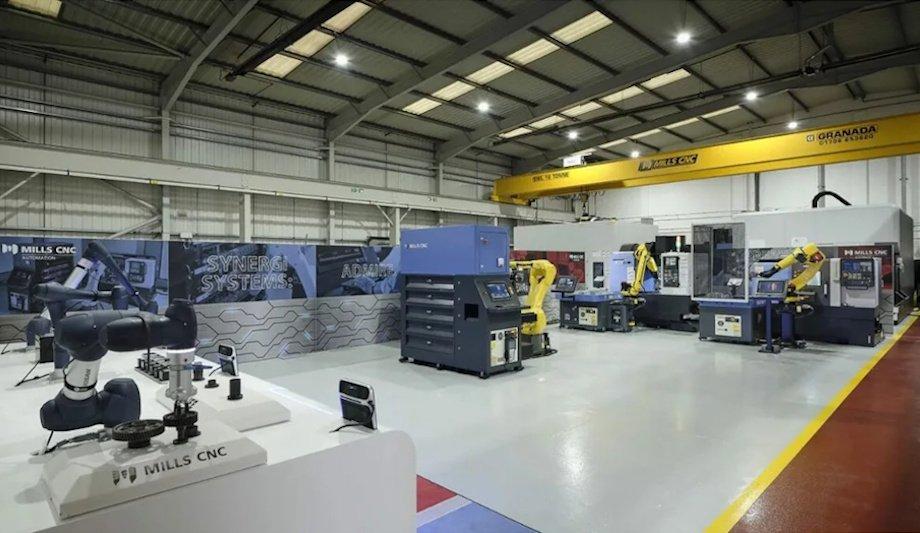
A client reported the successful engagement of a PAFSS system they had installed, which activated during a fire outbreak in the electrical control cabinet of a CNC brick setting machine used by a building products manufacturer. CNC machines, often left unattended and reliant on automatic operations, present significant fire risks due to potential tool breakage and the use of flammable materials.
Protection for CNC Machines
PAFSS systems are notably suited for safeguarding CNC equipment, providing prompt detection
PAFSS systems are particularly suited for safeguarding CNC equipment, providing prompt detection and automatic fire suppression directly at the ignition point.
In this recent fire incident, swift activation of the PAFSS limited the fire's spread within the warehouse, potentially averting a larger disaster that could have posed risks both to property and staff on-site.
Insights from Industry Experts
Matt Nicholls, the Midland Fire Suppression Manager, emphasized the effectiveness of PAFSS in high-risk environments: “PAFSS is a really effective system in high-risk warehouse settings, and every business owner with CNC machines and other electrical enclosures should make sure they have them installed."
"We see time and again the damage they prevent when activated, and we’re pleased that we can do our bit to protect our clients’ businesses by fitting them.”
Details of the Incident
The fire originated from an electrical short circuit within the CNC machine's control cabinet, which led to overheating and subsequent sparking of flammable materials.
Such incidents are common in industrial environments, underscoring the necessity for robust fire suppression systems. Fortunately, Midland Fire had installed an automatic fire suppression system, which responded efficiently to the emergency.
System Activation and Response
PAFSS systems are designed for self-activation without human intervention
PAFSS systems are designed for self-activation without human intervention. In this case, the system activated when the detection tubing inside the machine's cabinet ruptured due to fire-triggered heat, releasing pressurized gas.
This led to the mechanical opening of the suppressant cylinder valve, discharging the fire suppressant directly onto the flames. This rapid intervention both contained and extinguished the fire, while also alerting the main fire alarm system.
Achieving Positive Outcomes
The advantages of deploying PAFSS in this scenario were substantial. The fire was quickly contained, limiting damage to superficial impacts such as minor charring.
The facility avoided prolonged downtimes, as operations resumed soon after the incident. Importantly, staff safety was maintained as the self-activating system required no personnel intervention, reducing the risk of injury. Financially, the company avoided significant costs associated with repairs and operational disruptions.
Benefits of PAFSS
Built to withstand harsh conditions, PAFSS remains reliable regardless of dirt or dust interference
PAFSS offers a compelling case for investment in automatic fire suppression, ensuring efficient fire control and safeguarding staff without interrupting business continuity. The system's installation is straightforward, utilizing flexible tubing that supports numerous detection points in confined spaces.
Built to withstand harsh conditions, PAFSS remains reliable regardless of dirt or dust interference. Additionally, remote monitoring and control capabilities provide further assurance against unexpected incidents.
Installation Services Available
Midland Fire is an authorized installer of Jactone PAFSS® systems, providing expert design, installation, and maintenance services for businesses across diverse industries.
Their team offers a complimentary consultation to tailor solutions that fit specific needs, followed by comprehensive support throughout the system's lifecycle.
While it’s never nice hearing that a client has had to deal with a real life fire situation, it’s always good news for them when they learn that their work has made a difference and helped protect a local business. That’s how they felt when one of the clients recently got in touch to report the successful activation of a PAFSS system that they’d previously installed for them.
The fire in question started in the electrical control cabinet of a CNC brick setting machine belonging to a building products manufacturer. CNC machines can pose a particularly high fire risk as they’re unattended and automatic, and tool breakage and the use of flammable coolants or lubricants doesn’t help.
Protecting CNC machines
PAFSS (Pneumatically Actuated Fire Suppression Systems) is the perfect solution for protecting CNC machines, as it offers speedy detection and automatic suppression of fires at the source.
In this instance, without PAFSS in place, the fire could have quickly spread throughout the vast warehouse space where it was located, which could have been devastating for the business owners, and also really dangerous for the staff on duty. Let’s take a look at exactly what happened and how PAFSS stepped in to save the day.
High-risk warehouse settings
“PAFSS is a really effective system in high-risk warehouse settings, and every business owner with CNC machines and other electrical enclosures should make sure they have them installed."
"We see time and again the damage they prevent when activated, and we’re pleased that we can do our bit to protect our clients’ businesses by fitting them,” Matt Nicholls, Midland Fire Suppression Manager.
The Incident
So how did it all start? Quite simply, during normal operations, an electrical short circuit occurred within the electrical control cabinet of the CNC machine, which led to the arcing and overheating of the machine’s components. This then likely caused sparking, which ignited flammable materials in the machine (like wiring insulation or plastic parts), quickly starting a fire.
This is a fairly common cause of industrial fires and something that should always be protected against by fire suppression systems. Luckily, in this case, an automatic fire suppression system was in place – installed by Midland Fire.
How their fire suppression system responded
PAFSS is designed to kick in automatically in situations like this, self-activating to put out the fire quickly and effectively, without the need for staff intervention.
Here’s a step-by-step breakdown of how it worked in this scenario:
1. Fire detection
The CNC machine was fitted with a detection tubing pressurized with inert gas, routed throughout the internal compartment of the machine’s control cabinet. When the fire broke out, the heat from the flames caused a localized section of the detection tube to rupture at the point of highest temperature.
2. System activation
The rupture triggered the system, depressurizing the tubing instantly, which opened a valve on the suppressant cylinder. This was done mechanically, meaning that no electrical components were needed – ideal for protecting against electrical faults like this one.
3. Fire suppression discharge
The system discharged the fire suppressant agent directly onto the fire through the ruptured section of the tube. In this case, the fire was extinguished almost immediately at its source, limiting its spread and impact. Meanwhile, the system communicated with the main fire alarm system, and the alarms sounded.
The outcome
The benefits of using a PAFSS system to automatically suppress a fire are immeasurable. In this scenario, the client benefited from the following:
- Minimal damage – As the fire was detected and extinguished so quickly, it didn’t have the chance to spread and completely destroy the CNC machine and any surrounding machinery. Instead, the machine only suffered superficial damage like minor charring and melted insulation.
- Saving lost business time – In this case, the need for major repairs to the machinery was avoided and the factory didn’t need to evacuate or shut down. The machine was back up and running quickly so operations weren’t drastically delayed.
- Staff were kept safe – Most importantly, no one was hurt as a result of the fire. The self-activating nature of the fire suppression system meant that staff didn’t put themselves in danger by trying to fight the flames, and a large fire which could have led to multiple injuries was avoided.
- Cost savings – The costs in the fallout of a fire can be devastating, often leading to businesses not being able to bounce back. But not in this case. Potentially thousands of pounds were saved related to machine repair, production loss and potential injuries. Happy days.
The benefits of PAFSS
The proof is all here – PAFSS really is worth the investment. It’s an automatic system, meaning that fires are brought under control quickly without compromising on the safety of staff, saving them money in the event of an incident and helping to protect the business.
Installation is easy on both new and existing equipment, and flexible tubing allows for an unlimited number of fire detection points in enclosed spaces. PAFSS systems are highly reliable, using polymer tubing that’s specially engineered and unaffected by dirt, dust or oil, keeping the equipment safe no matter what. They can monitor and control the system remotely too, meaning no nasty surprises.
Automatic fire suppression systems can be installed in all kinds of places, from public transport to industrial warehouses to kitchens, so whatever business they run, there’s a PAFSS solution for them.
Need a fire suppression system installation for their business
Midland Fire is an authorized and registered installer of both direct and indirect Jactone PAFSS® systems. The team is experienced and specialized in the design, installation, and servicing of the systems for businesses of all sizes, across a range of industries.
They provide a free consultation, in which the friendly engineers will advise them on the best solution for their business. They can then go on to design and install the PAFSS system, providing them with ongoing maintenance and support once the system is in place.