VIKING Life - Saving Equipment A / S - Experts & Thought Leaders

























Latest VIKING Life - Saving Equipment A / S news & announcements

Ship fires are on the rise, posing serious risks to crews, vessels, and operations. Ensuring the firefighting equipment meets the latest safety standards is not just essential — it’s lifesaving. The latest update to the Marine Equipment Directive (MED), (EU) 2024/1975, mandates significant changes to the approval and use of firefighting suits onboard European vessels. Here's what they need to know to stay compliant and protect the crew. Key regulation updates From August 2024: All new firefighting suits placed on the market or onboard vessels must comply with the EN469:2020 standard. From June 2025: All new firefighting suits placed on the market and onboard EU vessels must meet level 2 classification for enhanced protection in high-risk firefighting situations. What does this mean for shipowners? Supplementing or replacing suits with level 2 models ensures both compliance and enhanced crew safety To comply with the updated MED directive, shipowners must evaluate and future-proof their firefighting equipment. Existing suits in good condition can remain in use, but they advise planning for a timely upgrade. Supplementing or replacing suits with level 2 models ensures both compliance and enhanced crew safety. The VIKING YouSafe™ Torch firefighting suit meets the latest EN469:2020 standard and is classified as level 2 for maximum protection. This suit is specifically designed for marine environments, combining superior heat resistance and waterproofing with crew comfort and durability. What is a level 2 classified firefighting suit? Level 2 suits are designed to handle the challenges of firefighting in enclosed spaces. They offer: Superior heat resistance for high-temperature environments Enhanced water penetration protection, which is critical when dealing with steam or water exposure Good breathability, ensuring crew comfort and performance during extended operations To identify a level 2 suit, users must look for the X2, Y2, and Z2 marks. Note: Level 1 suits remain compliant until worn out, but do not offer the same advanced protection. Fire in electric vehicles poses a significant risk VIKING understands the unique safety requirements for electric vehicles and AFVs, and can provide them with the equipment and expertise needed to ensure the appropriate fire protection. The VIKING YouSafe Torch firesuit is EN469:2020 certified, meeting the updated regulations. The EMSA recommends fire suits with level 2 water penetration resistance when fighting fires in electric vehicles and AFVs.

For shipowners across the globe, safety is first. But in a world where one must maximize efficiency - even when it comes to safety - many successful operators are turning to trust safety management with a single expert partner. When they look at maritime safety, what do they see? Liferafts, lifeboats, immersion suits, and firefighting systems? Service and training? Compliance with rules and regulations? It can be complex for sure, but it doesn’t have to be! Maritime firefighting equipment The primary focus of all suppliers was to offer the products and solutions that customers needed For many years, the primary focus of all suppliers was to offer the products and solutions that customers needed. That goes for the maritime safety equipment business, too. Suppliers sold - and customers bought. And that was fine. One supplier would sell and service the liferafts, personal protective gear would be sourced from various vendors, and firefighting equipment would be serviced by a third company. And so on. For operators able and willing to assign the required resources and absorb the related administration, complexities, and risk involved, such processes are no issue. But surely, there’s a better way to manage safety. What if safety was the product itself – nothing more, and nothing less? Latest addition to Shipowner Agreement VIKING started addressing this over 10 years and is now broadly promoting the latest addition to its Shipowner Agreement. Called Safety Management, the new top-tier option under the concept caters to those who see the large benefits to be gained from having a single global expert streamline and simplify all aspects of safety compliance – freeing up resources to boost the core business. On the product side, Safety Management ads dynamic and digital service optimization on top of the premium safety products, proactive planning, and expert service execution at fixed prices that have already seen agreements signed up for thousands of vessels - at a 98% contract renewal rate. No one-size-fits-all Many operators start out with just one or two safety equipment types under agreement and sign up Of course, Safety Management is not a perfect fit for every operator. Depending on several factors, such as sailing patterns, flag state, fleet size, composition, and more, some shipowners remain best suited with one of the many other options under the Shipowner Agreement concept. Many operators start out with just one or two safety equipment types under agreement and sign up for more as the benefits are established. In fact, 70% of owners expand their agreement within the first year – and this trend goes for both smaller fleets and for major global container carriers alike. Everything included-with OEM quality and competence Following recent acquisitions of marine fire service major Drew Marine FSR and renowned lifeboat and davit supplier Norsafe, the product and servicing setup available under the Shipowner Agreement umbrella has never been greater. Spanning everything from premium lifesaving equipment, to globally uniform servicing with OEM competence and state-of-the-art VIKING Safety Academy training, customers can enjoy convenient access to the full-circle value chain that goes into ensuring 360° asset and crew safety at full compliance – from one supplier, globally.

As the potential last line of defense in critical situations at sea, personal protective equipment must be maintained to the highest of standards, with any damage recorded and flagged for repair. RFID track-and-trace technology is a game-changing PPE condition and service solution. Before leaving the manufacturing plant, all VIKING PPE is fitted with a durable radio-frequency identification (RFID) device that allows for monitoring of its servicing status. Incoming and outgoing goods Staff members register incoming and outgoing goods by scanning the RFID chips At service stations, staff members register incoming and outgoing goods by scanning the RFID chips, helping them to keep track of equipment rented out to customers. “If any damage is identified during the servicing process, the suit or lifejacket is sent to a workstation for testing and repairs,” says VIKING operations manager Raymond Kennedy. Different types of PPE Kennedy added: “We track which parts are used in repairing a suit by scanning a barcode. This gives us full traceability of the batches and components needed and eliminates the risk of typing errors.” “Even tiny tears in the fabric of a suit can drastically affect its performance, so we test our products thoroughly, using different methods for different types of PPE.” Inspections and testing Additionally, the system allows products to be linked with each other digitally Once inspections and testing are complete, the system accurately records any repairs that may be required, he adds. “We track which parts are used in repairing a suit by scanning a barcode. This gives us full traceability of the batches and components needed and eliminates the risk of typing errors.” Additionally, the system allows products to be linked with each other digitally. If a customer is using a personal locator beacon together with a lifejacket, for instance, the system can help them to set the items up and connect them to each other so that they know exactly which equipment goes where. Data makes a difference While the RFID system tells VIKING where its PPE is, where it should be going, and what condition it is in, it also offers longer-term benefits. “By collecting information from the chips, we can pinpoint weak spots in our manufacturing and servicing procedures to improve our products continuously. If our data shows repeated issues with a cuff or a collar, for example, we can target those parts for improvement.” This approach is part of VIKING’s commitment to providing high-quality PPE that can be relied upon to save lives. “We take great pride in the equipment that we manufacture and service. Our suits and lifejackets are often the last means of survival in emergencies, so it is crucial that they function faultlessly every time." Technology and sustainability make a good business case VIKING recently won a three-year contract to supply PPE to Serica Energy Following a competitive tender process, VIKING recently won a three-year contract to supply PPE to Serica Energy, one of the UK’s pioneering oil and gas companies. The deal with the United Kingdom-based offshore energy major is the second of its kind for VIKING in consecutive years. VIKING will work with Babcock Offshore to deliver aviation suits for Serica crew in the British sector of the North Sea. The contract marks VIKING’s second major success in the offshore aviation segment in as many years, following on from last year’s agreement with CNOOC Petroleum Europe Limited, which also involved Babcock as an aviation provider. VIKING’s ongoing efforts Global Sales Manager, Heather McManus believes there is a direct link between VIKING’s ongoing efforts to enhance its products and services and its impact in this specialized sector. “Our latest aviation suit is one kilogram lighter than its predecessor, for example, and is fitted with a radiofrequency identification device (RFID) equipped to track its condition and detect any possible weak spots.” VIKING’s corporate social responsibility policy “The use of RFIDs also cuts paper consumption significantly, improving operational efficiency while also benefiting the environment in a way that aligns closely with VIKING’s corporate social responsibility policy. Serica Energy is strongly committed to minimising its environmental impact, a commitment demonstrated in the fact that these suits feature reusable Velcro® straps instead of plastic packaging,” she adds. “Those working at sea are perhaps more conscious than anyone of the impact our throwaway culture has on the oceans. Cutting out single-use plastics isn’t just the right thing to do; it’s what our customers want to see.”
Insights & Opinions from thought leaders at VIKING Life - Saving Equipment A / S
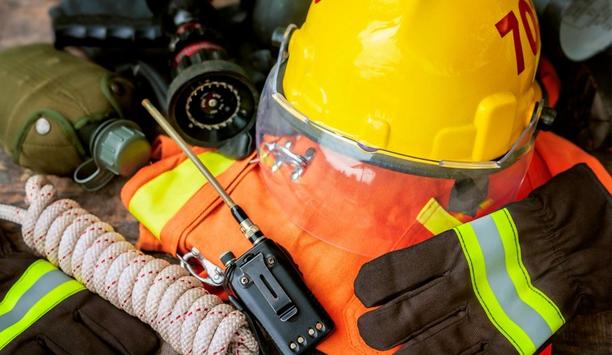
Trends in garments and protective gear for firefighters are evolving to address the changing needs of the fire service. Garments worn by firefighters must be comfortable and allow an adequate range of motion. They must protect first responders from hazards such as heat and exposure to blood-borne pathogens. Fire service clothing must be durable to withstand long-term usage in hostile environments. “It’s personal for everyone in the industry,” says Oliver Spoecker, Director, Workwear & Protective Wear and Global Commercial Director for Lenzing. “Firefighters have to be kept safe by the best all-around protective fabrics.” He says fibers must be comfortable, breathable and safe.” Fire-Resistant qualities Flame resistance is a fundamental property for fibers in the fire service. Lenzing FR (Flame Resistant) Fibers are sustainably produced on three continents by the multi-billion-dollar company. The cellulosic fibers come from wood and then are made inherently flame retardant by introducing a pigment into the carbon matrix that provides fire-resistant qualities. Another concern in the fire service is stress from excess body heat caused by exertion The flame resistance is an integral part of the fiber and therefore cannot be washed out or worn out over time; the fire resistance endures as long as the garment. Another concern in the fire service is stress from excess body heat caused by exertion, and FR fibers are breathable to address the issue. Because the fiber comes from natural substances, there are no dangers of exposure to skin. Fire service market Lenzing fibers are familiar to ex-soldiers who later become firefighters. The uniforms of U.S. soldiers in Iran and Afghanistan contained Lenzing fibers. In fact, the breakthrough in military applications gave the company a push to enter the fire service market in 2007. DuPont produces Nomex Xtreme Performance fibers that provide protection, thermal performance and toughness for firefighters. They contain the heat and flame protection of DuPont Nomex with the lightweight strength of DuPont Kevlar, and the thermal damage tolerance and durability of high-performance materials such as PBO, Nomex Nano, and Nomex Nano Flex. Nomex fibers are incorporated into garments by manufacturers such as Fire-Dex, Globe Manufacturing, Lion, Veridian, and Viking. Comfort and flexibility are guiding the development of newer garments. Lighter-Weight jackets A triple-certified garment addresses the budget restraints of many departments For example, 5.11 Tactical has introduced lighter-weight jackets, outerwear, and a duty uniform that combine an ‘old-school’ aesthetic with better comfort and a better range of motion. Flexible fabrics, including a polyester-cotton blend, and adjusted fit are elements in the new line. Viking has introduced the new Viking Shield clothing line that meets the requirements of three different applications: technical rescue and extrication (NFPA 1951), emergency medical services (NFPA 1999), and wildland firefighting (NFPA 1977). A triple-certified garment addresses the budget restraints of many departments. The approach is cost-effective and cost-efficient, says Grant Grinstead, Viking’s Fire Segment Sales Manager for North America. Providing structural protection A surprising element is how lightweight the garment is. “A lot of firefighters are shocked because they didn’t know there was a product like this,” says Grinstead. “The big thing is the light weight and the feel of it, and it is made in tailored sizes.” Viking has provided structural protection (turnout gear) to firefighters for two decades. Introduction of the new Shield product can help reserve a company’s turnout gear for the 30 to 40% of calls that require it. For the other 60 to 70% of calls, the new multi-use, lightweight garments can provide more comfort for firefighters.
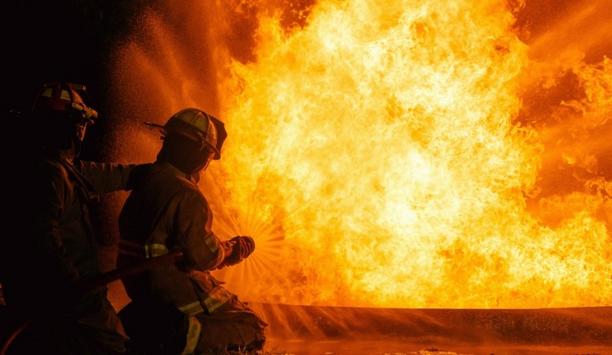
The New Future For Fire Agencies
Download
The Eight Key Trends in Fire Detection in 2023
Download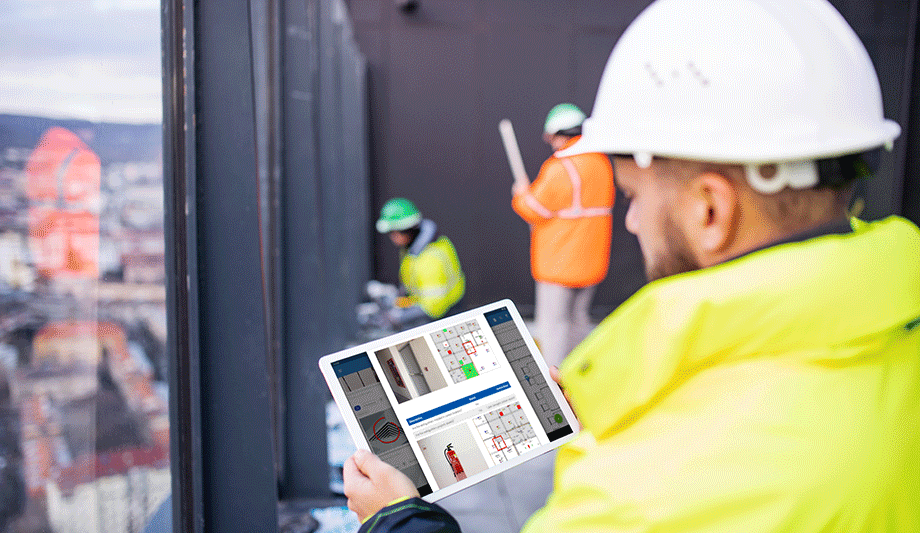
A Digital Platform to Improve Fire Safety Compliance and Inspections
Download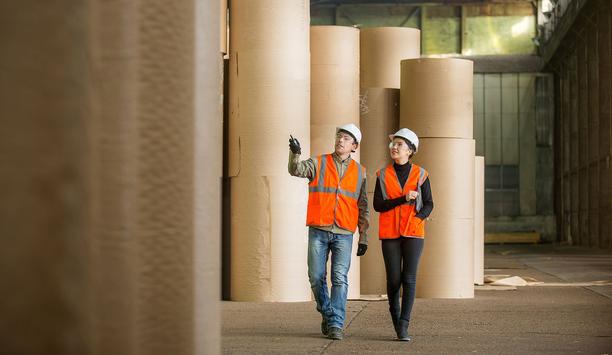
Overcoming the Challenges of Fire Safety in the Paper Industry
Download
Carbon Monoxide: Creeping Killer Caught In The Act
Download
VIKING VK466 residential pendent sprinkler
VIKING VK472 residential pendent sprinkler
VIKING VK458 residential pendent sprinkler