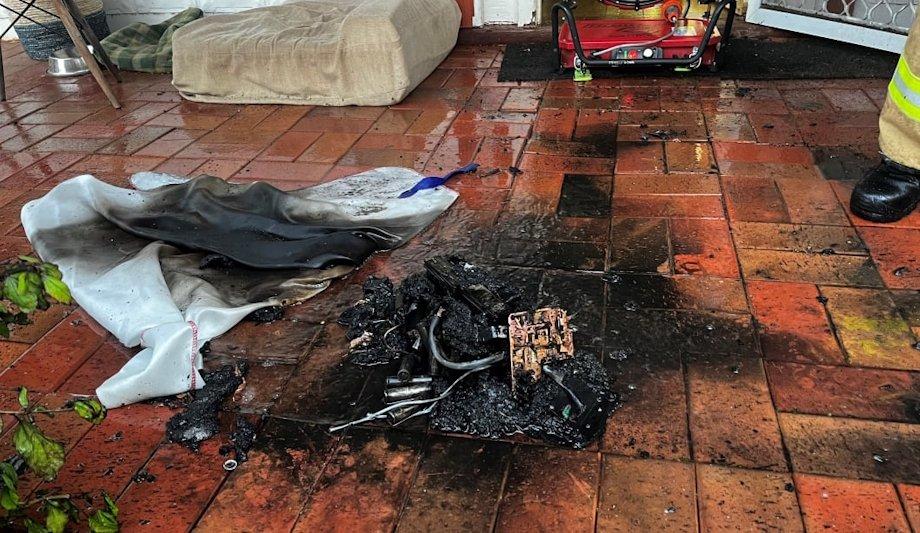

A potentially devastating lithium battery fire was averted in Broken Hill, in the state's far west, thanks to the quick actions of a resident and an off-duty firefighter. On Sunday at approximately 5 p.m., a homeowner began charging a newly-purchased solar power generator at his residence on Morgan Street when the device's battery pack started sparking and emitting 'popping' sounds. Recognizing the danger of an imminent battery explosion, the resident swiftly relocated the device to the front porch, away from the interior of his home.
Lithium Battery Dangers
The homeowner immediately contacted emergency services by calling Triple Zero (000). The situation escalated as the Lithium battery emitted loud 'bangs'—a sign of its hazardous reaction. A neighbor, an off-duty Fire and Rescue NSW (FRNSW) Station Officer, witnessed the event and promptly intervened. Using a fire blanket, he smothered the device just as it ignited and exploded, preventing more severe damage. The attending FRNSW crew extinguished the remaining flames and ventilated the smoke-filled home. They then submerged the burning battery pack in a water barrel to eliminate any chance of it reigniting. The resident's prompt response has been commended by firefighting officials for preventing a catastrophic outcome.
Lithium Battery Fires
Acting Deputy Commissioner for Field Operations, Trent Curtin, stated, "Lithium battery fires are extremely difficult to extinguish, and firefighters often have to use copious amounts of water to ensure they are doused and adequately cooled to prevent re-ignition." This incident has once again highlighted the significant risks associated with Lithium battery fires, prompting FRNSW to reinforce their public warnings.
Preventive Measures
To minimize the risk of such fires, several precautions are advised. Batteries should not be overcharged or left to charge unsupervised, especially overnight. It is crucial to purchase Lithium battery-powered items from reputable sources. Charging batteries on flammable surfaces, such as beds or sofas, should be avoided. Devices should always be charged with compliant and approved equipment, without mixing unrelated components. Batteries should be handled with care to avoid damage, and they should be stored in cool, dry areas, away from combustible materials—particularly keeping larger devices outside bedrooms and living spaces. Damaged batteries and devices should not be used or charged.
For guidance on recycling and disposing of used batteries, the Fire and Rescue NSW website offers additional resources.