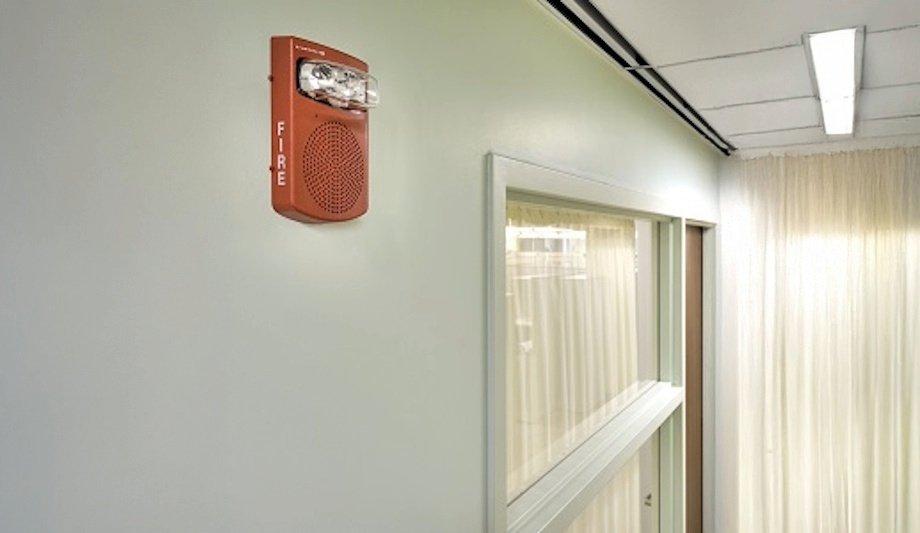

Johnson Controls has achieved a significant milestone with its addressable fire alarm notification appliances, becoming the first in the fire protection sector to earn the UL Verified Mark for their advanced self-test functionality.
This accreditation acknowledges that the TrueAlert ES self-test technology effectively assesses and confirms the operational status of certain notification appliances. This innovative feature offers a seamless testing solution for commercial buildings, eliminating the need for expensive after-hours testing.
Performance of Self-Testing Appliances
Independent validation underscores the reliability and efficiency of the company's self-testing products
According to Bruce W. Marien, Product Manager for Notification at Johnson Controls, “Johnson Controls was the first company to offer self-testing fire alarm devices, and we’re now the first to receive the UL Verification Mark for the technology.”
This independent validation underscores the reliability and efficiency of the company's self-testing products, offering users confidence in reduced operational disruption.
“UL has tested and confirmed the performance of our self-testing appliances so customers can be confident that the product will add convenience to their operations and dramatically reduce disruption to building occupants,” added Bruce W. Marien.
Simplex and Autocall TrueAlert ES
The self-testing feature is compatible with Simplex and Autocall TrueAlert ES addressable notification systems, enabling technicians to configure the fire panel for manual or automatic testing of devices.
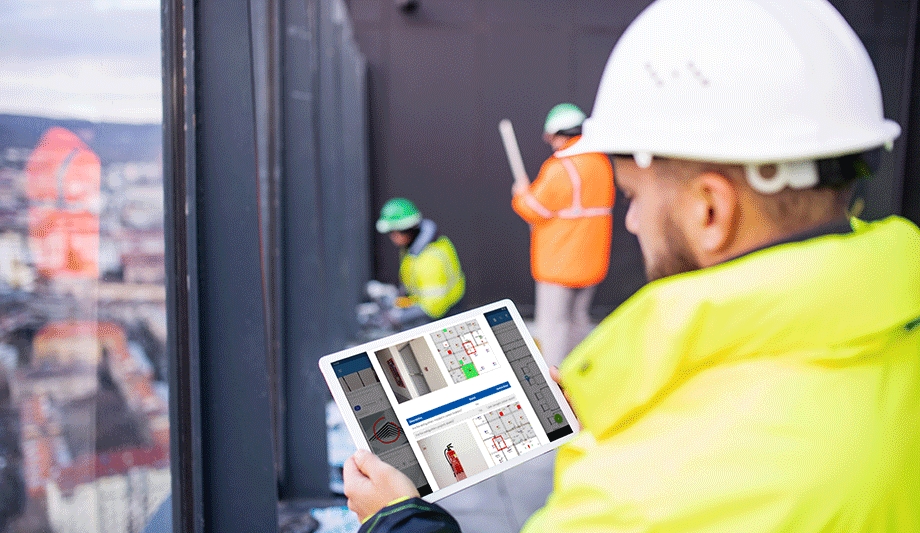
Each device involved in the test produces an audible or visible signal, with results documented in the panel for easy reporting and review. Users can schedule these tests for times when buildings are empty, minimizing disturbance, or opt for manual testing with a hand-held magnet.
Building Safety and Fire Detection System Reliability
The results confirmed the appliances' compliance with NFPA 72's automated test standards
The self-test capability enhances building safety and reliability by permitting frequent automatic testing of fire systems. This function provides assurance that the appliances will function as needed.
An independent study revealed that the Johnson Controls self-test successfully identified all non-operational units, with false negatives occurring less than 1% of the time. The results confirmed the appliances' compliance with NFPA 72's automated test standards.
Simplex or Autocall TrueSite Workstation
Should an issue arise, the system can accurately identify the malfunctioning device. Users can access test outcomes either directly from the panel or via a Simplex or Autocall TrueSite Workstation.
Kevin Faltin, Vice President of UL’s Building and Life Safety Technologies division, noted, “UL’s marketing claim verification program helps meet the need for more transparency from the brands people choose. This objective, third-party verification allows Johnson Controls to stand out from those with self-declared or unsubstantiated claims.”