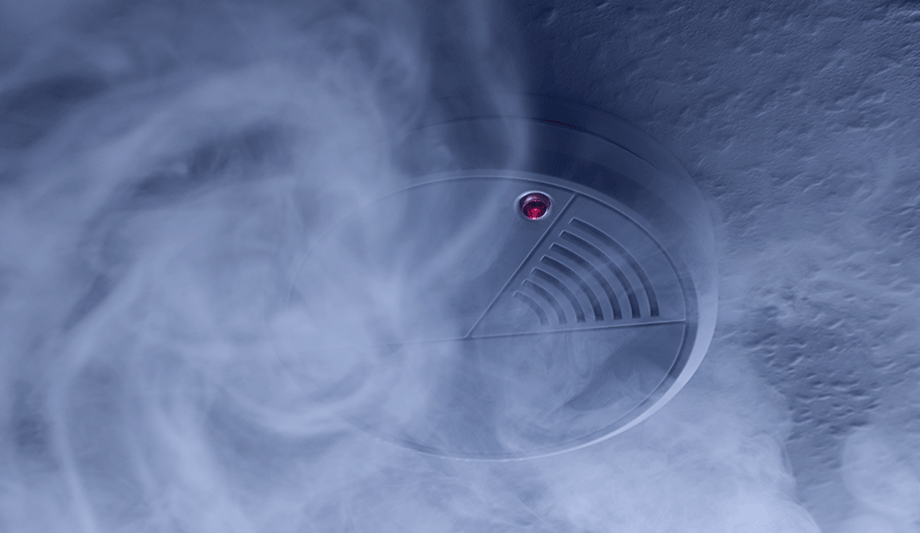
Fire protection, prevention, and suppression systems are all fundamental parts of fire safety. However, while these systems all work together to create a holistic fire safety plan, it’s important to understand the difference between the three.
Fire protection systems are designed to protect a building’s occupants and minimize the damage associated with fire. It’s worth noting that fire protection doesn’t necessarily stop a fire from occurring in the first place. Instead, it’s about reducing damage and ensuring the most efficient and safe exit plan for a building’s occupants.
Fire protection systems
Users can have both active and passive fire protection systems, and buildings will usually have both to ensure higher levels of fire protection.
Active fire protection systems include fire alarms and sprinklers, while passive fire protection systems include things, such as compartmentation and mortar-based or intumescent coating.
Fire prevention
Fire prevention is about reducing the risk and likelihood of a fire occurring as much as possible
Fire prevention is about reducing the risk and likelihood of a fire occurring as much as possible. This obviously differs from fire protection systems, which aim to protect people and buildings once a fire has started.
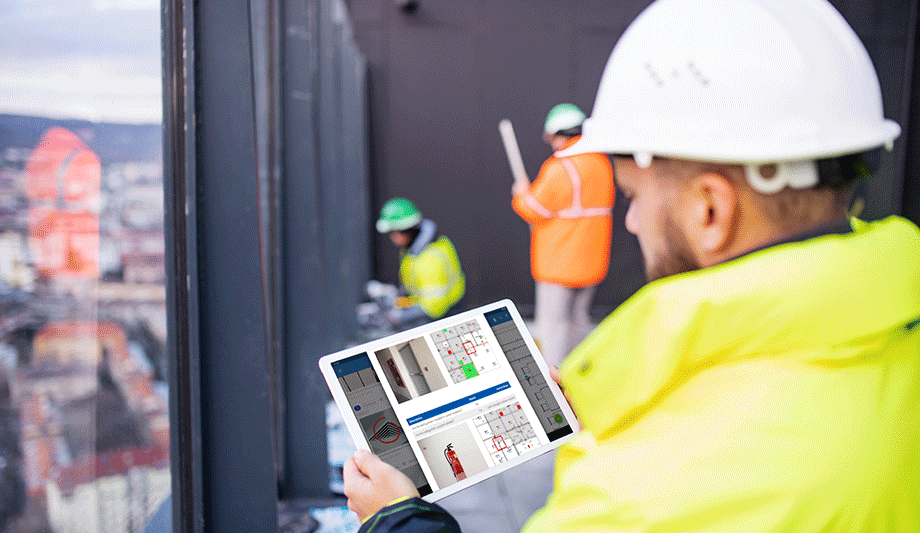
An example of a fire prevention method would be conducting regular fire risk assessments, highlighting any potential fire risks, and taking action to reduce those risks.
Fire prevention is about proactively identifying and removing fire hazards, but of course, people can never reduce the risk of fire to zero, which is why it’s important to also have fire protection and suppression systems in place.
Fire suppression
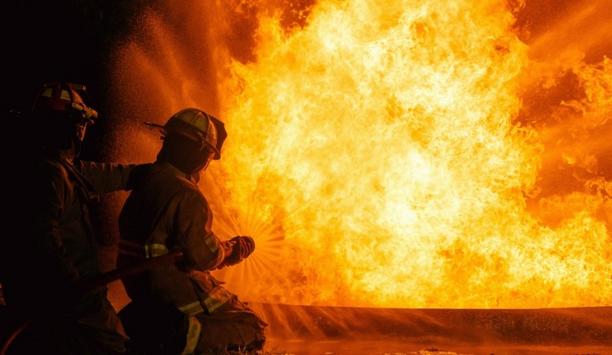
The aim of a fire suppression system is to extinguish a fire as quickly as possible. Fire suppression systems are used to extinguish, control, or, in some cases, entirely prevent fires from spreading.
A fire suppression system is actually classified as an active fire protection system. This means it’s made up of engineered units that are built to extinguish fires through the application of a substance. These substances could be water, foam, or chemical compounds.
Fire prevention, protection, and suppression
Users can look at fire suppression as the final measure or last line of defense put in place to fight the spread of fire and reduce the damage caused by a fire.
Users can see that while they’re all different, fire prevention, protection, and suppression is a three-stage process, with each stage containing specific measures to prevent and fight fires, and provides a holistic approach to fire risk management.