The COVID-19 (Coronavirus) pandemic has affected each and every one of them and the way they live and work. With more people than ever working from home and staying indoors, there’s an increased level of risk in regards to fire safety.
In light of this, it’s important that the fire safety procedures within living spaces, particularly blocks of flats and apartments, are reviewed. With this in mind, Total Fire Group have put together some considerations for landlords to ensure their premises are as safe as possible for residents.
Carry out regular fire safety inspections
By law, fire risk assessments are required when there is a significant change to a property
With people at home for large parts of the day, this, of course, has implications for the fire safety of a home or building. By law, fire risk assessments are required when there is a significant change to a property.
As this represents a significant change, it’s important that landlords carry out a new assessment to guarantee that the existing measures are acceptable and will still be relevant in the event of a fire.
Keep fire exits and routes clear at all times
It’s now more than ever that escape routes should be kept clear to ensure residents can utilize the fire exits safely and efficiently in case they need to do so.
By undertaking regular inspections and placing ‘keep clear’ signs near the designated emergency exits, they can be sure that all fire exits are kept clear of obstructions, allowing people to use them properly if required.
Assess the fire alarm system if installed
It is also important to consider assessing the current fire alarm system in place in the building
Some blocks of flats and HMO’s may be provided with a common fire alarm, or to operate AOV’s (automatic opening vents). Of course, it is critical that fire alarm tests should still be carried out in line with the current legal regulations.
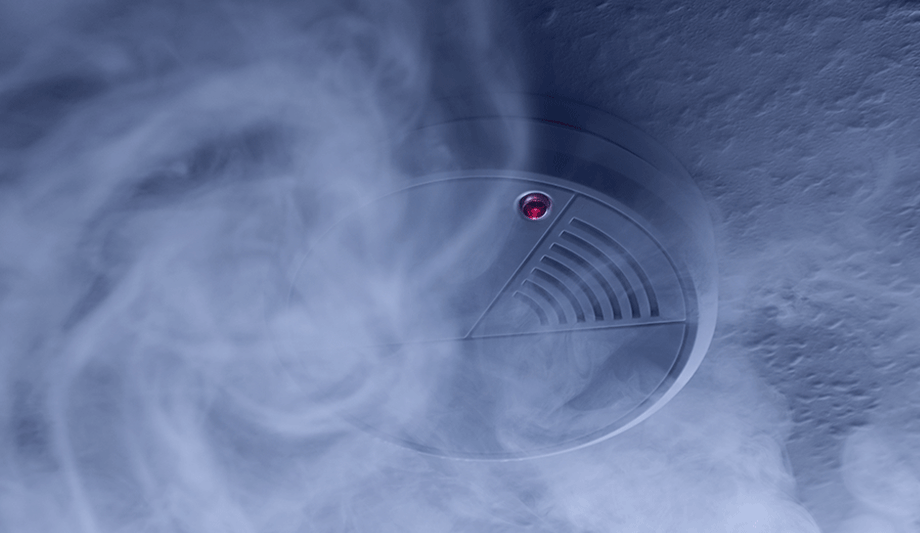
It is also important to consider assessing the current fire alarm system in place in the building. With more people inside their living spaces at the same time, they need to ensure that the fire detection within their flat is in excellent working order.
Make adjustments to fire safety measures
Even if the current fire alarm system is fully operational, it could still be worth considering investing in an improved fire alarm or additional safety measures in the building. For example, a sprinkler system – which not only helps save lives, but also helps decrease the amount of damage a fire can cause.
Now is the time to evaluate the fire safety procedures in place at the premises. Even as life begins to return to normal, government advice is for people to stay indoors as much as possible in order to contain the virus. By adhering to the points mentioned above, landlords can minimize risk and ensure the safety of residents.
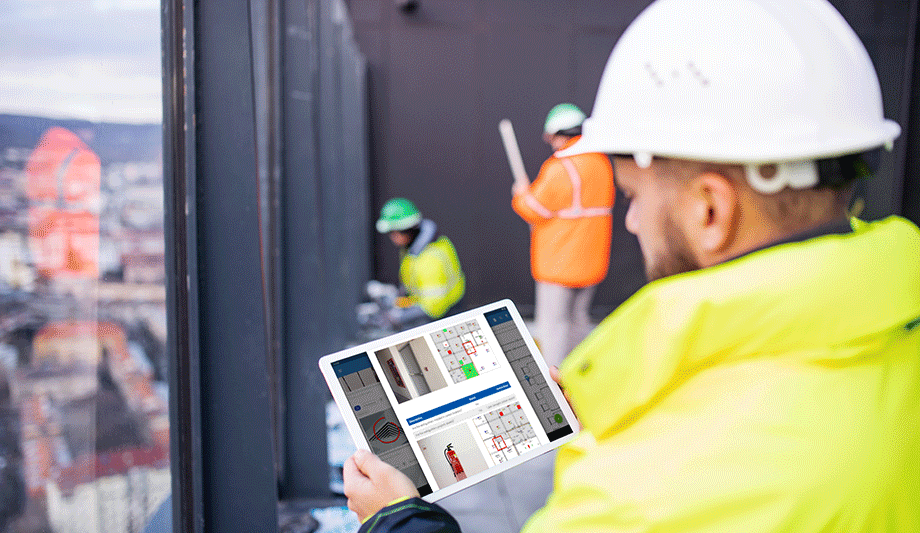
For anyone who would like any further advice on conducting fire risk assessments, get in touch with the team at Total Fire Group. They’ve developed fire risk management software that can help manage and coordinate fire safety tasks seamlessly.