The Fire and Rescue NSW (FRNSW) team is set to compete against a combined Australian Defence Force side next Tuesday in an exciting curtain raiser for the NRL ANZAC Day match at Sydney's Allianz Stadium. This event provides FRNSW a significant platform to honor the valor and dedication of the nation's past and present military personnel, as they perform prior to the traditional clash between the Sydney Roosters and St George Illawarra.
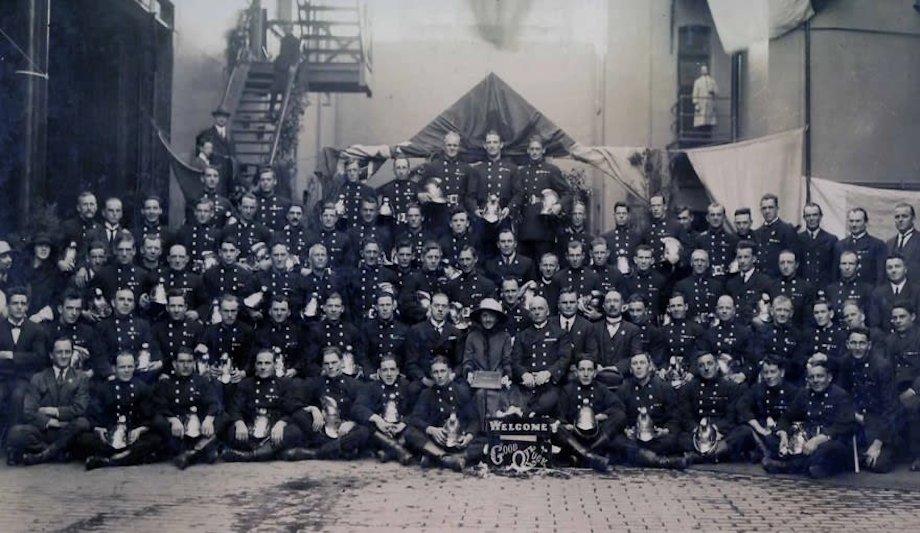
FRNSW holds a storied connection with the Australian Defence Force, a relationship shaped by the military service of numerous firefighters since the Sudan War. NSW firefighters have consistently demonstrated their commitment, partaking in every major conflict including the Boxer Rebellion, Boer War, both World Wars, the Korean and Vietnam Wars, as well as modern-day operations. Notably, 325 firefighters enlisted during World War I, with nearly 10% making the ultimate sacrifice.
One prominent figure among these is William Stuart Kilpatrick, who left his role as a First Class Fireman in August 1914 to fight in World War I. After serving gallantly in Gallipoli, he was awarded the Military Medal for leading his men through intense machine-gun fire in Amman. Kilpatrick continued his military service during World War II at Milne Bay, New Guinea, showcasing remarkable bravery even in the face of adversity during a strafing attack by Japanese aircraft. His career also saw him serve at several Sydney fire stations, making a significant impact until his death in 1966.
The legacy of NSW firefighters is further enriched by Eddie Griffiths, a former Roosters champion who became the Chief Officer of the NSW Fire Brigades. Griffiths, who served as an artilleryman in Egypt and Türkiye during World War I, won three premierships with the Eastern Suburbs and was described as "Our greatest firefighter" by his commander. His leadership and contributions to the brigades are fondly remembered alongside his sports achievements.
FRNSW Commissioner Paul Baxter expressed deep respect and gratitude for the sacrifices and service of these firefighters. He emphasized the invaluable contributions of women during World War II, where three thousand women joined as 'Auxiliary' firefighters to respond to emergencies. "These firefighters answered the call when their country needed them," Baxter stated. He reaffirmed FRNSW's pride in representing these heroes on the ANZAC Day sporting field.
The sparks will fly next Tuesday when Fire and Rescue NSW (FRNSW) takes on a combined Australian Defence Force side in a curtain raiser to the NRL ANZAC Day match at Sydney’s Allianz Stadium.
FRNSW has welcomed the opportunity of playing before the traditional Sydney Roosters – St George Illawarra game, in honour of the nation’s past and present servicemen and women.
FRNSW has a long association with the ADF, through the military service of hundreds of firefighters in conflicts, ranging back to the Sudan War.
NSW firefighters in wars
NSW firefighters have served their country in every conflict since, including the 1900 Boxer Rebellion
Private Richard Isaac Barratt of “D” Company, NSW Infantry, joined the then-Metropolitan Fire Brigades less than a month after returning from the Sudanese expedition in 1885.
NSW firefighters have served their country in every conflict since, including the 1900 Boxer Rebellion, the Boer War, the World Wars, the Korean War, the Vietnam War, and modern-day conflicts.
Over the course of World War I, no fewer than 325 firefighters or 23% of the then-NSW Fire Brigades enlisted, with almost 10% of them killed on Active Duty. One of the firefighters who answered the call to arms was William Stuart Kilpatrick from Marrickville.
Remembering Sergeant Kilpatrick
As a 20-year-old, the First Class Fireman resigned from the Fire Brigades in August 1914 and left Sydney to defeat German forces in Rabaul, then part of New Guinea.
Kilpatrick then enlisted in the 6th Australian Light Horse, serving in Gallipoli, where he was commended for his good work in aiding the Australian withdrawal from Anzac Cove.
In March 1918, Sergeant Kilpatrick led his men through ‘murderous’ machine gun fire in Amman (then part of Syria) to carry wounded Australians from Turkish trenches to safety. For this, he was awarded the prestigious Military Medal for gallantry.
Sgt Kilpatrick’s service in WW II
Sgt Kilpatrick, at age 49, later served at Milne Bay, New Guinea, during World War II
Sgt Kilpatrick, at age 49, later served at Milne Bay, New Guinea, during World War II and had to abandon ship in October 1943, swimming to shore whilst being strafed by Japanese Zero aircraft.
William Kilpatrick MM, who passed away in 1966 at age 72, had served at Headquarters, George Street West, Marrickville, and Granville Fire Stations.
It is also fitting to recognize that a former Roosters champion was the Chief Officer (Commissioner) of the NSW Fire Brigades and a Gallipoli veteran.
Remembering Eddie Griffiths
Eddie Griffiths won three premierships with Eastern Suburbs in 1911, 1912, and 1913, playing alongside the brilliant ‘Dally’ Messenger, and was appointed NSWFB Chief Officer in 1948.
He was described by one of his early commanders as “Our greatest firefighter…a legend in the true sense of the word.” A 40-year firefighter, Mr. Griffiths served as an artilleryman in Egypt and Türkeye during World War I.
FRNSW Commissioner Paul Baxter has embraced the opportunity for firefighters to acknowledge the service and sacrifices of their colleagues and forebears.
Role of women
“These firefighters answered the call when their country needed them, at times when the world they knew was under threat,” Commissioner Baxter said.
“Many of them paid the ultimate price,” he added, “Others continued to serve their communities by joining the brigades upon their return home from the wars.”
“I would also like to highlight that three thousand women joined the Fire Brigades as ‘Auxiliary’ firefighters in World War II, ready to respond to air raids and emergencies on home soil. We are very proud of the service provided by our firefighters, and it’s a terrific honor to represent them on the sporting field for this Anzac Day clash.”