
Recent reports highlight the remarkable application of drone technology in the rescue of a severely injured fisherman near Eden, on New South Wales' far south coast. The incident unfolded earlier this month when the man, who was fishing with three companions, fell off a cliff and sustained a serious leg injury. His plight was discovered on Sunday, April 2, when the Fire and Rescue NSW (FRNSW) unit from Eden commenced a search at The Lookout.
Deployment of Remotely Piloted Aircraft System
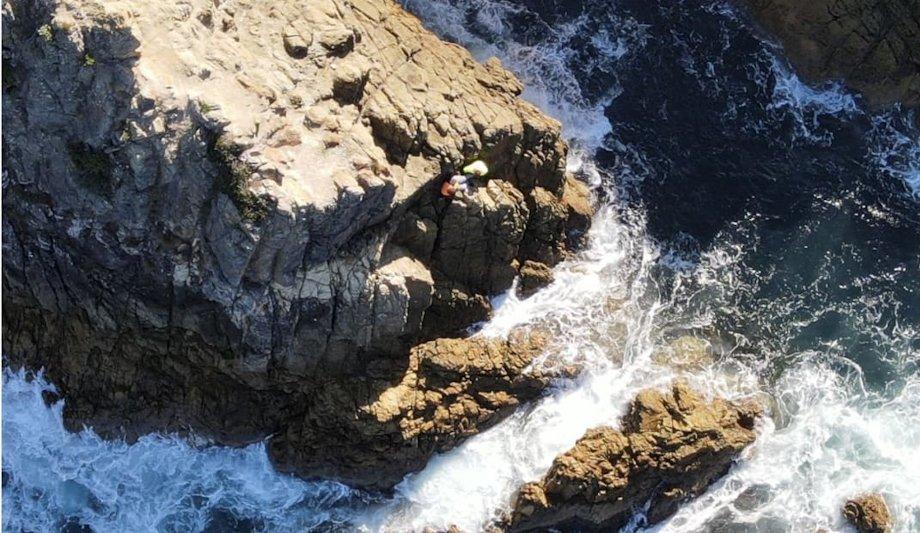
Faced with difficulties in locating the injured man and his friend who had climbed down to assist him, the fire crew resorted to their Remotely Piloted Aircraft System (RPAS). Operating around 100 meters above the water, the drone used thermal imaging to successfully identify the fishermen stranded on a ledge 50 meters down the cliff.
However, a new challenge arose when rescuers learned that the fishermen did not speak English, complicating the communication of the injured man's condition. Captain Zlatko Nemec of Eden FRNSW collaborated with NSW Ambulance paramedics to devise a creative solution. They connected with an interpreter from the Ambulance service in Sydney to record Chinese-language audio messages.
RPAS Camera System Facilitates Communication
The instructions and messages were transmitted 540 kilometers to the drone, which delivered them directly to the fishermen on the ledge. Using the drone's loudspeaker, the messages provided reassurance and guidance. The fishermen, in turn, communicated back through hand signals captured by the RPAS camera system, which were relayed to the rescue teams via a visual display.
A Volunteer Rescue Association (VRA) vertical recovery team eventually abseiled down the cliff to stabilize the injured fisherman. He was subsequently airlifted by a Canberra Rescue helicopter, complemented by a road ambulance, to Bega Hospital for medical attention.
The Role of First Responder Technology
“The technology was a godsend,” Captain Nemec stated, emphasizing the crucial role of drones in such rescue operations. “These drones are not only saving lives, but they’re also reducing the risks facing first responders. In these types of rescues, we have to quickly assess the extent of injuries in order to keep the patients alive.” The RPAS enabled identification and communication with the stranded individuals in what he described as extraordinarily challenging terrain.
Increasing Use of Drones in Emergencies
Since April last year, following the Black Summer Bushfire Inquiry, Eden has been among several regional FRNSW stations trained in drone use. This technology is now a pivotal tool across more than two dozen regional and suburban stations in New South Wales, aiding in rescue missions, major fire responses, hazmat incidents, missing person searches, and more. It has significantly enhanced emergency response and safety across the region, offering critical support to other emergency services and improving community protection.