Fire Safety Standards - Expert Commentary

The fire industry has made it absolutely clear, led by authorized bodies including the BAFE Fire Safety Register, that the current pandemic does not remove the need to comply with any fire safety requirements under the Building Regulations. As we now look beyond the lockdown period, John Allam, Operations Director at Amthal Fire and Security reviews the raft of new proposals demonstrating the Government and industry’s commitment to compliant fire safety and new immediate demands placed on...

New government legislation due to come into force in the United Kingdom on July 1st will require electrical installations in privately rented properties to be tested and inspected at least once every 5 years. The Electrical Safety Standards in the Private Rented Sector Regulations (2020) will require landlords to enlist qualified electricians to complete inspections and provide certification to tenants – or face fines of up to £30,000. While the risk of fire can never be entire...

The effective provision and management of on-site fire safety, prevention, response and protection is a core responsibility of operators of hazardous high-risk critical infrastructure and industrial manufacturing facilities around the world. Such services are typically found at airports, refineries and petrochemical plants, power stations and nuclear facilities, mines, manufacturing sites and port facilities. Driven by legislative requirements and international fire safety standards, many organ...

Those responsible for the specification of products which go into new modern buildings have been asking for safe, approved cabling, which play a critical part in electrical supply systems. The number of fires in high-rise buildings in Europe and the Middle East have brought the issue of quality of products for fire performance circuits into sharp focus, not least the Grenfell disaster. Meanwhile, new buildings become increasingly complex, with the use of new materials and the designs of many r...

Water is key to any firefighting operation. Being able to secure an adequate water supply is critical a critical skill for all fire departments. One of the most challenging scenarios to secure a water supply in is when there is no municipal water supply, or it is lacking in volume and flow. When fires occur in these areas, the only alternative is to shuttle water from the nearest municipal supply or a static body of water. To get the highest flow possible, departments must train on shuttle set...
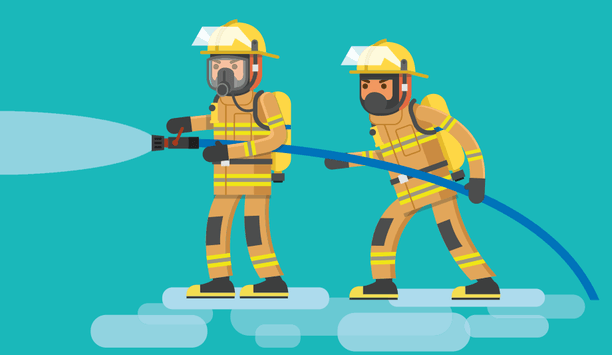
Firefighting is hot, hazardous, and let's face it, grueling work. But believe it or not, the job today has become even more challenging as firefighters must deal with increased heat loads, toxic substances and other physical challenges that make structural firefighting one of the most demanding professions on the planet. So, needless to say, being well-trained, physically fit, and safely equipped can make all the difference in the world. Evolving Technology The fact is, as heat loads and toxic...

Products for electrical systems that are installed into modern, complex buildings have to be fit-for-purpose for today’s challenging demands. With the background of numerous incidents still being felt by the fire performance industry, how is it to set the benchmarks for the future to make sure there is never another Lakanal House or another Grenfell? The long-term answer is for clearer guidance and legislation, if necessary, to enable the whole supply chain to make decisions which are com...

The continuity of power in the event of a real fire has never been more important as modern buildings become more complex and the need for the highest quality of products comes under the spotlight. With power for lighting and fire alarms, the fire and rescue services can use the intelligence gathered to evacuate people quickly, confident that they have found all the people in the building. Without power, they are literally scrambling in the dark without good information upon which to make thei...

The era of “smart buildings” is here, bringing new opportunities for significant gains in efficiency, safety and environmental protection. In an interview, Rodger Reiswig, director of industry relations at Johnson Controls Global Fire Protection Products, offers his insights into the impact of smart buildings on fire detection and what it means for organisations planning new facilities. Q: How do you define smart buildings? The term “smart buildings” means different thi...

A number of shocking incidents involving fire have highlighted the need to better manage risks in buildings. David Adkins, managing director at Risk Warden, explains why some organisations need to give compliance with statutory regulations more focus and how the use of state-of-the-art online risk assessment tools can help to ensure that a building is as safe as possible. The Grenfell Tower disaster in London, in which 72 people lost their lives, brought the subject of fire safety into sharp fo...

A new study reveals that intelligent fire detection systems have the potential to unlock more than 30 percent cost-savings on routine maintenance checks through real-time, data-driven remote monitoring. Kevin Mears, Product Manager for Kentec Electronics, describes how remote monitoring and predictive maintenance can meet the competitive challenges of the digital age. Leading economists have identified the convergence and synergies delivered by The Internet of Things – the interconnection...

Are new VA standards cause for alarm? Dr Steve Harrison, Product Engineering Manager at ASL Safety & Security, considers certification requirements in the voice alarm (VA) sector and how pending new standards will differ from predecessors. What's new, what should we be interested in, when are the implementation deadlines and what is the best route towards compliance? With major new voice alarm standards set to come into operation in Britain in 2011 (British Standard...

Electrical work in UK homes can critically limit their fire defences The structural ability of domestic buildings to resist and withstand fire can be critically reduced by electrical work within walls and ceiling linings. In this article Mike Clark, Technical Director of the Electrical Safety Council, the UK-based not-for-profit organisation, explains some of the related issues. Fire safety in domestic buildings generally requires that certain walls, floors...

Fire safety in road or rail tunnels is critical in avoiding potentially disastrous incidents Roger Wilton, Assistant Technical Manager of the Fire Industry Association (FIA), explains the challenges of preventing underground fires. Fires in tunnels tend to make headline news, largely because of the potential loss of life that such an incident presents. At the turn of the new millennium three catastrophic fires in as many years ensured that tunnel protection beca...
The New Future For Fire Agencies
Download
The Eight Key Trends in Fire Detection in 2023
Download
A Digital Platform to Improve Fire Safety Compliance and Inspections
Download
Overcoming the Challenges of Fire Safety in the Paper Industry
Download
Carbon Monoxide: Creeping Killer Caught In The Act
Download