Carbon monoxide, an odorless and invisible gas, poses a significant threat to household safety, often going undetected until it causes serious harm or fatalities.
This silent hazard can emerge from common household sources, such as gas stoves, fireplaces, or even vehicles, particularly when fuel combustion is incomplete.
Dangers and Symptoms of CO Poisoning
CDC reports that annually, over 400 Americans die from unintentional CO poisoning
Exposure to carbon monoxide interferes with the body’s ability to absorb oxygen, leading to symptoms that are easily mistaken for the flu, such as headaches, dizziness, nausea, and confusion. This often deceptive nature of symptoms contributes to the gas's peril.
The Centers for Disease Control and Prevention (CDC) reports that annually, over 400 Americans die from unintentional CO poisoning, and there are more than 100,000 emergent medical visits related to exposure.
Vulnerable populations include infants, the elderly, and individuals with pre-existing health conditions, though the risk is universal, underscoring the urgency of prevention.
Life-Saving Instances of Carbon Monoxide Detectors
Real-life instances highlight the critical role carbon monoxide detectors play in safeguarding families. One story features Jeff Deminski from New Jersey, whose detector activated just in time to save his family, including a newborn son, from the deadly gas.
Similarly, in Pierre Part, Louisiana, two families narrowly avoided tragedy during a power outage when their detectors alerted them to high CO levels. These examples illustrate that CO detectors can be a crucial line of defense against this insidious threat.
How Carbon Monoxide Detectors Function?
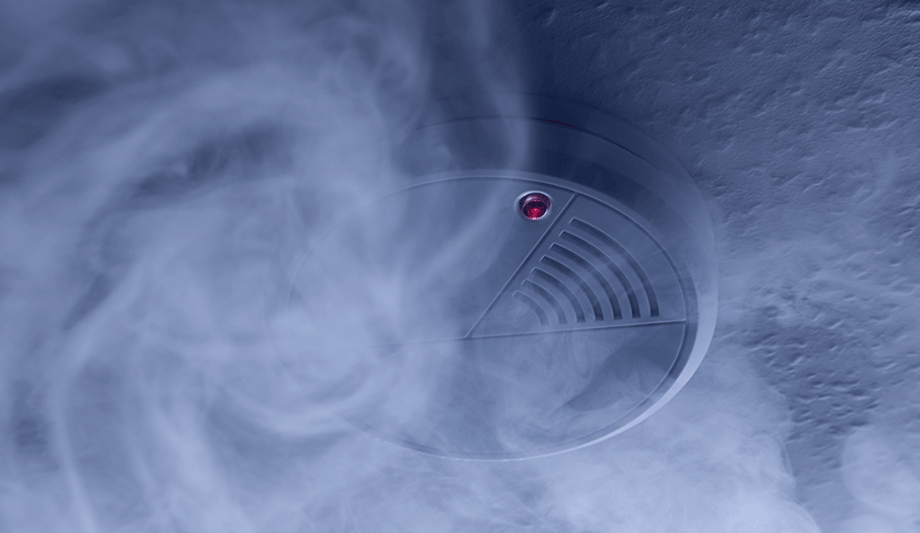
Carbon monoxide detectors operate much like smoke alarms by monitoring CO concentrations
Carbon monoxide detectors operate much like smoke alarms by monitoring CO concentrations. If CO levels surpass safe limits, the alarm sounds, providing critical time to evacuate the premises.
Proper placement is key: detectors should be situated near sleeping areas to ensure timely alerts during the night. The CDC recommends using battery-operated detectors with backup power, and replacing units every five years to maintain functionality.
The Imperative of Regular Maintenance
Consistent upkeep of carbon monoxide detectors is necessary for optimal protection. Batteries should be replaced bi-annually, coinciding with daylight saving time changes to serve as a reminder.
Moreover, gas-fueled appliances, such as heating systems, water heaters, and stoves should undergo professional inspections yearly to avert potential leaks. Awareness of a detector's lifespan is crucial as well — most devices require replacement after five years, ensuring long-term reliability.
Carbon Monoxide Risks in Everyday Situations
Factor highlights the need for CO alarms to guard against unexpected sources of the gas
The scope of carbon monoxide hazards extends beyond faulty appliances. Instances post-natural disasters, when portable generators are often used, also pose significant risk, particularly if these devices are operated indoors or near dwellings.
This factor highlights the need for CO alarms to guard against unexpected sources of the gas, emphasizing the importance of having detectors installed in all homes, covering various exposure scenarios.
The Cost-effectiveness of Safety Measures
Carbon monoxide detectors are an affordable and straightforward safety measure, costing about as much as a family dinner while offering invaluable peace of mind by protecting loved ones.
As Jeff Deminski advises, “Don’t think it won’t happen to you. You’ll never know the danger is there until it’s too late.”
Carbon monoxide detectors at homes
Incorporating a carbon monoxide detector into household safety plans is a proactive step toward preventing the tragic consequences of CO exposure. Regular checks of existing units' functionality and battery status are equally important to maintain this protective measure.
In summary, while carbon monoxide is a lethal threat that cannot be perceived by the senses, installing a simple alarm can effectively avert its dangers. Amidst over 400 preventable deaths each year, ensuring the presence of functional CO detectors at home is a critical move to safeguard family health and safety.
People can’t see it, smell it, or taste it. Carbon monoxide is a silent, deadly gas that could be lurking in the home without them even knowing.
Produced when fuel burns incompletely, this invisible killer is released by everyday household items like gas stoves, fireplaces, or even cars. The scary part? It can cause serious harm, or worse, death, before they even realize something’s wrong.
The Dangers of Carbon Monoxide Poisoning
Inhaling this gas prevents the body from getting the oxygen it needs, leading to symptoms that often mimic the flu: headaches, dizziness, nausea, and confusion. It’s easy to brush these off as nothing serious, which makes the threat particularly deceptive.
The CDC reports that:
- Over 400 Americans die each year from unintentional poisoning.
- More than 100,000 emergency room visits occur each year due to exposure.
The risk is especially high for infants, the elderly, and people with underlying health conditions, but it poses a threat to anyone. This makes it a real, everyday danger, yet one that is entirely preventable.
Real-Life Stories: When a Detector Made the Difference
Imagine this: it’s early morning, and they’re enjoying the last few hours of sleep. Suddenly, a piercing alarm breaks the silence. It’s the carbon monoxide detector. At first, they might think it’s a false alarm, but then they remember how this gas is odorless and can kill without warning.
That’s exactly what happened to Jeff Deminski from New Jersey, who shared his terrifying experience when a carbon monoxide detector saved his newborn son’s life. His house was filling with the deadly gas, and without the alarm, he might have lost his entire family in their sleep.
Similarly, two families in Pierre Part, Louisiana, were spared from tragedy when their alarms alerted them to high levels of carbon monoxide while using generators during a power outage. Carbon monoxide doesn’t discriminate, and it doesn’t wait for the “right” time. A simple detector can be the difference between life and death.
How Carbon Monoxide Detectors Work?
These detectors operate similarly to smoke alarms. They constantly monitor the air for elevated levels of CO. If levels exceed a safe threshold, the alarm sounds, giving they and their family time to evacuate.
The placement of these detectors is crucial. Install them near sleeping areas so that you’re alerted if a leak occurs during the night. According to the CDC, battery-operated detectors with a backup power source are ideal, and it’s recommended to replace them every five years to ensure they’re in proper working order
Subtle Symptoms, Big Consequences
What makes carbon monoxide especially dangerous is that its symptoms are often subtle:
- Mild symptoms: It starts with a headache or slight dizziness.
- As levels rise: They might feel nauseous, but write it off as something they ate. They may also experience increased dizziness and fatigue.
- Dangerous symptoms: As levels continue to rise, confusion sets in, making it difficult to think clearly or act. This is when things become truly dangerous. In some cases, individuals may fall unconscious before realizing anything is wrong.
In fact, one story described how a family was alerted to danger when their air purifier’s warning light flashed red. At first, they didn’t think much of it, but when they checked their carbon monoxide detection system, it was alarming with rapidly rising numbers. That quick check likely saved their lives.
The Importance of Regular Maintenance
Just like any other safety device in the home, carbon monoxide detectors need regular maintenance. It’s recommended to change the batteries at least twice a year — an easy trick is to do it when they change the clocks for daylight saving time.
It’s also essential to ensure that gas appliances are serviced regularly to prevent leaks. Heating systems, water heaters, and gas stoves should be checked by professionals annually to minimize risks.
And don’t forget the lifespan of the detector. After five years, most carbon monoxide detection systems need to be replaced. Some might last longer, but it’s always better to be safe than sorry. Think of it as a small investment for long-term peace of mind.
Carbon Monoxide in Everyday Life
While they often associate carbon monoxide poisoning with malfunctioning appliances, the risk is broader. Power outages often lead to the use of portable generators, which emit this gas.
After hurricanes or severe storms, families frequently turn to these generators for power, which can create a serious risk if used improperly indoors or too close to the house. Tragically, this leads to preventable deaths every year.
By placing a detector in the home, they’re covering all the bases. Whether it’s a broken furnace, a forgotten car running in the garage, or a generator during a storm, the alarm is there to catch what they can’t.
A Small Price for Safety
At the end of the day, carbon monoxide detectors are inexpensive, easy to install, and readily available. For something that costs about as much as a family dinner, they get something priceless: protection for their loved ones.
As Jeff Deminski said after his experience, “Don’t think it won’t happen to you. You’ll never know the danger is there until it’s too late.”
The next time they’re out running errands or ordering online, take a moment to add a carbon monoxide detection system to the list. And if they already have one, check its batteries today. It’s one of the easiest ways to protect the people they love most. If they don’t know and would rather leave it to a professional, give them a chat! it’s free.
A Simple Step to Save Lives
They often overlook the simple things, but when it comes to carbon monoxide, a small detector can make all the difference. Whether it’s a faulty appliance or a power outage leading to a generator leak, these alarms are essential for every household.
With over 400 preventable deaths each year, they don’t want to become another statistic. Protect the family now because sometimes, it’s the things they can’t see that pose the biggest threat.