
Digitalisation and the adoption of new technologies are rife in every sector and industry these days.
So, it shouldn’t come as any surprise that the fire industry is right ‘up there with the latest innovations in fire tackling and prevention measures.
Innovations in active fire protection
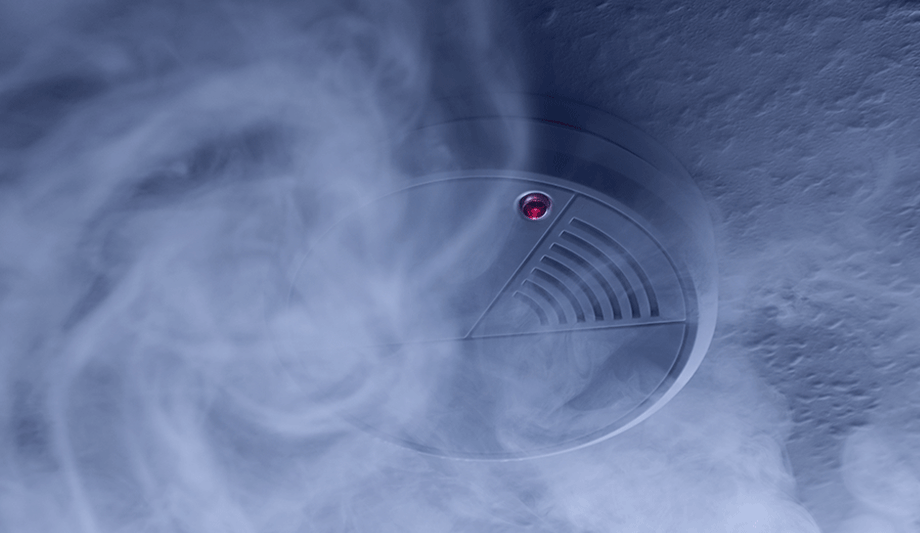
Active fire protection is an item we use to prevent fire and smoke from spreading. These include smoke detectors, fire alarms and fire sprinklers. Here are some active fire protection measures you may not have heard of before though:
Air sampling smoke detectors
Small ports in the detector analyse the surrounding air from many parts of a building. The air is brought into the port using tubing, with detectors ready to act as soon as they sense smoke.
Video smoke detection
Video smoke and flame detectors use cameras and computer algorithms to detect danger. Cameras send footage to a computer, which then runs an algorithm which is trained to look for groups of pixels indicating smoke or fire. In the event of a positive id, it sends an alarm to the control system.
The very good news is that the system can work with standard security cameras. It’s excellent for being able to detect fire or smoke in a large area or outdoors.
Water mist suppression
Water mist systems are more sustainable than sprinkler systems, they can cover a wider area
Water mist systems are more sustainable than sprinkler systems because they use smaller water droplets. At the same time, they can cover a wider area.
They cool down the temperature in a room faster than water because the mist is effectively steam, which replaces oxygen (an essential component fire needs to spread).
The Internet of Things (IoT)
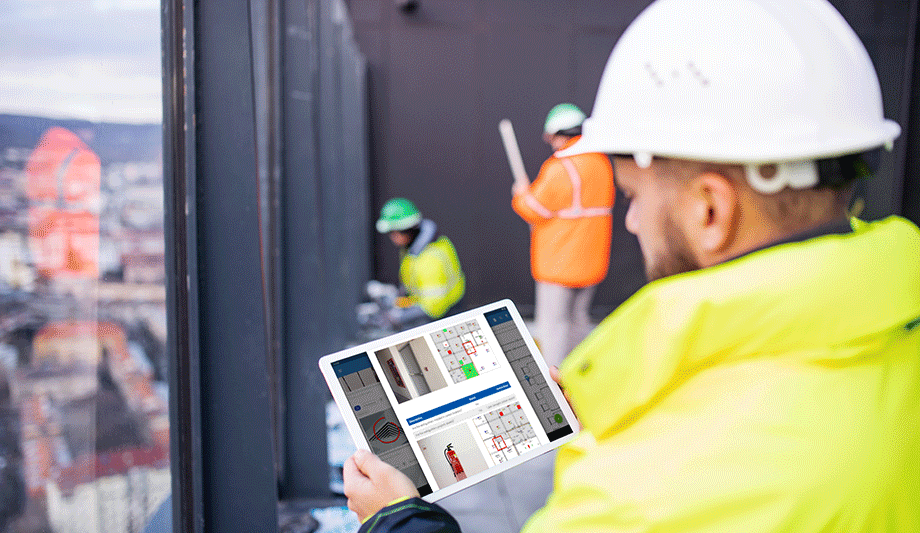
Smart buildings equipped with IoT sensors can detect hazards faster than traditional alarms, revolutionizing safetyThe IoT involves technology ‘talking’ to each other, i.e. the smart heating with your mobile and the water tank. This makes for a much faster and more secure data connection system between areas.
Smart buildings are also being constructed, where sensors can ‘read’ a building’s temperature incredibly accurately (to the extent they can be quicker than a standard smoke alarm). An alarm system and procedures can then be instantly triggered.
Thankfully, there are an increasing number of smart buildings being constructed these days, from five million connections in 2016 to an expected 150 million and more connections by 2025.
Big Data and Predictive Analysis
Evaluating large volumes of data can improve risk analysis for fires. It can help with site planning and emergency assistance times and even save lives.
Statistics used are those relating to previous fires, buildings, location, weather population and general geographical information.
Future of Firefighting
Further development in artificial intelligence, big data and IoT will result in more innovations and discoveries in the world of fire prevention and firefighting. That’s important because the quicker a fire can be detected, the more lives will be saved.