As the Christmas season approaches, warehouses throughout the UK are gearing up for an especially busy period, fueled by the significant increase in online shopping. During this hectic time, it is crucial for businesses to implement comprehensive safety measures, starting with conducting a fire risk assessment of their warehouses. This article outlines the essential steps for performing a warehouse fire risk assessment.
The initial step in any fire risk assessment is to identify potential fire hazards present within the warehouse. Special attention should be paid to ignition sources, such as matches, lighters, cigarettes, and any open flames. Sparks from machinery or vehicles, faulty electrics, and improperly maintained equipment or extractor fans can also pose risks. Additionally, traditional heat sources like HVAC systems and radiators can become hazards if blocked or improperly ventilated. Extended use of lighting can similarly increase fire risks.
Another critical aspect is identifying potential fuel sources that could facilitate the spread of a fire. Warehouses often contain flammable materials such as solvents and chemicals, including cleaning products, which serve as potential fuels. Other common sources include waste products, like shredded paper and wood shavings, which require proper disposal. Moreover, stored goods and storage systems like pallet racking can become dangerous if they come into contact with ignition sources.
The next step is to assess who might be at risk during a fire. It is important to understand where employees and visitors might be located and ensure that there are unobstructed escape routes available to everyone. Some individuals, particularly new hires or seasonal staff employed during the holiday rush, may not be familiar with the premises, which underscores the necessity of clearly marked fire exits.
Effective fire safety protocols encompass three critical actions. First, evaluate fire risks, acknowledging that while arson is possible, accidental fires due to human error or negligence are far more common. Training employees and promoting prompt incident reporting can mitigate these risks.
Second, work on reducing identified risks by removing ignition sources and fuels. Regular cleaning and maintenance can help in this regard. Creating easy-to-follow evacuation routes with clear signage can facilitate quick exits in emergencies. Installing early detection systems is another vital step in minimizing fire hazards.
Even with stringent safety protocols, the possibility of a fire cannot be eliminated entirely. Therefore, having a contingency plan in place is vital. Modelling potential fire paths, including flames and smoke spread, can help optimize evacuation routes and timings. Engaging a qualified fire safety consultant can offer valuable guidance in this area and ensure that the assessment meets BAFE-approved standards.
With the festive season around the corner, ensuring a safe working environment for warehouse staff is more important than ever. A comprehensive fire risk assessment and robust safety measures can make warehouses significantly safer. Professional fire safety consultants, such as Total Fire Group, conduct thousands of fire risk assessments annually and hold NSI certification for the BAFE SP205 Life Safety Fire Risk Assessment Scheme, providing reliable support through this critical process.
Warehouses across the UK are set to be busier than ever this Christmas. With the huge rise in online shopping, warehouses are busy places to be at any time of year, but never more so than during the run up to Christmas.
With this in mind, it’s more important than ever to take steps to keep the staff safe this Christmas, and the best place to start is by conducting a fire risk assessment of the warehouse.
Here, the article will go through the process of a warehouse fire risk assessment.
Identify Fire Hazards
As a first step, users should identify all possible fire hazards within their warehouse
As a first step, users should identify all possible fire hazards within their warehouse. Pay close attention to identifying sources of ignition (anything that could start a fire). Some examples of common ignition sources include matches, lighters, cigarettes, and any naked flame.
Sparks can also ignite fires, as can and machinery or vehicles which produce heat. Faulty electrics and equipment can also be a fire hazard, as can extractor fans if they are not properly maintained.
Even conventional heat sources such as HVAC and radiators can become a danger if they are covered or their ventilation is blocked. Similarly, lighting can also be a risk factor if left on for too long.
Waste products
Waste products such as shredded paper and wood shavings are also possible sources of fuel
Users should also look to identify any potential sources of fuel that could help a fire to catch and spread. Fuel sources commonly found in warehouse environments include flammable liquids, solvents, and chemicals, including cleaning products.
Waste products such as shredded paper and wood shavings are also possible sources of fuel and should be cleaned up properly. Of course, paper and packaging are found in the majority of warehouses and can be highly flammable materials.
Users should also be aware that stored goods (and the methods used to store them such as pallet racking) can also be a source of fuel. An important part of the fire risk assessment is taking precautions to ensure that any potential fuel sources do not come into contact with any live ignition sources.
Identify people at risk
The second part of the process of a warehouse fire risk assessment is to identify the people in and around the premises who may be at risk in the event of a fire.
Firstly, evaluate where all staff and visitors are likely to be in the event of a fire, and ensure that there is a clear and safe route out of the building from each location where people are likely to be.
Users must take into account that some people on site (for example visitors) may not be familiar with fire procedures and evacuation routes, so all routes should be clearly marked as a fire exit.
Trained in fire safety
This is even more important at Christmas time, when many warehouses employ seasonal staff or temps to bolster staff numbers in the busy period before Christmas.
While all employees should be trained in fire safety upon commencing employment, those who are new to the business are likely to be less familiar with the layout of the premises, which reinforces the need for clear and accurate signage to keep staff safe at this time of year.
Fire safety protocols
The fire safety protocols should consist of these 3 critical steps:
Evaluate the risk of the fire
Whilst arson is unfortunately a hazard that poeple need to consider, the fact remains that most fires start by accident. This could be a simple human error, such as forgetting to extinguish something or dropping a match. Negligence – such as poor cleaning – is also a common cause of fire. Employee training and reporting incidents promptly are also key factors in reducing the risk of fire.
Reduce the risks
Identifying fire hazards (as discussed above) allows users to take action to help risks. For example, users can remove sources of ignition and fuels such as the ones identified earlier in this article. Users can also ensure proper cleaning of the warehouse and maintenance of equipment.
Once one has identified the people at risk and where they’re likely to be, users can plan clear and safe fire exit routes, and even alter layout if necessary to make evacuation easier and faster. Users should consider clear signing and emergency lighting if required.
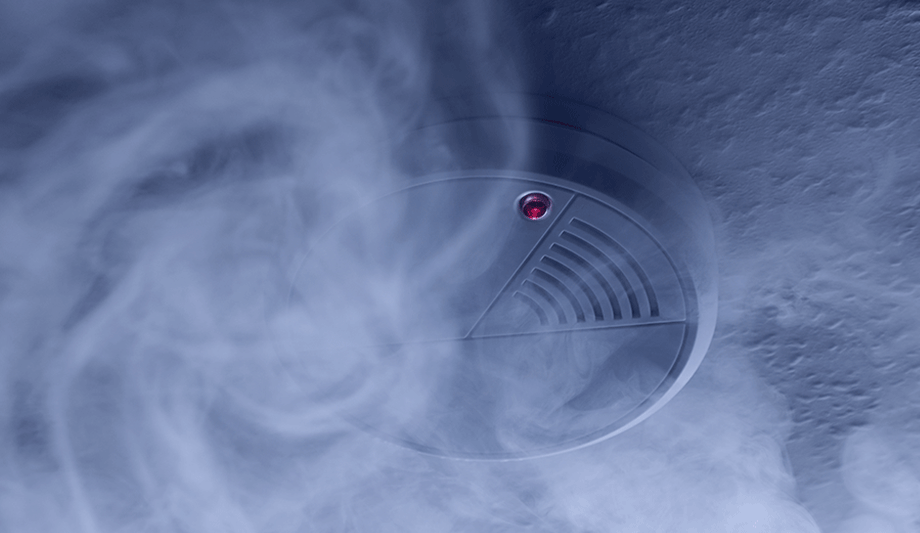
And of course, one of the key ways to reduce risks is by installing early detection and warning systems.
Assess the outcomes of fire
Even with the most robust fire risk assessment and protocols in place, there is still a chance that fire can happen in any warehouse. With this in mind, users need to be prepared with a plan for what they will do in the event of a fire to ensure people are not put at risk.
Modelling should be employed to predict the path of flames and smoke, and how this will impact the routes people use to evacuate the premises, as well as the time it will take for the fire to spread between rooms.
This may sound like a daunting task, but a qualified fire safety consultant will be able to help users to ensure they get it right. Make sure that any consultant one works with provides BAFE-approved fire risk assessments.
Correct protocols
With Christmas approaching, it’s never been more important to ensure that the warehouse is as safe as it can possibly be for the employees. By undertaking a thorough fire risk assessment and setting the correct protocols in place, users are making their warehouses a safer place to be for everyone.
If users need help conducting their fire risk assessment, there are professional fire safety consultants who can support them through the process.
Total Fire Group conducts an average of 2,000-2,500 fire risk assessments each year and has been certified by the National Security Inspectorate (NSI) for the BAFE SP205 Life Safety Fire Risk Assessment Scheme. They can help ensure that their fire risk assessment is conducted thoroughly and safely.