Under the Regulatory Reform (Fire Safety) Order 2005, the person designated as the "Responsible Person" is obligated to conduct a fire risk assessment. This assessment aims to identify potential fire hazards, reduce or eliminate these risks, and implement necessary safety measures to ensure that individuals on the premises are alerted and can safely evacuate if a fire occurs. By executing these assessments, restaurant operators can significantly decrease the likelihood of fire-related incidents in their establishments.
Conducting a Fire Risk Assessment
For a comprehensive fire risk assessment, the following five steps are recommended:
- Identify fire safety hazards
- Determine who could be harmed and how
- Evaluate the risks and decide on appropriate precautions
- Implement procedures and document findings
- Review and update the assessment regularly
Considerations for Restaurant Environments
In restaurant settings, specific factors demand attention during fire risk assessments. The bustle of a busy kitchen, with equipment like ovens, open flames, and gas hobs, makes it a potential fire hazard zone. Thus, identifying and evaluating these hazards is critical.
Maintenance of Extraction Systems
Owners should also ensure that extraction ducts and fans are well-maintained. Any build-up of flammable materials, such as fats, dust, and grease, should be cleaned to prevent obstruction of ventilation systems, which can exacerbate fire spread.
Impact of Public Presence
Unlike office spaces where employees are familiar with fire safety protocols, restaurants see varied patrons daily. Each patron might lack knowledge of the building's layout or fire exit locations and may have unique vulnerabilities, such as mobility impairments. Restaurant owners must consider these factors when conducting fire risk assessments to enhance overall safety.
Engaging BAFE-Approved Services
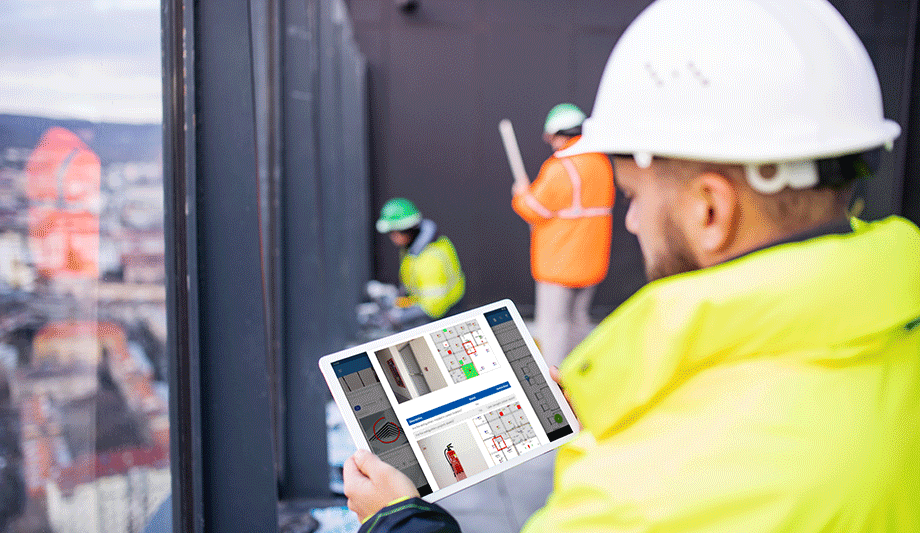
To ensure thorough and effective fire risk assessments, Total Fire Group offers BAFE-approved services that can alleviate the burden from restaurant owners, allowing them to focus on daily operations. Their bespoke fire risk assessment software stands out in the industry, providing reliable evaluations. Moreover, Total Fire Group provides ongoing consultancy services, encompassing initial assessments and more comprehensive support, having worked extensively with the hospitality sector to enhance fire safety management.
Under the Regulatory Reform (Fire Safety) Order 2005 there is a requirement placed on the “Responsible Person” to carry out a fire risk assessment – to identify any possible risks, to reduce or remove those risks and to implement any precautions necessary to ensure that persons on the premises could be alerted and would be able to escape safely in the event of a fire occurring.
In doing this users will drastically reduce the chance of their restaurant being affected.
Fire risk assessment
When carrying out a fire risk assessment, users should follow these five steps:
- Identify fire safety hazards
- Determine who may be harmed and how
- Evaluate the risks and decide on precautions
- Implement procedures and record findings
- Review and update the assessment
Restaurant-specific considerations
Kitchen processes and cooking equipment
Ovens, open flames, gas hobs – a busy restaurant kitchen is arguably one big fire hazard. With a hectic commercial kitchen full of people hustling and bustling, it’s important to make sure any potential fire hazards have been highlighted and assessed.
Extraction ducts and fans
Users should ensure that any and all extraction ducts are cleaned or adequately maintained to repair any breaks/gaps in the ducts. This is because the build-up of flammable fats, dust, and grease may prevent ventilation systems from working properly and contribute to the rapid spread of fire.
Members of the general public
A successful restaurant will be filled with members of the public, and this can pose unique challenges
Commercial spaces such as offices often only have the same employees within their premises day-to-day, who should have received up-to-date fire training and be familiar with fire safety procedures.
However, a successful restaurant will be filled with members of the public, and this can pose unique challenges.
Every day the restaurant is filled with brand new people, often who have never been to the premises before and aren’t aware of the layout of the premises, the location of the fire exits, and may have their own unique vulnerabilities, such as a physical disability. Restaurant owners should keep this in mind when thinking about their fire risk assessments.
BAFE-approved
Total Fire Group can carry out BAFE-approved fire risk assessments on the owners’ behalf to give them the peace of mind that it has been done correctly, and give users the time to focus on the day-to-day running of the business.
They have even developed their very own fire risk assessment software that is like nothing within the industry.
However, fire risk assessments are only the beginning of the fire risk management cycle. They can also offer an ongoing fire consultancy service, which includes the initial fire risk assessment(s), as well as more in-depth support. They have worked with many brands, conducting fire risk assessments for the hospitality industry