Did they remember to schedule that fire risk assessment? They’re sure they did, but they’re just not 100%. They’ll have to pull out the “Excel spreadsheet of doom” and find the fire risk assessment tab. Not the quickest task to do at 4:30 pm on a Friday.
Managing the fire risk assessments when they run a large property portfolio can be a headache. Tools like Excel and Google Calendar can help, but they’re not really fit for purpose, certainly once they start growing past 20 properties.
fire risk management cycle
Fire safety software can help an overworked property manager keep up to date
Fire safety software can help an overworked property manager keep up to date with their fire risk management cycle. But with a lot of different fire safety products on the market, it can be difficult to decide which one would be the best for the property business.
In this article, they’ve listed the five key things the fire safety software should do if they want to make the portfolio fire risk management a breeze.
Automates reminders for them to get their FRAs done
No more scheduling reminders on the phone or in the calendar. Not only is this way of reminding themselves about fire risk assessments time-consuming its open to human error. If they’re manually entering the dates and reminders for a number of properties, all it takes is one bad day or typo to throw the fire safety management off.
Fire safety software keeps a database of all the buildings and reminds them when it’s time to book a property’s fire safety assessment. Some software, like Total Fire’s Aurora, also directly messages the client and the fire risk assessment company when an assessment is due on one of the properties. This means the assessments can run on autopilot while they take care of other areas of the business.
Manages the fire safety management cycle in one forum
Correctly syncing up and managing these different platforms is one solution to this problem
Running any business process over multiple software platforms is a drag. Making sure each tool is working properly and communicating with others when they need to can leave a lot of room for things to break. Correctly syncing up and managing these different platforms is one solution to this problem. But it takes constant maintenance and testing to make sure everything’s doing what it’s supposed to.
A better way to solve this problem is by using one fire risk management software system for the entire fire risk management cycle. That way, there isn’t any danger of something breaking or a tool becoming unresponsive because everything is managed in one place. Having all the data on the properties in one platform and being able to communicate with contractors and FRAs using it is a must for any property manager.
The fewer programs and software they need to manage their processes, the better. Having everything taken care of in one place makes it easy for a property manager to check, update and review their fire safety status.
Assign tasks to contractors based on the FRAs' offers
Having a fire risk assessor complete the fire risk assessments on the properties is only half the job. Once a fire risk assessment is completed, a property owner then needs to work with external contractors and internal teams to enact any recommendations provided by the fire risk assessor.
Fire safety software can help a property owner overcome this hurdle by letting them forward
Communicating the recommendations to external contractors and the team can be tricky and disjointed when a property owner is relaying the information from the fire risk assessor. Although the fire risk assessor will leave detailed notes, there’s still a possibility that important considerations will get lost in translation.
Fire safety software can help a property owner overcome this hurdle by letting them forward a fire risk assessor’s recommendations straight to external contractors or the team directly in the platform. Total Fire Group’s software, Aurora, has this functionality. It lets property owners forward recommendations directly to their chosen contractors. This not only saves them time and energy, but it also guarantees the fire risk assessors' advice will be carried out to the letter.
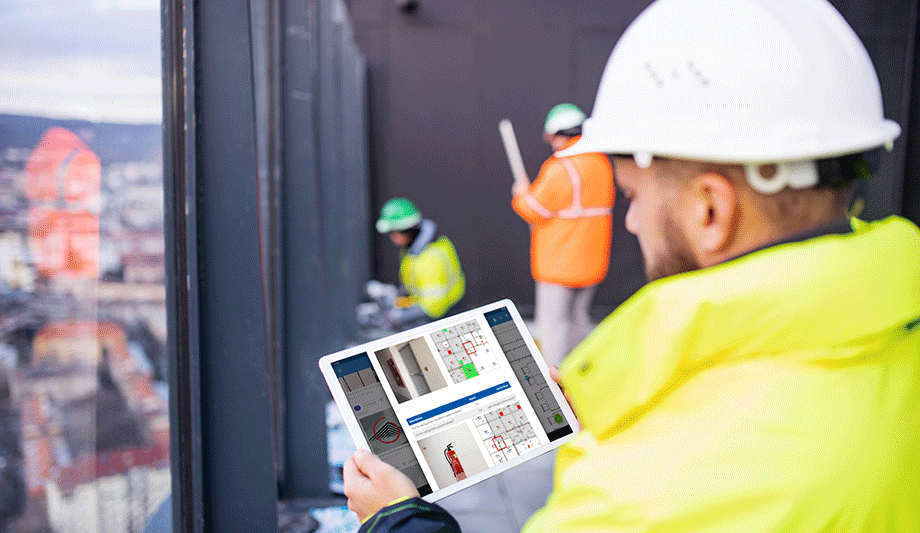
Upload floor plans and images to directly stress FRA findings
There is a lot that goes into a fire risk assessment. An assessor needs to tick off a whole host of criteria, and they can find things that need fixing in all sorts of locations. Traditionally, fire risk assessments were done with a paper and pen. If they were lucky, a printed out floor plan was used too. This lets assessors mark problems and recommendations with greater accuracy to help the property owner identify and fix their problems.
Fire safety software, like Aurora, fire risk assessors upload and share digital floor plans to their platform
Nowadays, a paper and pen is a pretty old-fashioned way of doing things. It’s easy for notes to be misinterpreted or missed altogether. They can be difficult to understand (or read) and hard to follow when trying to locate a problem.
Fire safety software, like Aurora, lets fire risk assessors upload and share digital floor plans to their platform. It lets assessors pinpoint finding locations and add notes directly to the plan, and they can even add pictures to different areas to better highlight the issues that need fixing. This gives clients greater clarity on what is happening on their sites and makes it easier for them to communicate with external contractors.
Automatically generates a BAFE SP205 Certificate
If the assessment company is BAFE SP205 certificated, Aurora will automatically produce the BAFE Certificate with every FRA. This might not sound like a big deal, after all, it’s just a certificate.
But by doing the BAFE certificate automatically, it saves everyone time and effort and gives property owners the satisfaction of having their properties assessed by a reputable company.
Find a fire safety control software that does all these things
There is no shortage of fire safety management software out there on the market. Each has its own distinct strengths and weaknesses. Whichever one they choose, make sure it can do the 5 things they’ve mentioned above.
That way, they’ll know that the software will reduce the workload and make the fire safety management a breeze.