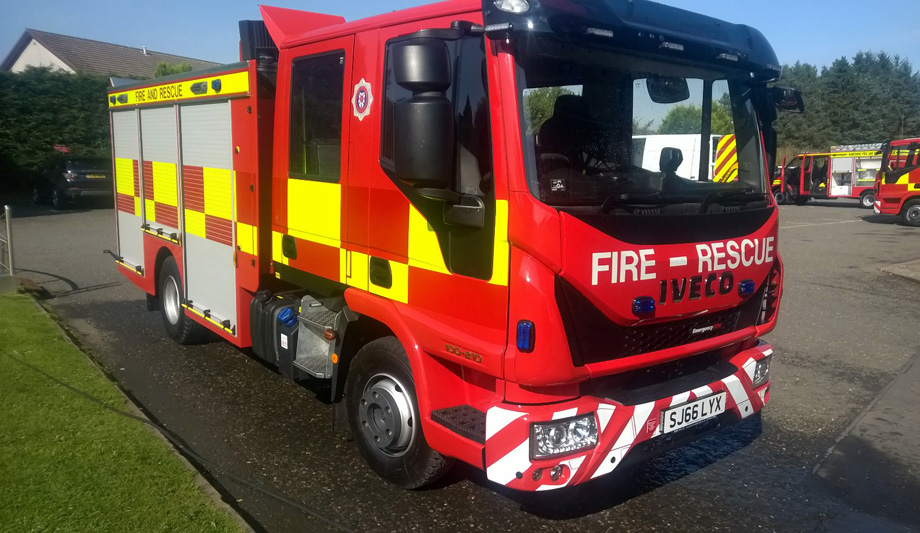

From 19th September, for the first time, all six new emergency response vehicles for North Yorkshire Fire and Rescue Service are attending emergencies.
The Tactical Response Vehicles (TRVs) have been introduced as part of the review of the fire cover, which was undertaken as the number of incidents the Service attends over recent years* has reduced significantly.
New technology and procedures
Assistant Chief Fire Officer, Owen Hayward, said: “After nearly four years of research, development and consultation, I am pleased that these vehicles are now operational. This is a new way of responding to emergencies both for North Yorkshire and, I believe, in the UK. New technology and procedures allow these vehicles to be crewed by fewer staff than a standard fire engine. They have replaced a standard fire engine in areas of relatively low risk and where there is another standard fire engine on the same fire station.”
TRVs have replaced one of the two standard fire engines at Harrogate, Scarborough, Malton, Northallerton, Ripon and Tadcaster fire stations. The first TRV (Scarborough) started responding to incidents in January 2017, with the ones at Northallerton and Tadcaster becoming operational in February, Harrogate in April, and the final two at Malton and Ripon in September. Since January 2017 the TRVs have been sent to over 600 emergencies.
Responding to both small and serious incidents
The North Yorkshire Fire and Rescue vehicles are crewed by three staff, rather than four or five on our standard fire engines. They are equipped to be able to respond to, and deal with small incidents, such as bin fires, on their own. They also attend more serious incidents, such as house fires and road traffic collisions, alongside standard fire engines, and other resources.
The operational use of the TRVs will continue to be monitored and evaluated, and where necessary adjustments to the equipment and operating procedures will be made.
The Fire Authority agreed at their meeting on the 20th September that a further review of the TRV crewing (which will remain at three) should take place during 2020 for reporting to the December 2020 meeting of the Fire Authority.
Finally, Assistant Chief Fire Officer, Owen Hayward, said, “I am proud of the hard work that all staff have done over the last few years to get these vehicles operational. The TRVs are now delivering a more cost effective service, and provide a better match of resources to risk in those areas.”