Kidde - Experts & Thought Leaders







Latest Kidde news & announcements

The fire protection industry is amid some exciting technological developments. While the core tenets of fire protection remain the same, new products allow for solutions that are more efficient and sustainable, not to mention safer. In this article, CLM will highlight some of the most recent advances in fire protection technology, and how they can transform the industry. Internet of Things The Internet of Things (IoT) has the potential to revolutionize everyday objects. In essence, the technology uses the internet to expand the capabilities of many products and appliances. Driverless cars are a common example of what have been described as Smart Connected Things (SCot). Smart technology is set to thoroughly modernize how fires are detected currently. Smart buildings In 2016, it was estimated that smart buildings hosted a total of 5 million connections Recently, CLM has seen an increase in ‘smart buildings’. In 2016, it was estimated that smart buildings hosted a total of 5 million connections. This is expected to increase to over 150 million connections by 2025. Going forward, many of these smart buildings will offer cutting-edge fire detection systems. These systems use sensors to read a building’s temperature with greater precision. These sensors could potentially detect the presence of fire before traditional smoke alarms. They may also be able to accurately gauge the intensity of a fire, alerting firefighters so they are appropriately prepared to tackle the blaze. Conventional fire protection systems Many conventional fire protection systems rely on an interconnected system of alarms. These are often installed by different manufacturers, with each one having different requirements for monitoring and maintenance. Smart buildings could not only offer superior levels of fire detection but also a centralized system in which an entire fire protection system is handled automatically by one computer. While this would necessitate a backup system in case of technical issues, this stands to make a building’s fire protection system as a whole more efficient. Water sprinklers Water sprinklers are a key asset for both commercial and residential fire protection Water sprinklers are a key asset for both commercial and residential fire protection. However, they arguably use too much water to be considered a sustainable solution. It should be noted that, according to the Staffordshire Fire and Rescue Service, the average sprinkler dispenses 55 liters of water per minute compared to the 750 liters dispensed by the typical fire hose. Fire sprinklers also pose problems for buildings that host fragile equipment, electronics, and perishable valuables. This, combined with an increased focus on sustainability, has prompted research into the benefits of water mist suppression systems. Water mist suppression systems These systems work by creating droplets that are much smaller in size than those produced by conventional sprinklers. This not only reduces water usage but increases the surface area of water being dispensed. Fires feed on oxygen, and by replacing oxygen with steam, mist suppression systems reduce the overall temperature at a faster rate. This is not the only benefit offered by mist suppression systems. By creating a thin layer of water on affected walls, the rate at which fire spreads is reduced. Reduced rate of deaths Traditional sprinklers produce large water particles that become infused with smoke particles These systems also drastically lower the potential for smoke inhalation. Traditional sprinklers produce large water particles that become infused with smoke particles, which then cause smoke to spread. By curtailing the spread of smoke, mist suppression systems can reduce the rate of deaths from smoke inhalation, which make up over half of all fire-related fatalities (even this is a conservative estimate). The development of water mist systems had stalled for quite some time. This is due to a lack of similar industry technology, which complicated the process of setting technical standards. However, over the last few years, the technology has started becoming commercially available. Fire-stopping sealants However, some of these products have been known to contain volatile organic compounds Fire stopping is a fundamental element of any passive fire protection system. This process involves using sealants to rectify any breaches in walls, floors, or ceiling voids that may enable the spread of smoke. There is a range of sealants currently available on the market, including silicone, MSP, butyl, and acrylic-based products. However, some of these products have been known to contain volatile organic compounds (VOCs). VOCs VOCs can emit gases that are harmful to the environment, not to mention they contain multiple health risks. Prolonged exposure to VOCs can cause chronic headaches, visual impairment, and even memory loss. Therefore, fire protection companies need to embrace non-toxic and environmentally safe sealants. Protecta FR IPT CLM Fireproofing is one of several companies to use Protecta FR IPT, a VOC-free sealant that utilizes an innovative Inert Polymer Technology. This technology means there are no chemical reactions when applying the sealant. It is these chemical reactions that emit pollutants and hazardous gases. This lack of reaction also makes the sealant compatible with many construction materials, whilst also outperforming its less sustainable counterparts. Since this “green” sealant can be used on flooring, joinery, plumbing, and tiling (to name a few), it also reduces the amount of waste that comes with using multiple products. In the fire industry, there can be many catalysts for technological advancement. While CLM is always looking for ways to make processes safer and more efficient, it must also keep abreast of new fire safety regulations. Not only does this ensure the well-being of both residents and operatives, but new industry regulations may also, at times, prompt investment in new products and systems. Approved Document B updates For instance, the Ministry of Housing, Government & Local Government has announced updates to Approved Document B (Fire Safety) which will go into effect from November 2020 (and projects where building work starts after January 2021). These updates apply to blocks of flats (as well as mixed-use buildings that contain flats) that have top floors over 11 meters above ground level. Reduced threshold The most notable update is the height threshold for sprinkler systems in residential blocks of flats, which has been reduced from 30 to 11 meters. The reduced threshold means that C-PVC sprinkler pipes must be sealed with specialist-approved products. CLM strongly advises that operatives and project managers consult the following sources for guidance on sealants that comply with these new regulations: Lubrizol’s FBC System Compatible Program Spears’ FlameGuard Compatible Products List Smoke detectors Smoke detectors remain a critical part of fire protection, but they can be unfortunately considered a nuisance in many homes. This is because traditional smoke detectors can struggle to differentiate between ‘real’ fires and, for instance, the smoke created when cooking. This leads to smoke detectors being disconnected due to being ‘too sensitive’. Challenges with smoke detectors CLM must develop systems with more nuanced smoke detection capabilities According to a study of U.S. homes conducted by the National Fire Protection Association, in fires with smoke detectors that were installed but failed to work, 43% were found to have missing or disconnected batteries. This shows more than anything that this common practice mustn’t continue. CLM can continue to encourage homes to keep their smoke detectors connected, but this does not address the cause of the issue. Instead, CLM must develop systems with more nuanced smoke detection capabilities. Smoke alarm developed by Kidde One example of this is a new smoke alarm developed by Kidde, one of the world’s pioneering providers of fire safety technology. In 2019, it was announced that their smoke alarms would be equipped with TruSense technology. Smoke can be produced in a variety of household situations, from a fire to cooking as well as smoking cigarettes indoors. While all of these situations will likely trigger a smoke alarm, each produces smoke particles of varying sizes. TrueSense alarms TrueSense alarms have been trained by algorithms to differentiate sources of smoke, based on the size of the particles. This then reduces the amount of ‘false alarms’, deterring households from disconnecting their smoke detector. These types of systems certainly have potential for residential homes. Requirements for commercial buildings CLM must also consider the unique requirements of commercial buildings at risk from fire However, CLM must also consider the unique requirements of commercial buildings at risk from fire. Warehouses, depots, and large storage facilities are expansive spaces with higher ceilings than the average home. This means there is a risk of fire damage before the smoke reaches the detectors. It should also be taken into account that commercial buildings will usually have more than one smoke detector. This means that fire protection systems may raise the alarm without knowing the exact location of a fire. Visual image detection (VID) technology These unique issues can be addressed with visual image detection (VID) technology. Cameras are installed and then linked to a piece of VID software on a central computer. The software utilizes algorithms, which have been programmed to recognize pixels indicative of either smoke or fire. The computer then triggers an alarm system that can contact the local fire department, while also initiating fire sprinkler and door systems. VID systems act as advanced and automated fire detectors, and can often identify the exact source of a fire.

Kidde, North America’s #1 home fire safety brand, and Ring, a pioneer in smart home security, announced a new partnership and innovative collection of Smart Smoke and Combination Alarms (Smoke + CO). Ring and Kidde are combining their respective expertise in smart home protection and fire safety to offer added peace of mind, control, and convenience. The alarms have Ring technology built-in, enabling customers to better protect their homes from anywhere. real-time smoke and CO alerts Customers can receive real-time smoke and CO alerts through the Ring app and opt into professional monitoring and emergency dispatch service through a new Ring 24/7 Smoke & CO Monitoring subscription ($5 per month), where trained agents can request emergency help and alert a customer’s emergency contacts in the event of an alarm. Home fires today are burning hotter and faster, causing more damage than ever before, which is why every second counts when it comes to a fire emergency. Together, Kidde and Ring are ensuring customers can act fast. The new offering will be showcased at CES 2025 providing attendees with an exclusive first look at the alarms before it hits U.S. shelves this spring. Sensing technology The nuisance of low battery chirps is minimized by giving customers approximately 7 days advance notice Kidde’s enhanced sensing technology has 25% faster and up to three times more precise smoke detection, and the devices’ advanced technology also reduces false alarms often caused by cooking, which helps prevent consumers from disabling their alarms - and putting themselves at higher risk. Additionally, the nuisance of low battery chirps is minimized by giving customers approximately 7 days advance notice in the Ring app of their alarm battery running low, so they can replace the batteries before the alarm starts chirping. home fire and carbon monoxide safety “For over 100 years, Kidde has made it our mission to deliver home fire and carbon monoxide safety solutions that meet evolving consumer needs,” says Isis Wu, President of Global Residential Fire & Safety at Kidde. “Our partnership with Ring is a continuation of that commitment in a seamless and integrated way that provides an extra layer of smart home protection, as well as convenience at your fingertips, to help keep families safer.” Smart home protection “At Ring, we are making it easy for people to stay close to the things that matter most to them, and the safety of their homes and loved ones is chief among that,” says Charlie French, Director of Emerging Products at Ring. “We’re ecstatic to bring Ring to a new part of the house, giving customers more control of such critical safety products and enabling them to protect their home no matter where they are.” new alarms with Ring Kidde is also teaming up again with actor and certified “candle-guy” Eric Stonestreet to help introduce the new collection at Kidde’s booth at CES on January 7 from 12:45 pm -1:45 pm PST. “Since I recently discovered that I am capable of (sometimes, even prone to) making mistakes, I need backup for the times when I forget to blow out my favorite candle,” says Eric Stonestreet. “Kidde’s new alarms with Ring will help me better protect my home even when I’m not there and ultimately help keep my family safe." Smart Smoke and Combination Alarms The Kidde Smart Smoke and Combination (Smoke + CO) Alarms with Ring will retail for $54.97 and $74.97 respectively and be available exclusively at The Home Depot stores and online at HomeDepot.com in April 2025, followed by additional retailer partners later this year. Customers can also sign up at Ring.com to be notified when the alarms are available for purchase. For a preview of the products, visit Kidde’s booth at CES #52628 in The Venetian Expo Ballroom (Smart Home - Level 2) and Ring’s booth at CES #CP-105, located at the Las Vegas Convention Center Central Plaza.

Carrier Global Corporation, a global pioneer in intelligent climate and energy solutions, entered into a definitive agreement to sell its Commercial and Residential Fire business to an affiliate of Lone Star Funds for an enterprise value of $3 billion. "The sale of our Commercial and Residential Fire business marks a defining step in our planned business exits critical to our transformational journey to becoming a focused, agile, higher-growth, pure-play company dedicated to creating a more sustainable world for generations to come," said Carrier Chairman & CEO David Gitlin. Carrier's portfolio transformation Commercial Refrigeration sale is on track to close around the end of the third quarter David Gitlin added: "I am so proud of what our deal and business teams have accomplished. We now have executed deals on all our divestitures, all signed within about a year of announcement, with a combined value of over $10 billion, representing a mid-teens EBITDA multiple in aggregate. This reflects tremendous dedication by so many, and I could not be more appreciative of our team's tireless efforts and great work." The sale announced marks a critical milestone in Carrier's portfolio transformation, following the acquisition of Viessmann Climate Solutions in January and the successful divestitures of its Industrial Fire and Global Access Solutions businesses. The Commercial Refrigeration sale is on track to close around the end of the third quarter. Closing of the Commercial and Residential Fire business is expected by the end of 2024, subject to regulatory approvals and customary closing conditions. Acquisition of Viessmann Climate Solutions Following the acquisition of Viessmann Climate Solutions, Carrier has reduced its net debt by over $5 billion through the repayment of outstanding term loans and notes, including last week's successful tender for additional outstanding debt. As a result of significant de-leveraging this year, and consistent with prior messaging, Carrier expects to redeploy the estimated $2.2 billion in net proceeds from the transaction towards share repurchases. Goldman Sachs & Co. LLC and J.P. Morgan Securities LLC are serving as financial advisors to Carrier. Paul, Weiss, Rifkind, Wharton & Garrison LLP, and Linklaters LLP are providing external legal counsel.
The New Future For Fire Agencies
Download
The Eight Key Trends in Fire Detection in 2023
Download
A Digital Platform to Improve Fire Safety Compliance and Inspections
Download
Overcoming the Challenges of Fire Safety in the Paper Industry
Download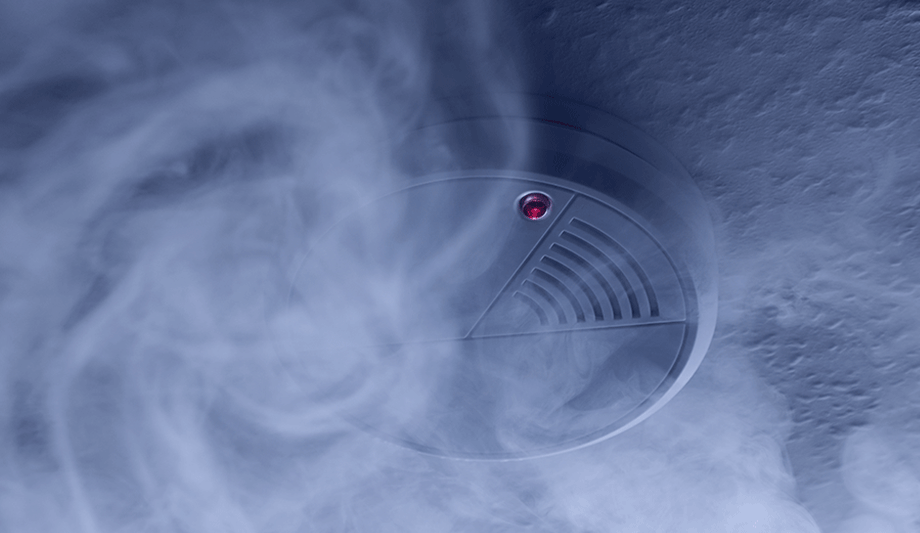
Carbon Monoxide: Creeping Killer Caught In The Act
Download