Forman Vehicle Services - Experts & Thought Leaders




Latest Forman Vehicle Services news & announcements

Global safety experts, Ardent Group (Ardent Vehicle Fire Protection) have announced significant new investment in machinery and robotics at its site in Roecliffe, York, United Kingdom (UK), as the company expands its portfolio of market-renowned fire suppression and electronic systems, for a wide range of vehicles, as well as static and mobile plant. Investment in machinery and robotics Explaining the investment, Neil Crowther, the Managing Director at the Ardent Group, said “In recent years, we’ve brought DAB Fire Engineering and Forman Vehicle Services into the Group, as well as expanded the number of markets and applications, where we operate.” He adds, “This has resulted in the need to further invest in our facility extending our machine capabilities, as well as bringing a new robot into the workflow, to drive further productivity and efficiency into the operation.” Meeting the growth projections of the business This investment increases our capacity to meet the growth projections of the business" Neil Crowther continues, “As a business committed to continuous improvement, this investment increases our capacity to meet the growth projections of the business and further accelerates our quality performance, at the same time.” He further said, “Importantly, we are also investing in more training of our people to up-skill the team and ensure we continue to deliver best-in-class people and business protection solutions, which we can all be proud of.” Vehicle fire suppression systems and equipment Ardent Group was founded in 1993 and was initially established to install and maintain vehicle fire suppression systems and equipment. Following substantial success in this market, Ardent Group developed its own brand of system, drawing on its years of industry experience. Its protection solutions now cover a range of applications and industries, from underground mining to public transport, static and mobile plant to electronic safety systems.

Following the outbreak of the Coronavirus (COVID-19), Forman Vehicle Services wanted to reassure everyone that they are doing everything they can to reduce the risk of infection for customers and employees. The company understands that many businesses are keen to maintain normality and they would like to do what they can to make business as usual as easy as possible. Operation update due to COVID-19 spread Supplying and maintaining their systems is a high priority for Forman Vehicle Services Please be advised that there is no change to the operation of the business and that system servicing, order processing, and fulfillment will go ahead as normal. Supplying and maintaining their systems is a high priority for Forman Vehicle Services and they value the importance of ensuring the safe running of the vehicles. Their phone lines are still open should anyone have any questions or concerns during this challenging period and their emergency line will continue to be operational out of office hours. Focus on environmental, organizational, and hygiene measures The primary focus of the business is on environmental, organizational, and general hygiene measures to reduce the risk of transmission. The well-being of their staff and customers is important to Forman Vehicle Services and they have put the following processes in place, in order to mitigate disruption to their customers, to their employees, and to their business: Introduction of a ‘no hand-shaking’ policy across the group Installation of posters to reinforce WHO advice regarding regular, thorough hand washing Embracing technology has meant that the key contacts are available for remote meeting They can now offer ‘contactless’ servicing, accepting written confirmation of acceptance Regular disinfectant of the offices, including door handles, desks, phones, and light switches Wherever possible, staff is working from home to help prevent the spread of the COVID-19 virus Increased deployment of hand soap at sinks around the offices Social distancing of office-based staff to reduce the transmission of any infections Health, safety and hygiene procedures Forman Vehicle Services have implemented health, safety, and hygiene procedures, and processes to reduce the spread of COVID-19 virus and the risk of infection, in line with World Health Organization (WHO) and government advice, and staff has been advised of recommended practices to limit the spread and chance of infection. For anyone having any concerns regarding infection control, please contact the company staff. Should there be any changes within the business, please be assured that Forman Vehicle Services will keep everyone informed via email, their website, and social media.

Recent shifts in the transport industry towards green energy have led to an increase in electric, hydrogen, and hybrid electric vehicles on the road. Public transport has seen a rise in the number of clean energy buses in use, and some questions regarding the safety of the vehicles have been raised. fire suppression systems One such question was that of the effect of the quiet vehicles on other road users and the partially sighted, which led to UNECE Regulation No. 138 for Quiet Road Transport Vehicles about their reduced audibility. Another question that has been raised concerns the use of fire suppression systems on these new energy vehicles. As technology develops, clean energy vehicles are becoming increasingly safe, but some challenges lie in the difference between the fire properties of clean energy and traditional combustion engines. Traditional fire suppression Traditional combustion engines catch fire most often when they overheat or when there is a fuel leak Traditional combustion engines catch fire most often when they overheat or when there is a fuel leak. Fire requires 3 essential components to ignite: fuel, heat, and oxygen. The diesel or hydraulic oil acts as fuel for the fire, the engine provides the heat, and the oxygen in the atmosphere completes the triangle. Traditional fire suppression systems, including some UNECE R107, approved fire suppression systems, rely predominantly on dry chemical extinguishing agents (dry powder) to suppress fires. how it works These systems work because the dry chemical agent is dispersed from the nozzles and gets into every area of the engine compartment thanks to its excellent dispersion and coverage capabilities. The dry powder coats the surfaces within the engine compartment, creating a barrier between the fuel and the oxygen. This suffocates a fire, suppressing it in a matter of seconds to minimize damage to the vehicle. Challenges when protecting clean energy vehicles Clean energy vehicles pose a challenge, as the combustion properties are different from those of a traditional engine. Hydrogen fuel cell-powered vehicles and Lithium-ion (Li-ion) battery-powered vehicles both pose a significant threat if ignited and each act differently. Lithium-ion (Li-ion) battery vehicles Electric and hybrid electric vehicles use Li-ion batteries and, if the battery pack ignites, the resulting fire is intense Electric and hybrid electric vehicles use Li-ion batteries and, if the battery pack ignites, the resulting fire is extremely intense and can spread quickly from cell to cell. The fire suppression systems currently installed on electric and hybrid buses are designed to contain the fire to give the passengers and the driver time to evacuate, rather than to extinguish the fire completely. Hydrogen fuel cell vehicles Hydrogen cell vehicles in particular pose a unique fire risk. For hydrogen to ignite, oxygen and an ignition source are required. However, when ignited, pure hydrogen flames burn pale blue which makes them almost invisible and they do not produce smoke, making them incredibly difficult to detect visually. Hydrogen firefighting protocols are similar to those of other gases. The gas should be eliminated, or, if this is not possible, the fuel should be allowed to burn out under controlled conditions. 1) Extinguishers Small fires can be fought with dry powder agents, carbon dioxide, or halon extinguishers. If a hydrogen fire is extinguished, but the fuel source is not cut off, the resulting mixture may re-form to reignite. Currently, hydrogen fires where the fuel source cannot be removed are fought by allowing the fire to burn out while preventing the spread of the fire and using copious amounts of water to cool the surroundings. 2) Dry chemical fire suppression system For hydrogen vehicles, as soon as a fire is detected the vehicle should be shut down to shut the valves, eliminating the fuel source. The installation of a dry chemical fire suppression system in hydrogen buses is recommended to contain the fire, reducing vehicle damage and allowing passengers and the driver to safely evacuate the vehicle. What is being done to improve electric vehicle fire safety? The testing creates safer batteries through tests examining the Li-ion battery cells' response to a range of variables Li-ion batteries have a safe window of use. Outside of this window they are liable to self-heat and go into ‘thermal runaway’ mode, increasing the likelihood of fire. Stringent safety measures are put in place to monitor Li-ion batteries, shutting down the battery if unsafe conditions are detected. The SP Technical Research Institute of Sweden (SP) is currently engaged in research surrounding the dangers and advancement of safety for electrified vehicles. The testing looks at creating safer batteries through tests examining the Li-ion battery cells' response to a range of variables, including temperature, fire, and explosion. greener fuel sources The rapid transition from the traditional internal combustion engine to newer, greener fuel sources has sparked changes in fire suppression, with investigations and experimentation into suppression systems for the new fuel sources underway. The danger that the risk of fire on these vehicles poses cannot be overlooked and despite advances in the safety of electric and hydrogen vehicles, the damage done if a fire does start can be catastrophic. Installation of fire suppression system Public transport vehicles must have a fire suppression system installed, as not only does it mitigate damage to the vehicle, but most importantly it gives the passengers and the driver valuable time to evacuate the vehicle. For passengers with reduced mobility, this extra time can make all the difference. The future looks bright for public transport vehicles, with constant and continual innovation in the field of fire suppression and the safety of clean fuel sources, and this momentum should push the industry forward in the next decade.
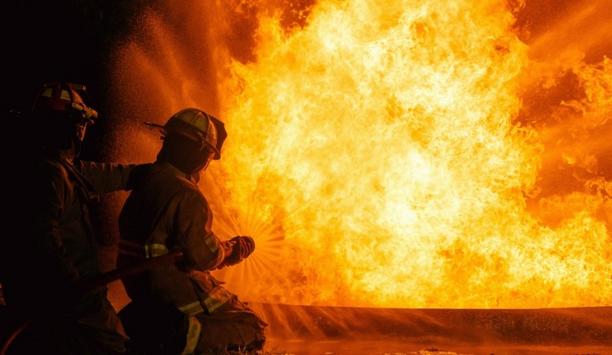
The New Future For Fire Agencies
Download
The Eight Key Trends in Fire Detection in 2023
Download
A Digital Platform to Improve Fire Safety Compliance and Inspections
Download
Overcoming the Challenges of Fire Safety in the Paper Industry
Download
Carbon Monoxide: Creeping Killer Caught In The Act
Download