CLM Fireproofing - Experts & Thought Leaders




Latest CLM Fireproofing news & announcements

The fire protection industry is amid some exciting technological developments. While the core tenets of fire protection remain the same, new products allow for solutions that are more efficient and sustainable, not to mention safer. In this article, CLM will highlight some of the most recent advances in fire protection technology, and how they can transform the industry. Internet of Things The Internet of Things (IoT) has the potential to revolutionize everyday objects. In essence, the technology uses the internet to expand the capabilities of many products and appliances. Driverless cars are a common example of what have been described as Smart Connected Things (SCot). Smart technology is set to thoroughly modernize how fires are detected currently. Smart buildings In 2016, it was estimated that smart buildings hosted a total of 5 million connections Recently, CLM has seen an increase in ‘smart buildings’. In 2016, it was estimated that smart buildings hosted a total of 5 million connections. This is expected to increase to over 150 million connections by 2025. Going forward, many of these smart buildings will offer cutting-edge fire detection systems. These systems use sensors to read a building’s temperature with greater precision. These sensors could potentially detect the presence of fire before traditional smoke alarms. They may also be able to accurately gauge the intensity of a fire, alerting firefighters so they are appropriately prepared to tackle the blaze. Conventional fire protection systems Many conventional fire protection systems rely on an interconnected system of alarms. These are often installed by different manufacturers, with each one having different requirements for monitoring and maintenance. Smart buildings could not only offer superior levels of fire detection but also a centralized system in which an entire fire protection system is handled automatically by one computer. While this would necessitate a backup system in case of technical issues, this stands to make a building’s fire protection system as a whole more efficient. Water sprinklers Water sprinklers are a key asset for both commercial and residential fire protection Water sprinklers are a key asset for both commercial and residential fire protection. However, they arguably use too much water to be considered a sustainable solution. It should be noted that, according to the Staffordshire Fire and Rescue Service, the average sprinkler dispenses 55 liters of water per minute compared to the 750 liters dispensed by the typical fire hose. Fire sprinklers also pose problems for buildings that host fragile equipment, electronics, and perishable valuables. This, combined with an increased focus on sustainability, has prompted research into the benefits of water mist suppression systems. Water mist suppression systems These systems work by creating droplets that are much smaller in size than those produced by conventional sprinklers. This not only reduces water usage but increases the surface area of water being dispensed. Fires feed on oxygen, and by replacing oxygen with steam, mist suppression systems reduce the overall temperature at a faster rate. This is not the only benefit offered by mist suppression systems. By creating a thin layer of water on affected walls, the rate at which fire spreads is reduced. Reduced rate of deaths Traditional sprinklers produce large water particles that become infused with smoke particles These systems also drastically lower the potential for smoke inhalation. Traditional sprinklers produce large water particles that become infused with smoke particles, which then cause smoke to spread. By curtailing the spread of smoke, mist suppression systems can reduce the rate of deaths from smoke inhalation, which make up over half of all fire-related fatalities (even this is a conservative estimate). The development of water mist systems had stalled for quite some time. This is due to a lack of similar industry technology, which complicated the process of setting technical standards. However, over the last few years, the technology has started becoming commercially available. Fire-stopping sealants However, some of these products have been known to contain volatile organic compounds Fire stopping is a fundamental element of any passive fire protection system. This process involves using sealants to rectify any breaches in walls, floors, or ceiling voids that may enable the spread of smoke. There is a range of sealants currently available on the market, including silicone, MSP, butyl, and acrylic-based products. However, some of these products have been known to contain volatile organic compounds (VOCs). VOCs VOCs can emit gases that are harmful to the environment, not to mention they contain multiple health risks. Prolonged exposure to VOCs can cause chronic headaches, visual impairment, and even memory loss. Therefore, fire protection companies need to embrace non-toxic and environmentally safe sealants. Protecta FR IPT CLM Fireproofing is one of several companies to use Protecta FR IPT, a VOC-free sealant that utilizes an innovative Inert Polymer Technology. This technology means there are no chemical reactions when applying the sealant. It is these chemical reactions that emit pollutants and hazardous gases. This lack of reaction also makes the sealant compatible with many construction materials, whilst also outperforming its less sustainable counterparts. Since this “green” sealant can be used on flooring, joinery, plumbing, and tiling (to name a few), it also reduces the amount of waste that comes with using multiple products. In the fire industry, there can be many catalysts for technological advancement. While CLM is always looking for ways to make processes safer and more efficient, it must also keep abreast of new fire safety regulations. Not only does this ensure the well-being of both residents and operatives, but new industry regulations may also, at times, prompt investment in new products and systems. Approved Document B updates For instance, the Ministry of Housing, Government & Local Government has announced updates to Approved Document B (Fire Safety) which will go into effect from November 2020 (and projects where building work starts after January 2021). These updates apply to blocks of flats (as well as mixed-use buildings that contain flats) that have top floors over 11 meters above ground level. Reduced threshold The most notable update is the height threshold for sprinkler systems in residential blocks of flats, which has been reduced from 30 to 11 meters. The reduced threshold means that C-PVC sprinkler pipes must be sealed with specialist-approved products. CLM strongly advises that operatives and project managers consult the following sources for guidance on sealants that comply with these new regulations: Lubrizol’s FBC System Compatible Program Spears’ FlameGuard Compatible Products List Smoke detectors Smoke detectors remain a critical part of fire protection, but they can be unfortunately considered a nuisance in many homes. This is because traditional smoke detectors can struggle to differentiate between ‘real’ fires and, for instance, the smoke created when cooking. This leads to smoke detectors being disconnected due to being ‘too sensitive’. Challenges with smoke detectors CLM must develop systems with more nuanced smoke detection capabilities According to a study of U.S. homes conducted by the National Fire Protection Association, in fires with smoke detectors that were installed but failed to work, 43% were found to have missing or disconnected batteries. This shows more than anything that this common practice mustn’t continue. CLM can continue to encourage homes to keep their smoke detectors connected, but this does not address the cause of the issue. Instead, CLM must develop systems with more nuanced smoke detection capabilities. Smoke alarm developed by Kidde One example of this is a new smoke alarm developed by Kidde, one of the world’s pioneering providers of fire safety technology. In 2019, it was announced that their smoke alarms would be equipped with TruSense technology. Smoke can be produced in a variety of household situations, from a fire to cooking as well as smoking cigarettes indoors. While all of these situations will likely trigger a smoke alarm, each produces smoke particles of varying sizes. TrueSense alarms TrueSense alarms have been trained by algorithms to differentiate sources of smoke, based on the size of the particles. This then reduces the amount of ‘false alarms’, deterring households from disconnecting their smoke detector. These types of systems certainly have potential for residential homes. Requirements for commercial buildings CLM must also consider the unique requirements of commercial buildings at risk from fire However, CLM must also consider the unique requirements of commercial buildings at risk from fire. Warehouses, depots, and large storage facilities are expansive spaces with higher ceilings than the average home. This means there is a risk of fire damage before the smoke reaches the detectors. It should also be taken into account that commercial buildings will usually have more than one smoke detector. This means that fire protection systems may raise the alarm without knowing the exact location of a fire. Visual image detection (VID) technology These unique issues can be addressed with visual image detection (VID) technology. Cameras are installed and then linked to a piece of VID software on a central computer. The software utilizes algorithms, which have been programmed to recognize pixels indicative of either smoke or fire. The computer then triggers an alarm system that can contact the local fire department, while also initiating fire sprinkler and door systems. VID systems act as advanced and automated fire detectors, and can often identify the exact source of a fire.

CLM Fire Testing, part of CLM Group, a global provider of fire safety solutions, proudly announces its partnership with the Fire Protection Association (FPA) for the establishment of a cutting-edge, UKAS-accredited fire testing laboratory. This collaboration marks a significant milestone in advancing fire safety standards and fostering innovation within the fire protection industry. superior service availability CLM Fire Testing will provide clients and the supply chain with premier access to essential fire testing In collaboration with the FPA, CLM Fire Testing will provide clients and the supply chain with premier access to essential fire testing. CLM Fire Testing is dedicated to leading the industry with their facility, offering equitable prices, and superior service availability, and is completely independent and impartial, ensuring all products and bespoke details are tested rigorously and to the appropriate standard. seamless approach Tom Gilbert, CLM Group CEO, said, "CLM’s commitment to improving the built environment is unwavering. Our significant investment in much-needed testing capacity in the UK will enable our clients to access our UKAS-accredited laboratory, conveniently and without excessive lead times." He adds, "We have identified that Tier 1 contractors working in partnership with us on the largest and most complex projects in the UK require a far higher level of assurance than ever before and our relationship with these contractors will ensure a seamless approach to accessing the highest quality testing available." fire resistance testing services Tom Gilbert continues, "It was important to me that our offering was impartial, and partnering with the Fire Protection Association will give clients and regulators complete assurance that the tests administered within our furnaces are appropriately conducted and conflict-free. We very much look forward to working with the FPA over the coming years." Dr. Gavin Dunn, FPA Managing Director, said, "I’m thrilled to be moving forward with this collaboration which expands our fire resistance testing services into a new market segment and complements our existing partnership with UL Solutions." FPA’s fire testing laboratory Dr. Gavin Dunn adds, "CLM’s investment in two furnaces at the FPA’s fire testing laboratory will support a new range of clients in scientifically proving and impartially checking specific construction details and systems for safety and effectiveness." He continues, "This is a crucial step in building an ecosystem within the industry that ensures the delivery of safe buildings we can all trust, and underscores our commitment to excellence and innovation in support of industry reform and regulatory compliance. I’m eagerly looking forward to working with CLM in the coming months and years." fire resistance standards Reaching temperatures over 1000°C, the large scale (3m wide x 3m high) vertical furnace and smaller scale (2m wide x 2m high) vertical furnace can test to a range of fire resistance standards for numerous product types including: Building Construction Components and Materials – Fire resistance testing to BS EN 1363-1, BS EN 1363-2, BS 476-20 Fire Door Sets – Fire resistance testing to BS EN 1634-1 +A1 and BS 476-22 Walls and Partitions – Fire resistance testing to BS EN 1364-1 and BS 476-22 Glazing – Fire resistance testing to BS EN 1364-1 and BS 476-22 Linear Joint Seals – Fire resistance testing to BS EN 1366-4 Penetration Seals – Fire resistance testing to BS EN 1366-3 By combining CLM Fire Testing’s expertise in fire safety solutions and installations with The FPA’s commitment to advancing fire protection knowledge, the partnership aims to address emerging challenges and provide high-quality UKAS-accredited fire testing in a convenient UK-based location, alleviating the current inadequate capacity concerns and long wait times.
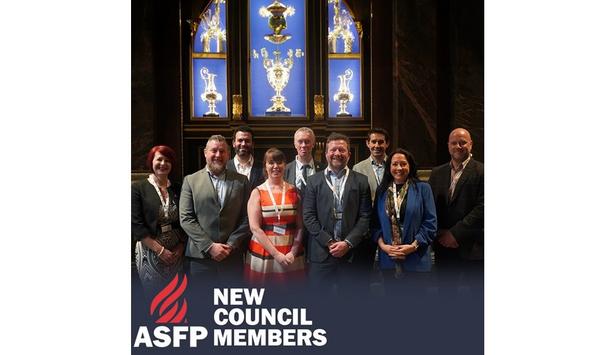
The Association for Specialist Fire Protection (ASFP) appointed its new Council at its 2024 Annual General Meeting (AGM) at Drapers’ Hall, in London, UK, on 11 April, 2024. The 12-strong Council was appointed following a successful election held in February-March in which 21 nominations were received. New and elected seats The Association’s Chair and Vice Chair retain their seats for another year, with the remaining 10 places elected for two years. The Council includes representatives from each of the ASFP’s member categories of Contractor, Manufacturer, Distributor, and Associate, as well as a representative from ASFP Ireland. In 2024, a place for a Principal Contractor member has been created to reflect the growth in membership in this category and ASFP’s increased engagement with this important sector of construction. The new Council members Clive Miles (Chair) – Chair, CLM Fireproofing Sharon McClure (Vice Chair) – Director, Avesta Scotland Ltd Moe Elmasry – Technical Manager, Golden Thread Fire Delay Alan Curran – Fire Engineer / Technical Director, OFR Consultants Carrie Blackshaw – Fire Protection Sales Director, Minster Liam Keenan – Technical & Managing Director, Compliance + Fire Limited Carl Burrell – Regional Market Director, Sherwin–Williams Jamie O'Hagan – CEO, Structural Fireproofing Systems Matthew Jones – Head of Fire Protection and HVAC, ROCKWOOL International Ian Outram – Firestopping Technology Manager, CPG UK Will Pitt – Technical Leader – MEICA Specialist Systems, Laing O'Rourke John O’Callaghan – Managing Director, Complete Coating Services The AGM offered all attending ASFP members their first opportunity to meet the new Council. They also received updates from ASFP officers on Association activities during 2023 and its plans, with the ASFP’s vision introduced by ASFP Vice Chair - Sharon McClure. office and training academy He detailed key activities in further developing the ASFP Competency Pathway and launching new training courses ASFP Managing Director - Mike Ward provided an update on ASFP operations, highlighting the successful purchase, fit-out, and occupation of the ASFP’s new office and training academy in Coventry. He also detailed key activities in further developing the ASFP Competency Pathway, as well as launching new training courses and membership groups, and developing new industry collaborations. ASFP Membership Officer - Tony Corcoran explained that interest in ASFP membership remained high, with over 57 new members joining since June 2023. He noted that the membership growth is across the full supply chain from Principal Contractors and architects through to fire risk assessors and facilities managers. latest legislative requirements ASFP Head of Technical - Dr. Andrew Taylor reviewed the technical landscape providing an update on the latest legislative requirements and highlighting ASFP’s role in developing standards and industry guidance. He detailed how the Association’s technical work assisted with the development of the Competency Pathway. The ASFP’s Competency Specialist - Kate Milford provided an overview of progress with the Pathway, explaining that work would continue throughout 2024 to address both individual competence and organizational capability, while also continuing to look for opportunities to show leadership and collaborate with like-minded organizations and individuals across the built environment. keynote address The formal event was brought to a close with a keynote address from Chandru Dissanayake of the Department for Levelling Up, Housing and Communities (DLUHC), who provided a detailed update on Government and regulatory progress and took questions from the floor. The meeting was followed by a lunch, allowing attendees to network with ASFP members, officers staff, and other industry leaders.
The New Future For Fire Agencies
Download
The Eight Key Trends in Fire Detection in 2023
Download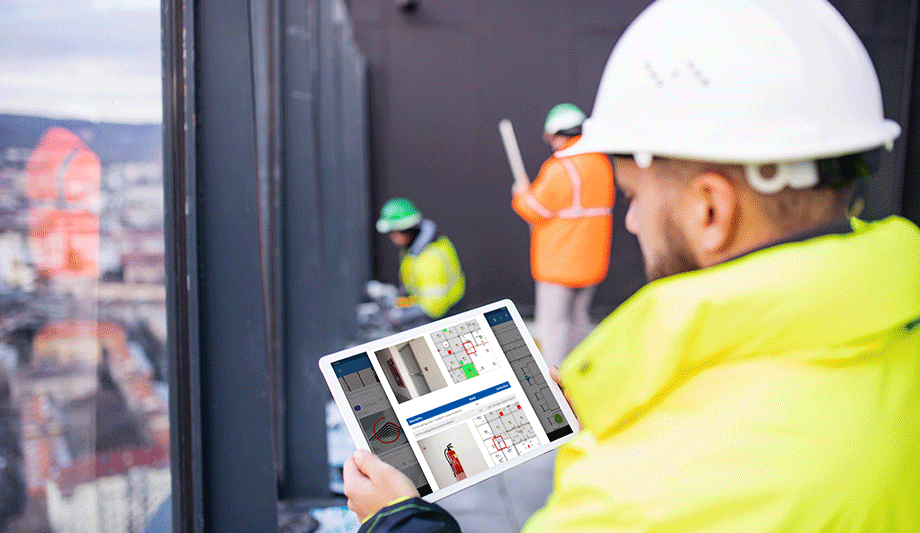
A Digital Platform to Improve Fire Safety Compliance and Inspections
Download
Overcoming the Challenges of Fire Safety in the Paper Industry
Download
Carbon Monoxide: Creeping Killer Caught In The Act
Download