|
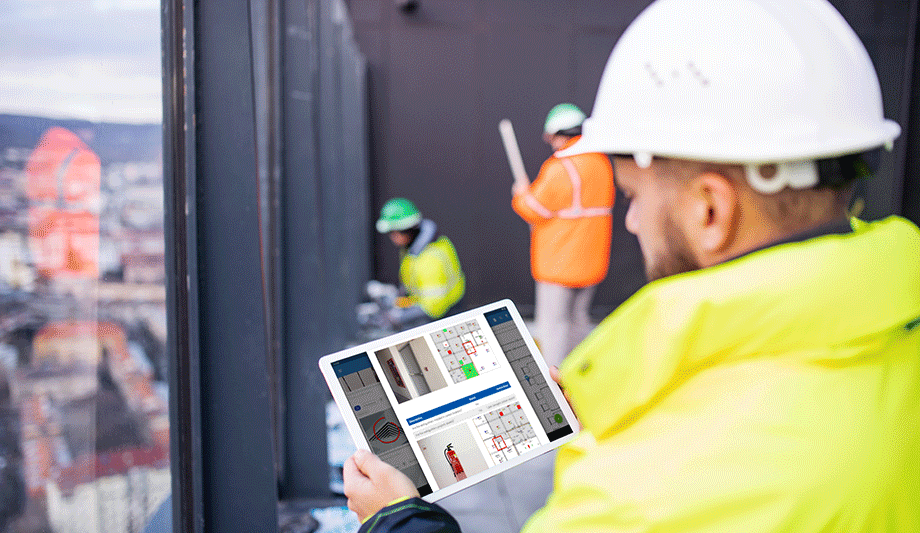
| One of the main roles of FLIR K50 handheld camera is to establish if the fire has been extinguished effectively |
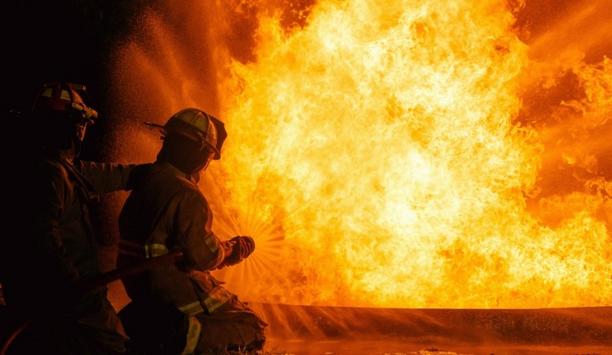
A number of companies that manufacture, or use, flammable chemicals and toxic materials are based in the Belgian port of Waasland, near Antwerp, and clearly these commercial activities present an increased fire risk. Accordingly, the Beveren fire service that is responsible for fire safety of the port and its surrounding municipalities, has always invested in advanced technology to support its team in this hazardous environment.
One of the detection technologies that the service has used for many years is thermal imaging and a truck-mounted system, that provides both visual and thermal imaging, is considered to be a key piece of equipment.
“This system has always given us an extra pair of eyes,” commented Corporal Stefaan Terryn of the Beveren team. “It monitors hotspots at the fire scene and sends the video images to a crisis room through a wireless link. This, in turn, gives the local authority the information it needs to take appropriate measures.”
Portable imaging
Last year the service decided to extend the scope of this technology to include handheld thermal imaging and weight was a critical factor in its choice of a suitable model. The fire suit, air tank and high pressure equipment that its fire fighters carry are already weighty so it was important that the thermal imaging camera should not significantly increase this burden.
Based on its good experience with the FLIR fixed mounted camera, it chose the FLIR K50 model that was also much lighter than the handheld thermal imaging cameras previously used by the service. And it is proving very useful for a wide range of applications.
Corporal Terryn continued: “It is good for chimney fires and for detecting hotspots in a dropped ceiling. Or we can use it to see temperature changes that result from chemical reactions in containers.”
One of the main roles of the FLIR K50 handheld camera, however, is to establish if the fire has been extinguished effectively or whether there is danger of re-ignition. Periodically taken temperature measurements provide this valuable information. It is also extensively used in targeted searches for missing persons.
The model’s SAR mode provides a dedicated colour palette to assist in this process. The camera also includes four other imaging options. They are ‘basic thermal imaging’ for initially sizing-up the fire scene and a ‘greyscale mode’ that removes the distraction of colour. ‘Fire mode’ improves sensitivity in high scene temperatures and the ‘heat detection mode’ highlights the hotspots in colour.
“The camera also helps us see potentially dangerous situations without the need to enter a specific area,” concluded Corporal Terryn. “We recently had to attack a fire in an engine room of ship that was berthed in Waasland Port. And this is a good example of where thermal imaging proved indispensable. Entering a confined space that is on fire is dangerous but with thermal imaging our fire fighter could see what was going on from a safe distance.”