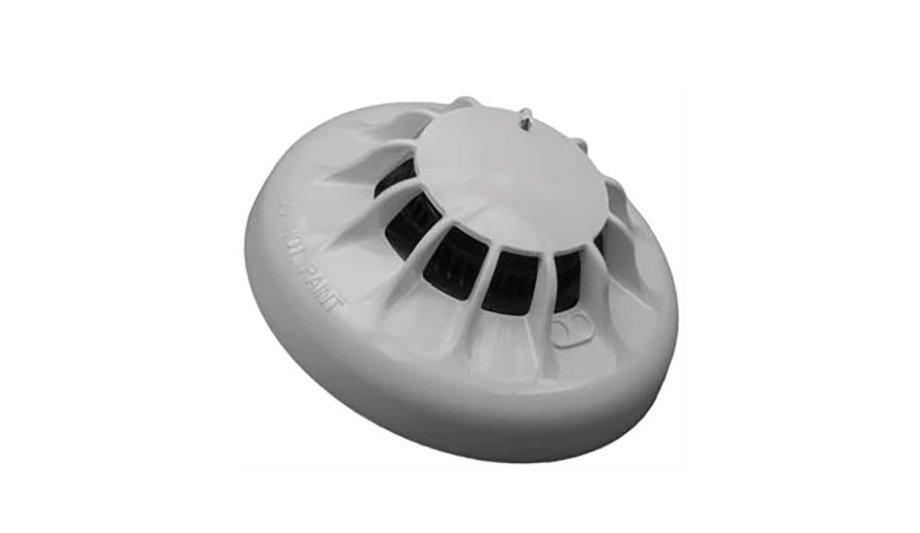

Johnson Controls, the global pioneer for smart, healthy, and sustainable buildings, and architect of OpenBlue connected solutions and services announces the new 700 Series Conventional Fire Detectors, the company’s first microprocessor-based conventional fire detectors that precisely monitor and respond to building fire conditions.
The inclusion of a microprocessor across the entire range means these conventional detectors offer advanced algorithms, resulting in the same detection performance and false alarm rejection as the company’s latest non-Fastlogic, Gen6 detectors.
Fire detection solution
The five fire detectors in the series (701P, 701PH, 701H, 702H, and 703H) each respond to unique parameters including smoke density, fixed temperature, and rate of rising of temperature, then notify fire detection panels to provide an alarm response for the affected zones.
The 700 Series Detectors offer a complete fire detection solution - including drift compensation - ideal for small commercial buildings such as retail outlets and business campuses.
Smoke detection and drift compensation
701PH is the first conventional detector which is approved to EN54-29
The 701P smoke detector works by sensing the optical scatter from smoke particles generated in a fire. This is suitable for applications such as electrical services areas where cable overheating may occur.
The 701PH smoke and heat detector operates as a standard optical detector under normal ambient conditions. However, when a rapid temperature rise is detected, the sensitivity of the optical detector increases to help better identify smoke particles. The 701PH is the first conventional detector from Johnson Controls which is approved to EN54-29, a non-harmonized standard for multi-sensor detectors.
The 701P and 701PH detectors both offer drift compensation (or threshold compensation), an intelligent feature that monitors the level of dust and debris within the optical detector, then adjusts the sensor to compensate for the obstruction. This results in improved reliability over time, extended life of the detectors, and fewer maintenance needs.
Heat-based fire detection
The 701H is an A1R heat detector that uses both rate-of-rise and 60°C static temperature sensing, where the fixed element provides a backstop for fires in which the temperature builds up gradually.
This line of fire detectors has been designed to reduce installation and system maintenance costs for customers "
The 702H is an A1S heat detector with a static response temperature of 60°C (EN54-5). Since it only responds at these specific temperatures, this detector is suitable for restaurant dining areas, retail facilities, and hotel rooms.
The 703H heat detector has a static response temperature of 90°C (EN54-5), which works best in areas where higher temperatures are normal such as boiler rooms and kitchens.
Extended service with easy installation
“This product series offers a full-building fire detection solution that requires only one trip to the ceiling to complete installation,” said Paul Grainger, product manager, Johnson Controls.
“In addition to reliability and accuracy, this line of fire detectors has been designed to reduce installation and system maintenance costs for our customers, through fast, easy installation and an extended detector service life.”