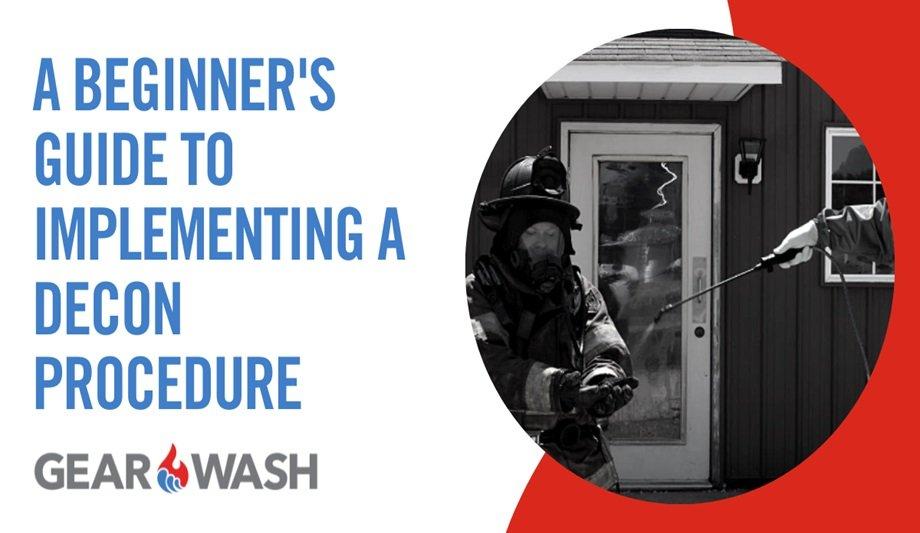

Adjust accordingly to best suit unique incidents or the department’s protocol.
Before a fire call
1) Invest in individually customized PPE that is properly fitted to each firefighter.
When budget allows, consider particulate barrier hoods; light, breathable turnouts; and a set of alternative PPE for non-structural calls (this may also reduce heat stress and cardiac fatigue).
2) Stock the apparatus with decon supplies, including:
- 5-gallon bucket
- A hose with a small nozzle
- Scrub brushes
- NFPA-approved detergent
- Spray bottles
- Facial wipes
- Decon bags (large enough to fit turnout ensemble)
- Spare gear bags and garments
3) Activate the local decontamination mobile unit, if available in the region.
4) Pre-establish a storage area on the truck or in a separate unit to store soiled PPE.
At the fire scene
- Set up a designated & enclosed decon space in the direct path of the exit point and away from the engine.
- Get hosed down head to toe using a small-nozzled hose before removing PPE or SCBA.
- Use a scrub brush to knock loose any remaining residue and repeat #6, if needed.
- Label and use an at least 3 mil thick, airtight Decon Bag to isolate all soiled PPE.
- Carefully remove SCBA and hood with gloved hands and pack into Decon Bag.
- Doff the remaining ensemble, also storing it in the Decon Bag.
- Secure the airtight Decon Bag while wearing medical gloves and prepare for transport, preferably outside the Passenger Compartment of the apparatus.
- Use soap and water or facial wipes (while still wearing medical gloves) to remove toxins from the most vascular areas of their skin (i.e. face, head, neck, jaw, throat, underarms, groin, and hands).
- If possible, wash hands and face with water and a de-greasing soap (i.e. Dawn™ dish soap) before leaving the scene.
- Continue to screening/hydration/replenishing/relaxation area.
Post-fire
- Make arrangements for Decon Bags to be picked up, delivered, or cleaned on-site.
- Shower to wash off any remaining residue from their skin.
- Clean all other items that may not withstand full water immersion (i.e. helmet liner, inside of the helmet, thermal imaging camera, portable radio and strap, flashlight, SCBA mask, etc.) using a damp, soapy cloth.
- Log all cleanings & repairs in the Gear Wash App or similar database.
- Encourage routine screenings for early detection.
Other tips
- Make sure the last person to use the hose cleans it before storing it.
- Restrict finger foods from the fireground. Only provide meals that require the use of utensils to eat, ensuring no one uses their hands
- When directly handling contaminated equipment/PPE, personnel should wear medical gloves.
- If laundering contaminated PPE on-site, use an NFPA-approved extraction washer and detergent and follow the PPE manufacturer’s instructions.
- High-traffic areas of the apparatus’ passenger compartment (i.e. seats, doghouse, headsets, etc.) should be wiped down every week.
- As a rule of thumb, if any equipment smells of smoke, it is considered to be 'contaminated' and shall be decontaminated as soon as possible.

- Fire Safety Planning
- Fire Prevention
- Fire Detection
- Fire Protection
- Fire Rescue
- Fire Safety Testing
- Fire Safety Standards
- Fire Safety Management
- Fire Emergency Response
- Electrical Fire Safety
- Industrial Fire Safety
- Active Fire Protection (AFP)
- Firefighter Health and Safety
- Personal Protective Equipment (PPE)