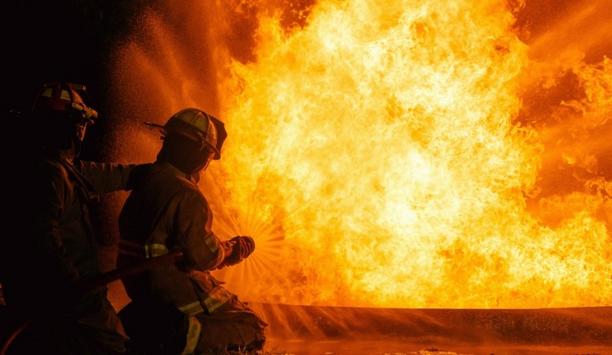

The dire consequences of a tunnel fire became evident when a transport truck caught fire while driving through the Mont Blanc tunnel between Italy and France on March 24, 1999. Other vehicles became trapped, and fire crews were unable to reach the transport truck. Thirty-nine people died.
Successfully responding to a tunnel fire relies on an ability to use resources effectively, manage the incident scene, understand fire dynamics in tunnels, and learn from fires of the past.
Pre-incident planning
Best practices in tunnel firefighting include a focus on pre-incident planning. Firefighters need an understanding of fire dynamics in tunnels and the systems that will affect those dynamics. Needed elements include conducting and maintaining pre-fire plans, better communication, and more study of firefighting methods in tunnels.
Every tunnel requires a pre-fire plan, including information about access, water supply, ventilation, and coordination of response efforts. Radio communication with tunnel managers can ensure accurate information is exchanged with incoming fire units in the event of a fire.
Cooperative approach
Standard operating procedures are vital, along with training exercises to maintain readiness
A cooperative working relationship with surrounding agencies ensures mutual response in the event of a tunnel fire. A policy should incorporate a joint response and identifies primary and secondary responsibilities for each department based on the situation. Standard operating procedures are vital, along with training exercises to maintain readiness.
In the event of a tunnel fire, alternative transportation measures should be in place to minimize any economic impact.
Technology
Technology is a component of managing the fire risk in tunnels. For example, a linear heat detection system above the carriageway in the Blackwall Tunnel in London constitutes an improvement in the tunnel’s fire detection system.
In case of fire, tunnel ventilation systems are designed to push smoke forward through the tunnel, based on the assumption that traffic will stop behind the site of the blaze.
However, driver behavior is an additional variable. For example, drivers might continue traveling past a blaze rather than stopping. In that case, a larger fire could provide thicker smoke that could overcome drivers before they reach the end of the tunnel. Fire systems might need to be reconsidered based on further research into human behavior.
Visibility
Brighter, whiter lights will improve management of incident sites and increase visibility for drivers
Visibility is also an important element of managing emergencies inside tunnels. For instance, high-pressure sodium (HPS) lights were replaced with 1,174 LED lights along EastLink tunnels in Victoria, Australia. The brighter, whiter lights will improve management of incident sites and increase visibility for drivers compared to the “orange” HPS lights.
Detection systems
Saltash Tunnel in the United Kingdom has deployed state-of-the-art technology to ensure the safety of the thousands of people who use the 410-meter underground route in Cornwall. An incident detection system provides quicker and more reactive detection of vehicle fires and other incidents.
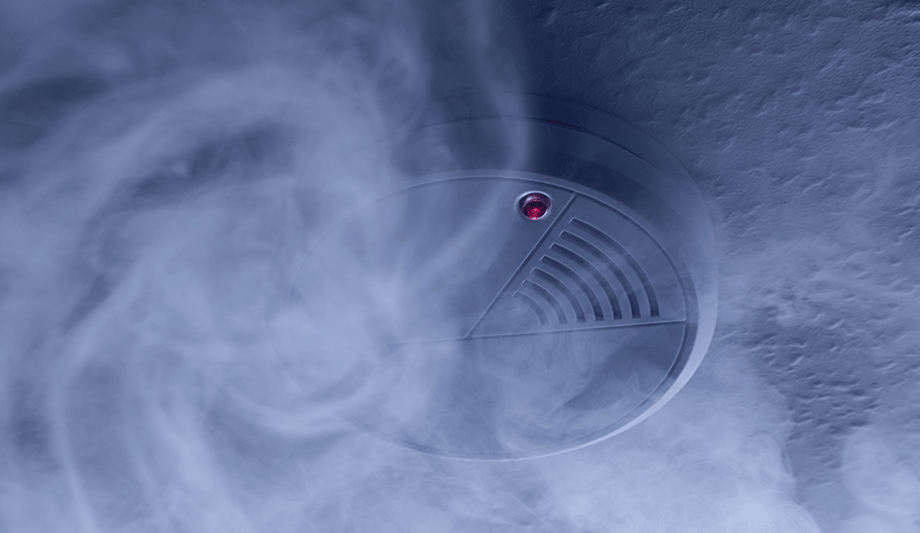
Emergency evacuation signs and separate smoke and heat detection systems are aligned to the public address system to direct drivers to the safest exit in the event of an incident at the tunnel. Drivers are quickly alerted, and emergency services can react faster in response to any potential incidents via a control room.
A more realistic approximation of an actual fire scenario helps to improve the safety of tunnels
A tool in the preparedness of possible tunnel fires is hot smoke demonstrations, which create realistic scenarios to enable responders to improve their reactions in an actual emergency. The demonstrations are safe for people and infrastructures and minimize business disruption. A more realistic approximation of an actual fire scenario helps to improve the safety of tunnels.