

The COVID-19 pandemic’s impact on the fire service will continue at least through 2021 and possibly for years to come. Specifically, several aspects of the pandemic have impacted the fire service long-term and have possibly changed it forever.
More awareness of Health Issues
For one thing, the pandemic has heightened awareness about issues of health and wellness of firefighters. In this regard, COVID-19 has been just the latest in the series of health and wellness issues surrounding the fire service. However, a global pandemic is difficult to ignore or neglect, unlike some other perpetual health concerns, such as physical exhaustion, cancer risks and mental and emotional burnout.
Ideally, the urgency of addressing the health concerns surrounding the novel coronavirus will translate into better management of longer-term concerns about the more enduring and ultimately, less retractable health concerns. In the end, concerns about health should be broad-based and intrinsic. Heightened awareness of the broad spectrum of health issues should be ingrained in the fire serve to engender more action, which is much needed and a long overdue.
Greater focus on Personal Protective Equipment
Another positive of the COVID-19 pandemic is a greater focus on personal protective equipment (PPE)
Another positive of the COVID-19 pandemic is a greater focus on personal protective equipment (PPE). Might emphasis on the use of masks during the pandemic translate into broader and long term awareness of the important role of PPE and more consistent usage to protect fire personnel?
Concerns about PPE supply during the pandemic also point to a need to manage usage levels of the equipment to ensure changes in the market do not leave a department’s personnel unprotected.
Financial and budget challenges for fire departments
The COVID-19 pandemic has also emphasized the fragile nature of fire department budgeting at all levels. Departments across the board were negatively impacted as tax revenues and fundraising funds decreased. And it’s not over yet.
Financial struggles will continue through the final phases of the pandemic. Addressing the budgetary impact will extend into future budget cycles and fire departments will continue to feel the impact. More than ever, departments will need to look for additional funding sources, such as government and foundation grants.
Imminent manpower crisis and concerns
The COVID-19 pandemic has accelerated the rates of retirement among firefighters, not to mention the likelihood of lower head counts because of budgetary cutbacks. The stresses of dealing with COVID-19 could discourage possible recruits from joining the fire service.
The bottom line is an imminent manpower crisis for the fire service; or, I should say, a hastening of a manpower crisis that already exists. Furthermore, volunteer departments are finding it harder than ever to attract personnel and recruiting paid firemen has its own set of challenges. A legacy of the pandemic might be even more difficulty recruiting manpower for fire service.
Training fire service personnel
As the public health and safety environment has evolved, so too has the role of the fire service
The COVID-19 pandemic stretched the resources of many fire departments as they sought to help out in myriad ways during public health emergencies. For example, more departments were called on to fill in the gaps in emergency management, community safety, etc.
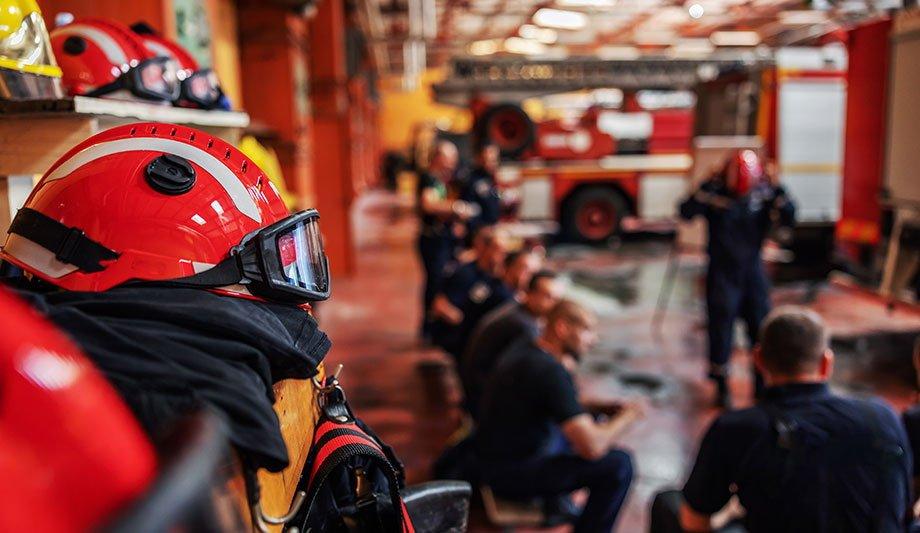
As the public health and safety environment has evolved, so too has the role of the fire service. To the extent that those changes persist into a ‘new normal’, fire departments will be struggling to fulfill their expanded roles. Departments will need to invest their scarce resources in training fire service personnel to respond to community needs in new and different ways.
Fire services need to do more with less
Taken together, these factors point to a need for fire departments to do more with less and fire departments need to up their game when it comes to addressing health concerns, managing PPE supplies, recruiting new personnel, and expanding services to meet the changing needs in the community.
However, less funding and fewer other resources reflect an operational environment that may be changed forever. In general, the fire service rose to the occasion during the global COVID-19 pandemic. The aftermath will also require fire service volunteers and professionals to work even harder than they already have to deliver on a challenging and expanding mission.

- Fire Safety Risk Assessment
- Fire Safety Planning
- Fire Prevention
- Fire Detection
- Fire Protection
- Fire Rescue
- Fire Safety Inspection
- Fire Safety Testing
- Fire Safety Standards
- Training & Education
- Fire Safety Policies
- Fire Safety Management
- Fire Emergency Response
- Electrical Fire Safety
- Building Fire Safety
- Industrial Fire Safety
- Tall Building Fire Safety
- Active Fire Protection (AFP)
- Firefighter Health and Safety
- Public Education
- COVID-19
- Personal Protective Equipment (PPE)
- Fire Insurance
- Explosion Protection
- Flammable Material Control