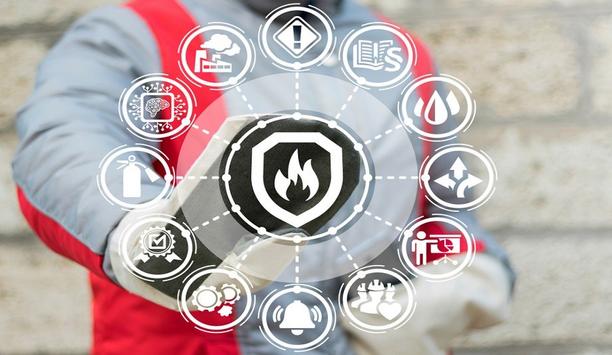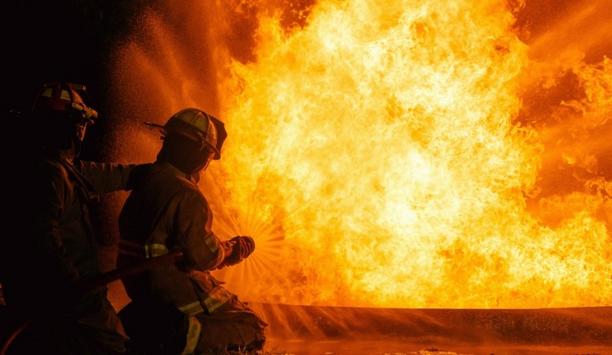

This year’s catastrophic wildfire season reminds us of the need for early detection of wildland fires before they escalate out of control. Historically, tools such as satellite imagery and localized video cameras have helped to identify fires at their origin and to alert authorities.
However, delayed detection and low reliability have been a problem. Cloudy weather can also be an impediment, and the severity and frequency of wildfires worldwide suggest that new approaches are needed. A new high-tech approach involves ground-based sensors, drones and the Internet of Things (IoT).
Wildfire detection solution
Numerical analysis of the new technique suggests it can offer a faster and more reliable wildfire detection solution than current satellite imaging techniques. However, the system can only cover smaller areas when compared to satellite imaging.
The system can only cover smaller areas when compared to satellite imaging
Researchers in Abu Dhabi, Saudi Arabia and Canada have proposed an early wildfire detection system based on unmanned aerial vehicles (UAVs) that pass over to collect data wirelessly, using the IoT, from low-cost sensors positioned throughout a wildland area. The sensors monitor the forest for any signs of smoke or heat.
In a report published by the IEEE Internet of Things Journal, the researchers sought (1) to study the performance and reliability of UAV-IoT networks for wildfire detection and (2) to propose a guideline to optimize the network to improve fire detection probability within limited system cost budgets.
monitoring larger area
The research suggests a need for a delicate balance to optimize the density of sensor devices and the number of UAVs covering a forest area. The goal is to maximize the lower bound of wildfire detection probability within a limited time and low system cost. Research suggests that more sensors equate to better detection up to a point.
The researchers demonstrated that the IoT/UAV network could detect fires in a shorter time
Beyond that threshold, however, efficiency is lost because extra time is needed for the UAV to gather data in each location, which delays the ability to monitor the larger area. The researchers demonstrated that the IoT/UAV network could detect fires in a shorter time when compared to satellite imagery. This finding expands the capability to fight a fire before it spreads out of control.
IoT sensor devices
After a fire ignition, the IoT sensor devices within a limited distance from the fire can detect it and then report their measurements to nearby UAVs. The researchers used Discrete-Time Markov Chain (DTMC) analysis to compute the fire detection and false alarm probabilities. Markov Chains use statistical models for real-world processes.
Inexpensive sensors, like the ones proposed for this application, do not have sufficient range to communicate with a distant fire control center. Therefore, the drones are used to fly over the area, capture the data wirelessly and then return to a base to report a fire.
Lower-Cost drones
The outlook for accelerating numbers of wildfires this year and in the future looks grim
The researchers are Osama M. Bushnaq of the Autonomous Robotics Research Center of the Technology Innovation Institute (TII), Abu Dhabi, UAE; Anas Chaaban of the School of Engineering, the University of British Columbia, Canada; and Tareq T. Al-Naffouri of the Computer, Electrical and Mathematical Sciences and Engineering (CEMSE) Division of the King Abdullah University of Science and Technology (KAUST), Thuwai, Saudi Arabia.
More than 95% of the Western United States is in drought, and there has been more than a month of above-normal temperatures. The outlook for accelerating numbers of wildfires this year and in the future looks grim.
New technologies provide a tool to address the problem, even as global warming makes it worse. Connectivity of the Internet of Things provides new opportunities to leverage the power of sensors, software and other technologies to address the challenges, and lower-cost drones are providing an additional tool to collect data that will power decision-making during wildfire seasons of the future.